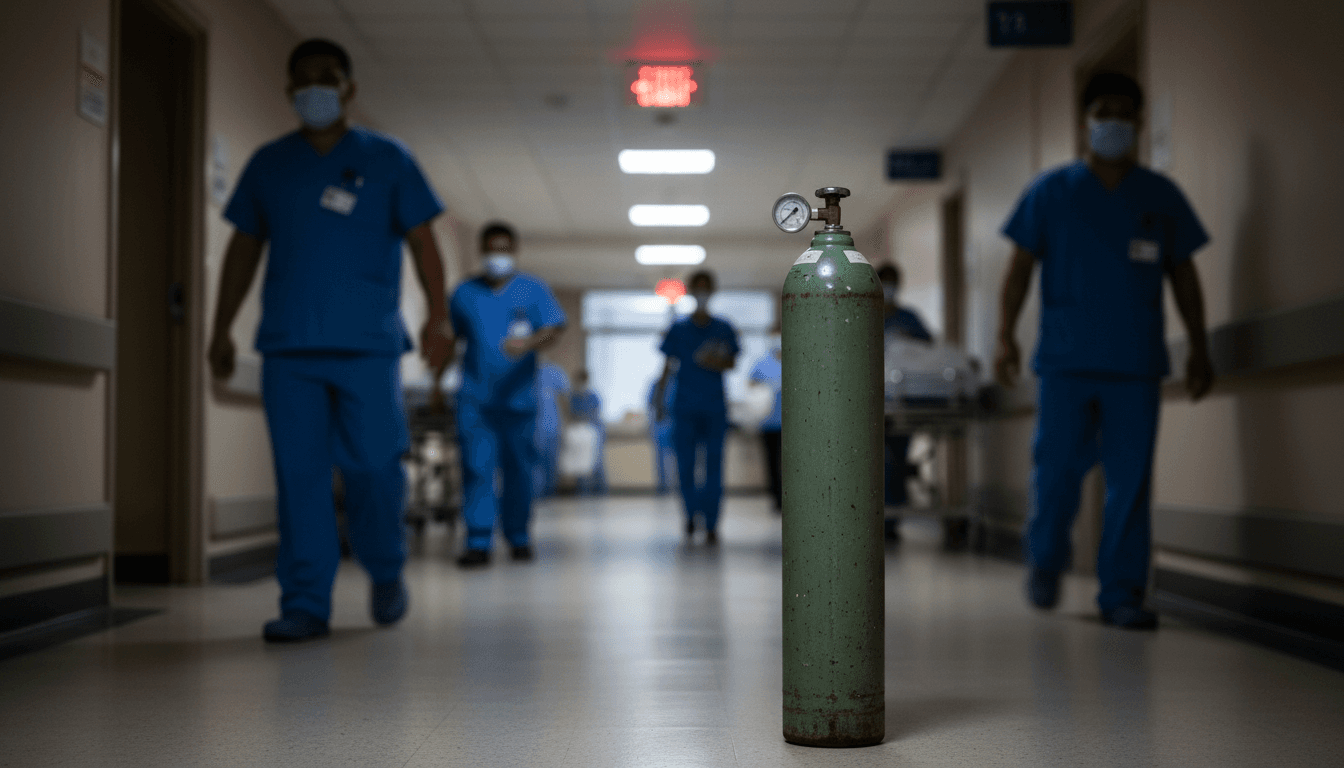
Gaza hospitals face critical oxygen crisis, threatening the lives of hundreds of patients, particularly premature babies and those in intensive care units, as vital oxygen-generating stations fail and supplies dwindle. The situation at Nasser Medical Complex in Khan Younis, one of Gaza’s largest functioning hospitals, exemplifies the broader collapse of the enclave’s healthcare infrastructure, with medical staff battling to maintain life support amid dire shortages.
On May 12, 2026, reports from the Middle East Monitor highlighted the severe challenges faced by medical teams at Nasser Medical Complex. Ismail Abu Nimr, director of engineering and maintenance at the complex, revealed that the main oxygen-generating station has ceased operation due to technical failures and a lack of operating oils. The backup station, while currently active, operates at limited capacity and is at risk of imminent shutdown. This precarious situation leaves critical departments, including neonatal units and intensive care, on the brink of catastrophic failure. The sight of dozens of empty oxygen cylinders awaiting refilling in the hospital courtyard underscores the severity of the problem.
The Looming Threat of Oxygen Crisis
The implications of this oxygen crisis are profound. Ahmad al-Farra, director of the Children and Maternity Department at Nasser Medical Complex, described the situation as “slow suffocation.” He emphasized that oxygen is an absolute lifeline for premature babies in incubators, intensive care patients, and those undergoing surgery. A complete shutdown of oxygen stations, Farra warned, would be a “real catastrophe and a death sentence for hundreds of patients,” urging immediate international intervention to avert total collapse. The dependency on oxygen is so absolute that repeated alarms due to low pressure are a constant source of anxiety for medical teams and patients’ families alike.
Gaza’s Health Ministry has consistently voiced alarm over Israel’s restrictions on the entry of essential medicines, medical supplies, equipment, and spare parts. These restrictions, according to the ministry, have devastating consequences for health services and patient outcomes. Official Palestinian reports have also highlighted the risks posed by the inability to import spare parts for the maintenance of vital equipment and vehicles, further exacerbating the healthcare system’s fragility. The use of substandard local substitutes for critical components has led to additional malfunctions and damage to pumps, further complicating efforts to keep the remaining facilities operational.
The current oxygen crisis at Nasser Medical Complex is not an isolated incident but a reflection of a systemic breakdown across Gaza’s health sector. Just last month, the Health Ministry warned that the only functioning oxygen station in Gaza City and northern Gaza was also at risk of stopping. This station serves as the primary source of medical oxygen for patients with chronic illnesses and various healthcare organizations. The ministry noted that this station had suffered “repeated malfunctions because of heavy pressure and long operating hours, amid a lack of sufficient alternatives.” The increasing demand for oxygen at hospitals and health centers, coupled with the risk of station shutdowns, paints a picture of an impending humanitarian catastrophe.
“Oxygen is the lifeline inside hospitals, especially for babies in incubators, intensive care patients and operating rooms. These patients depend on it completely,” said Ahmad al-Farra, director of the Children and Maternity Department at Nasser Medical Complex.
The scale of destruction to Gaza’s healthcare infrastructure is staggering. According to Gaza’s Health Ministry, approximately 25 of Gaza’s 34 oxygen production stations were destroyed during two years of brutal conflict. These destructions occurred during Israeli army incursions into hospitals as part of ground operations. By May 2025, only about nine stations remained operational, and even these were working at partial capacity, unable to meet the overwhelming patient needs. The deliberate targeting of the health sector, including hospitals, medical facilities, health centers, medical teams, and ambulances, has been a significant contributing factor to the current dire state.
The ongoing oxygen crisis is further compounded by Israel’s failure to adhere to its obligations under the ceasefire agreement in effect since October 10, 2025. This agreement was meant to ensure the opening of crossings and the allowance of agreed quantities of medical aid and health-related supplies. However, continued violations, including shelling and gunfire, have resulted in 854 Palestinian deaths and 2,453 injuries since the agreement. This two-year conflict has claimed the lives of over 72,000 Palestinians, wounded more than 172,000, and caused massive destruction to 90% of civilian infrastructure, creating an environment where a functional healthcare system is nearly impossible to sustain.
The international community and relevant organizations face an urgent call to action. The Health Ministry has implored them to intervene rapidly, not only to facilitate the entry of new oxygen-generating stations but also to ensure a sustainable supply of medical oxygen to health facilities. Without immediate and sustained intervention, the collapse of health services in Gaza, particularly the provision of life-sustaining oxygen, will lead to an unimaginable loss of life. The unfolding health and wellness catastrophe demands a robust and coordinated global response to protect vulnerable patients and rebuild a shattered healthcare system.