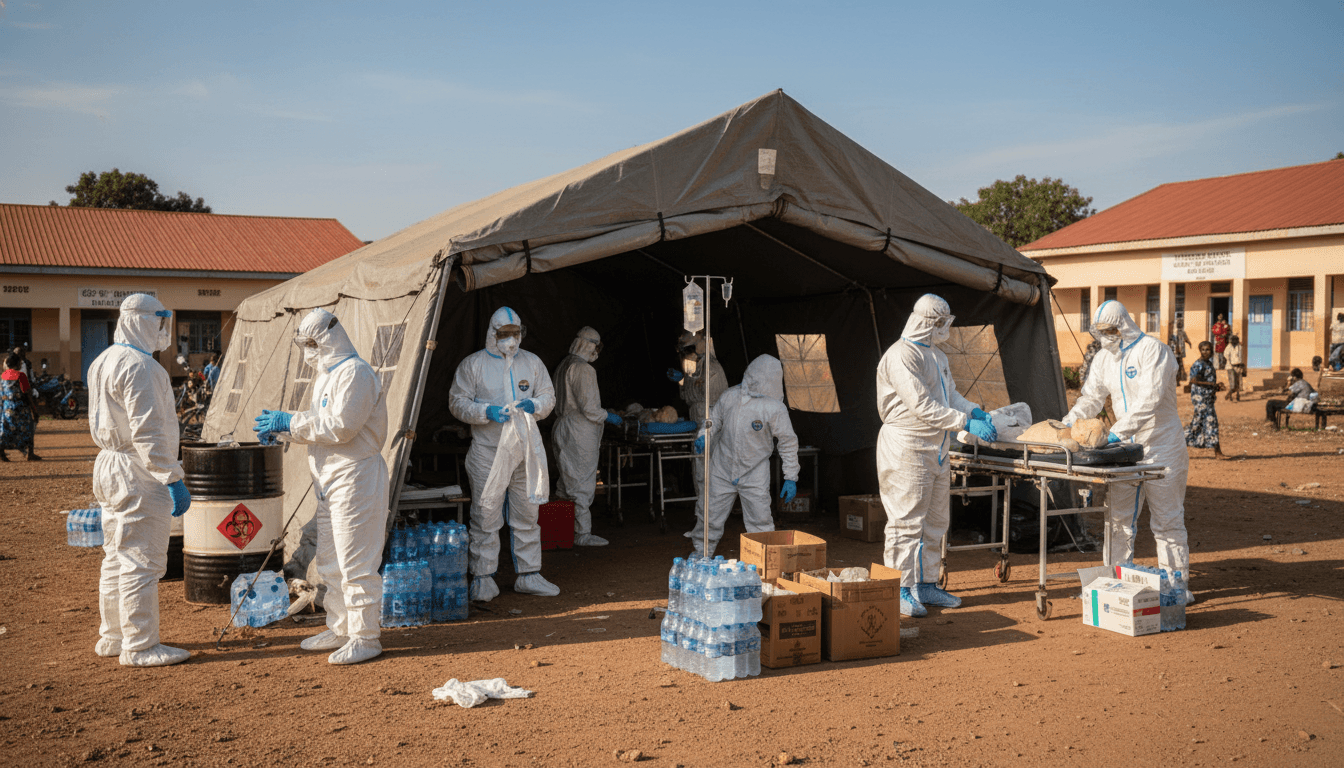
A new Bundibugyo virus outbreak in the Democratic Republic of Congo (DRC) presents a significantly more complex and urgent challenge than previous Ebola disease epidemics, as global health authorities face a critical absence of approved vaccines and treatments for this specific strain. Declared on May 15, 2026, in northeastern DRC, the outbreak has already seen over 500 suspected cases and 130 deaths across multiple health zones, with confirmed cases extending into neighboring Uganda. This marks the DRC’s 17th Ebola disease outbreak since 1976 and the third involving the Bundibugyo virus, following incidents in Uganda (2007–2008) and DRC (2012).
The Story: A Different Viral Foe
The core of the current crisis lies in the identity of the pathogen. Unlike the more widely recognized Ebola virus (formerly known as Zaire virus), which was responsible for the devastating West Africa epidemic (2014–2016) and the 2018–2020 DRC outbreak, the Bundibugyo virus lacks the scientific breakthroughs that have armed medical professionals against its cousin. John Johnson, MSF’s medical lead for epidemic response, highlights this crucial distinction, stating that while vaccines and treatments exist for the Zaire strain, “for the Bundibugyo virus — which also causes Ebola disease — no vaccine or treatment has been approved so far.”
This means the two currently approved Ebola vaccines, Ervebo (rVSV-ZEBOV) and another preventive option, are ineffective against the Bundibugyo virus. These existing vaccines were developed through emergency clinical trials, including those supported by MSF in 2019, which led to their market release. Now, discussions are underway within the World Health Organization to explore emergency clinical trials for Bundibugyo vaccine candidates, with MSF prepared to contribute to this vital research.
Similarly, therapeutic options are severely limited. While monoclonal antibodies have improved survival rates for patients infected with the Zaire virus, they have not demonstrated efficacy against the Bundibugyo virus. Antiviral candidates and experimental monoclonal antibodies exist, but their effectiveness remains unproven. Consequently, care for those infected with the Bundibugyo virus relies heavily on intensive supportive therapy, including fluid replacement, oxygen support, and rigorous monitoring of blood and cardiac function. Previous Bundibugyo outbreaks saw fatality rates between 25 and 40 percent, a grim statistic that underscores the urgency of developing targeted interventions.
“What makes this outbreak different and significantly harder to fight is the type of virus that causes Ebola disease. This is the Bundibugyo virus — not the same virus the world knows from the major West Africa epidemic… for the Bundibugyo virus… no vaccine or treatment has been approved so far.”
Impact Analysis: Broader Health & Wellness Implications
The Bundibugyo virus outbreak underscores a critical vulnerability in global public health preparedness: the uneven distribution of scientific advancements across different viral strains within the same disease family. This situation creates a significant challenge for health systems, particularly in regions already grappling with conflict, limited infrastructure, and other epidemics. The absence of specific diagnostic kits for the Bundibugyo virus further complicates rapid case confirmation and contact tracing, slowing down crucial containment efforts. This diagnostic bottleneck means that early isolation and monitoring, vital for controlling spread, are severely hampered.
The current scenario also highlights the economic and social toll on affected communities. Beyond the immediate health crisis, a lack of effective tools prolongs outbreaks, disrupting daily life, straining local economies, and eroding trust in public health interventions, especially in insecure regions of the DRC. The need for sustained community engagement – informing people and building trust – becomes paramount but is incredibly difficult in contexts marked by insecurity and limited access to healthcare, as seen in the DRC. This outbreak serves as a stark reminder that investment in research and development for less common but equally dangerous pathogens is not merely a scientific pursuit but a global health imperative.
Context & Background: A History of Viral Threats
The Democratic Republic of Congo has long been at the forefront of global efforts to combat Ebola disease, having experienced numerous outbreaks since the virus was first identified in 1976. While the world focused on the Zaire strain due to its higher prevalence and fatality rates, the Bundibugyo virus has quietly re-emerged, presenting a familiar yet distinct threat. The 2014-2016 West Africa Ebola epidemic catalyzed unprecedented scientific collaboration, leading to the rapid development of vaccines and treatments for the Zaire strain. However, this progress did not extend equally to other Ebola strains, leaving a gap in preparedness that is now acutely felt in the DRC.
The recurring nature of these outbreaks in the DRC, often exacerbated by conflict and population displacement, underscores the ongoing need for robust, adaptable epidemic response strategies. MSF teams, already providing healthcare in conflict-affected areas of the DRC, are uniquely positioned to respond, setting up isolation zones and providing essential medical supplies. However, their efforts are significantly constrained by the lack of specific medical countermeasures for this particular Bundibugyo virus.
What’s Next: The Race for Solutions
The immediate focus for organizations like MSF and local health authorities is on implementing non-pharmaceutical interventions to curb the spread of the Bundibugyo virus. This includes early isolation of suspected cases, daily monitoring of contacts for 21 days, strict infection prevention and control protocols (e.g., hand hygiene, PPE for healthcare workers), and safe and dignified burials. On-the-ground epidemiological work is crucial to understand transmission patterns and guide interventions. Ensuring continued access to regular health care for people in affected areas is also vital to prevent collateral health crises.
The long-term outlook hinges on the swift development and testing of vaccine candidates and treatments. The World Health Organization’s discussions regarding emergency clinical trials for the Bundibugyo virus are a critical step. If successful, these trials could replicate the rapid progress seen with the Zaire virus, offering hope for future outbreaks. However, the path to approval and widespread deployment will be challenging, requiring significant international collaboration and funding. The global health community must prioritize investment in research for all Ebola strains to prevent similar crises from reoccurring without adequate medical tools. Related health & wellness articles often highlight the importance of proactive pandemic preparedness.
Key Takeaway: A Call for Comprehensive Preparedness
The current Bundibugyo virus outbreak in the DRC serves as a sobering reminder that global health security requires comprehensive preparedness against all known viral threats, not just the most prevalent ones. The absence of approved vaccines and treatments for this specific Ebola strain not only endangers lives in the DRC and Uganda but also highlights a critical gap in the world’s ability to respond to diverse epidemic challenges. Moving forward, sustained investment in research and development for neglected pathogens, coupled with robust public health infrastructure and community engagement, will be essential to mitigate the impact of future outbreaks and ensure equitable access to life-saving interventions. This incident underscores that true preparedness means being ready for the known unknowns, especially when it comes to the complex and evolving landscape of viral diseases. For more insights on global health crises, consider exploring our latest analyses on health & wellness.