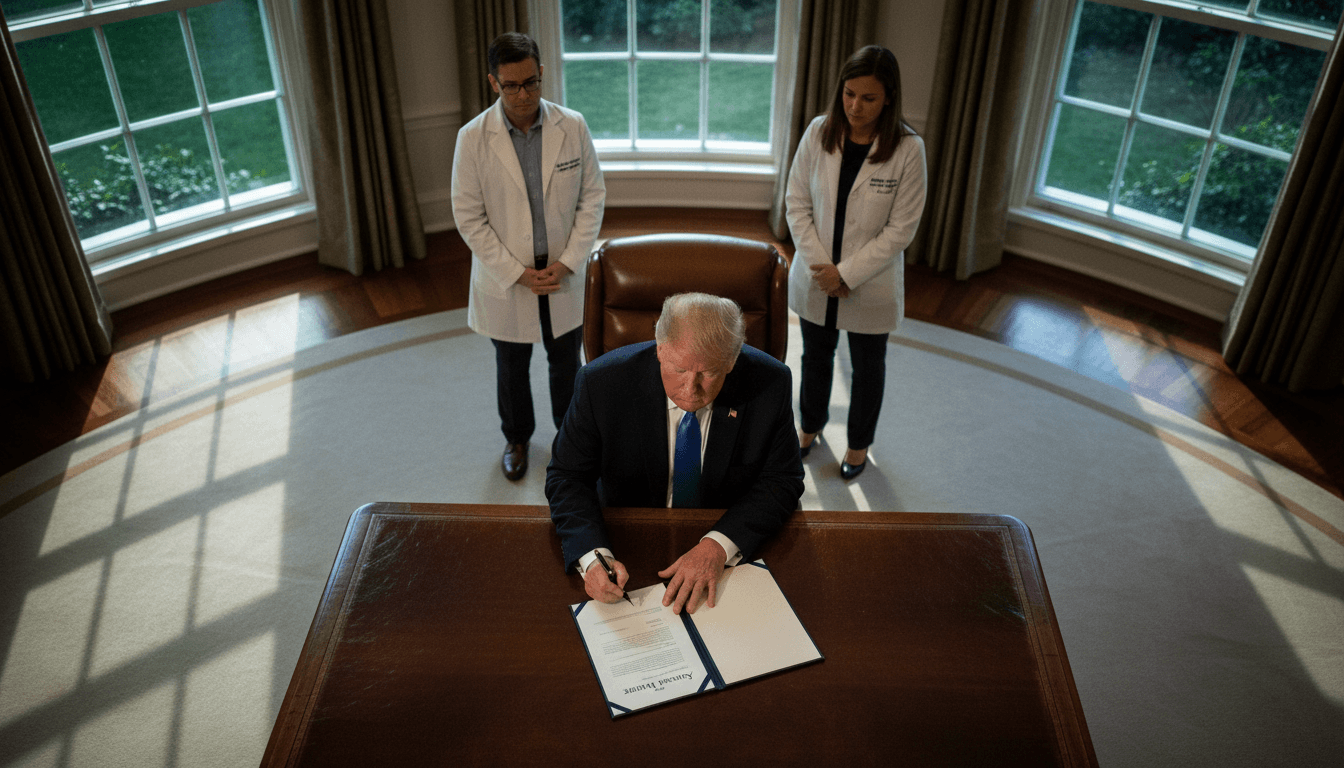
An executive order to accelerate psychedelic drug reviews by the U.S. Food and Drug Administration (FDA) was signed by President Trump on Tuesday, April 21, 2026, marking a pivotal moment for the burgeoning field of psychedelic-assisted therapies. This directive signals a significant shift in federal policy, aiming to streamline the regulatory pathway for substances like psilocybin and MDMA, which are increasingly recognized for their potential in treating a range of mental health conditions.
The Story: A New Era for Therapeutic Psychedelics
President Trump’s executive order, reported by Pharmaceutical Executive, directly targets the often-arduous and lengthy FDA review process. While specific details of the order’s mechanisms are still emerging, the overarching goal is to reduce the time it takes for promising psychedelic compounds to move from clinical trials to approved treatments. This move comes as a response to growing scientific evidence supporting the efficacy of psychedelics for conditions such as PTSD, severe depression, and anxiety, particularly in cases resistant to conventional treatments. The order is expected to mandate inter-agency cooperation and potentially allocate additional resources to the FDA to expedite the evaluation of these unique drug candidates.
“This executive order represents a critical acknowledgment from the highest levels of government that innovative approaches are needed to address the escalating mental health crisis,” an unnamed industry insider commented.
The decision to accelerate psychedelic drug reviews underscores a broader bipartisan recognition of the therapeutic potential of these compounds, moving beyond their historical classification as illicit substances.
Impact Analysis: Reshaping Health & Wellness
The implications of this executive order for the health and wellness landscape are profound. For pharmaceutical companies and biotech startups that have invested heavily in psychedelic research, this offers a clearer, potentially faster path to market. This could unlock substantial investment in the sector, fostering innovation and expanding clinical trials. Patients suffering from debilitating mental health conditions, for whom existing treatments have failed, stand to benefit most directly, gaining earlier access to what could be life-changing therapies. The acceleration of FDA reviews could also lead to a re-evaluation of drug development priorities, with a greater emphasis on novel mechanisms of action beyond traditional pharmaceuticals.
Furthermore, this policy shift will likely influence public perception of psychedelics, moving them further into the realm of legitimate medicine and away from stigma. It could also spur broader discussions around mental health care access and the integration of these therapies into mainstream medical practice. The Financial Standard has previously covered the growing interest in alternative mental health treatments, and this executive order provides a significant governmental endorsement.
Context & Background: A Shifting Paradigm
The journey to this executive order has been years in the making, fueled by rigorous scientific research and advocacy. Decades of prohibition following the 1960s had largely halted psychedelic research. However, in recent years, institutions like Johns Hopkins University and Imperial College London have published landmark studies demonstrating the therapeutic potential of compounds like psilocybin (from magic mushrooms) for depression and MDMA for PTSD. These studies have shown remarkable success rates, often outperforming conventional treatments in severe cases.
This renewed scientific interest has been accompanied by a groundswell of public and legislative support. Several states and cities have already decriminalized or legalized certain psychedelics for therapeutic use, creating a patchwork of regulations. The FDA itself has granted ‘Breakthrough Therapy’ designation to several psychedelic compounds, acknowledging their potential to offer substantial improvements over existing therapies for serious conditions. This executive order builds upon these foundational developments, providing a federal impetus to integrate these advancements into the national healthcare system. Our recent analysis on mental health investment trends highlighted the increasing venture capital flowing into psychedelic research, anticipating such regulatory shifts.
What’s Next: Navigating the New Regulatory Frontier
The immediate next steps will involve the FDA outlining specific guidelines and operational changes to implement the executive order. This could include establishing dedicated review teams for psychedelic drugs, streamlining data submission requirements, and potentially fast-tracking certain aspects of the approval process. Industry stakeholders will be closely watching for these details, as they will dictate the practical impact on drug development timelines. We can anticipate a flurry of activity from pharmaceutical companies, with increased investment in late-stage clinical trials for their psychedelic pipelines.
Challenges remain, particularly concerning the unique nature of psychedelic-assisted therapy, which often involves extensive psychotherapy alongside drug administration. Regulatory frameworks will need to evolve to encompass this integrated approach. Furthermore, questions of equitable access, cost, and training for therapists will become paramount as these treatments move closer to widespread availability.
Key Takeaway: The Dawn of Psychedelic Medicine
President Trump’s executive order to accelerate psychedelic drug reviews is more than just a procedural change; it signifies a profound paradigm shift in how the U.S. government views and approaches mental health treatment. By prioritizing the expedited review of these potentially transformative compounds, the administration has opened the door for a new era of psychedelic medicine. This move has the potential to redefine mental healthcare, offering hope to millions and positioning the United States at the forefront of psychedelic research and therapeutic innovation.