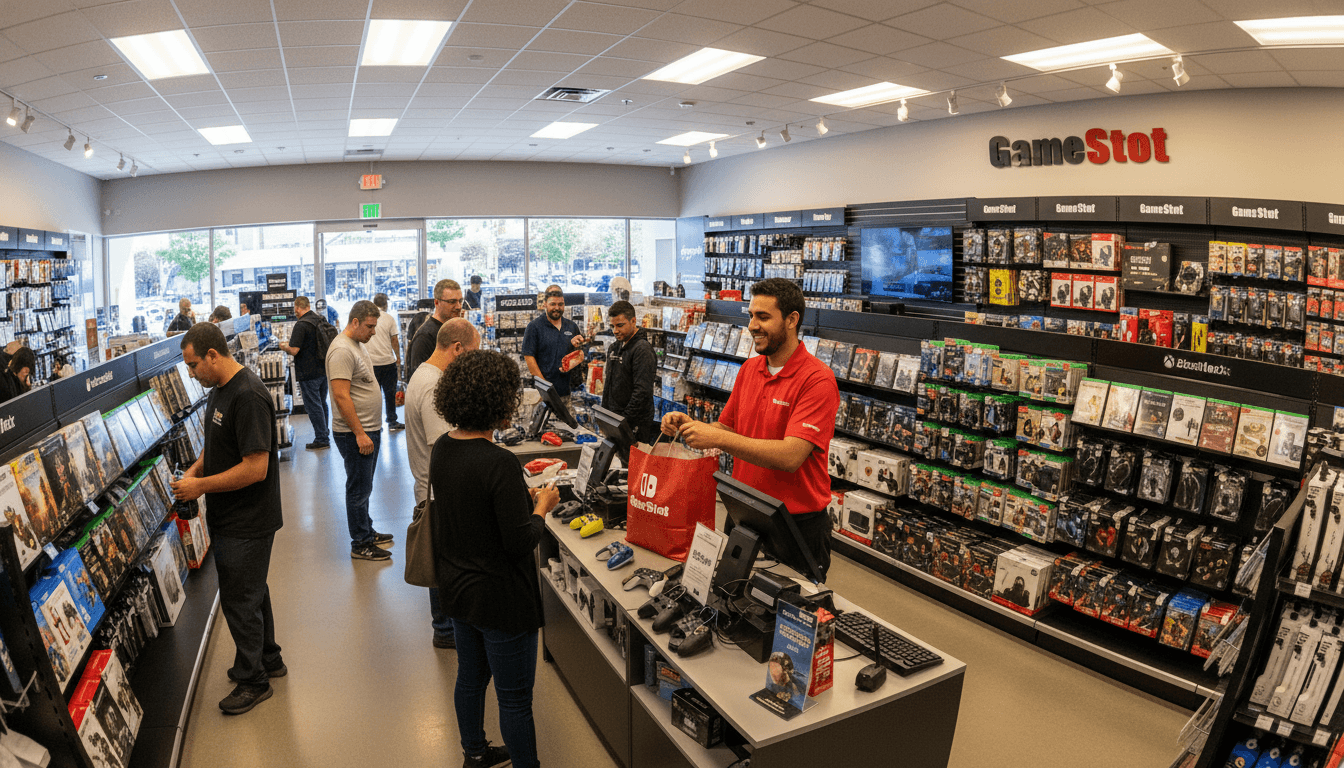
GameStop stock jumps 7% today, Thursday, June 4, 2026, a significant surge following the company’s announcement of record profits and a substantial revenue spike. This unexpected uptick in GME’s share price signals a potentially pivotal moment for the embattled retailer, long a subject of intense market speculation and a bellwether for the evolving retail gaming landscape.
The Business Impact
The core of this financial resurgence lies in GameStop’s recent quarterly performance. While specific figures were not detailed in the initial TradingView report, the characterization of ‘record profits’ and a ‘revenue spike’ suggests a strong operational turnaround. For a company that has grappled with the shift to digital distribution and intense competition from online retailers and big-box stores, such an announcement is a testament to strategic adjustments or perhaps unforeseen market dynamics. The 7% stock jump on the news immediately added significant market capitalization, rewarding investors who have held onto GME shares through its volatile history.
This positive financial news could be attributed to several factors. It might reflect successful diversification into new product categories, a revitalization of its brick-and-mortar experience, or a more effective e-commerce strategy. The gaming industry has seen a resurgence in physical collectibles and merchandise, an area where GameStop could leverage its established retail footprint. Related gaming articles often highlight the ongoing debate between digital convenience and the enduring appeal of physical goods for certain segments of gamers.
Market Dynamics and Industry Context
GameStop’s recent performance reverberates beyond its own balance sheet. The gaming retail sector has been undergoing significant transformation. Digital storefronts from platform holders like Sony, Microsoft, and Nintendo, alongside PC giants like Steam and Epic Games, continue to dominate game sales. However, the physical retail space, while diminished, still plays a role, particularly for console hardware, accessories, and a niche market for physical game collectors. This GameStop stock jumps 7% news could indicate a potential shift in this equilibrium, suggesting that a well-executed strategy can still yield substantial returns in a challenging environment.
“The market’s reaction to GameStop’s record profits underscores the enduring power of brand recognition and strategic agility, even in the face of seismic industry shifts.”
Historically, GameStop has been synonymous with the physical game market, a model that faced existential threats as digital downloads became the norm. Its stock has been a focal point for retail investors, particularly during the ‘meme stock’ phenomenon of 2021, which saw unprecedented volatility. This latest surge, however, appears to be driven by fundamental business performance rather than speculative trading, indicating a more sustainable basis for growth.
What’s Next for GameStop
The immediate aftermath of this announcement will likely see increased scrutiny from financial analysts and investors alike. The key question now is the sustainability of these record profits and revenue spikes. Will GameStop be able to maintain this momentum? Future quarterly reports will be crucial in determining whether this is an isolated peak or the beginning of a sustained turnaround. Investors will be looking for details on what specific initiatives drove this growth, such as new product lines, enhanced customer loyalty programs, or improved supply chain efficiencies.
The company’s leadership will face pressure to articulate a clear vision for continued expansion and profitability in a rapidly evolving gaming ecosystem. This could involve further investments in its e-commerce platform, expansion into new categories like retro gaming or PC hardware, or even exploring unique in-store experiences that differentiate it from purely online competitors. The continued success of GameStop stock jumps 7% and beyond will depend heavily on these strategic decisions and their execution.
This significant stock jump and the underlying financial performance provide a compelling narrative within the gaming industry. It suggests that traditional retail, when strategically adapted, can still find a viable and profitable niche in an increasingly digital world. For investors and industry observers, GameStop’s journey remains a fascinating case study in resilience and adaptation, with this latest development marking a notable chapter in its ongoing story.