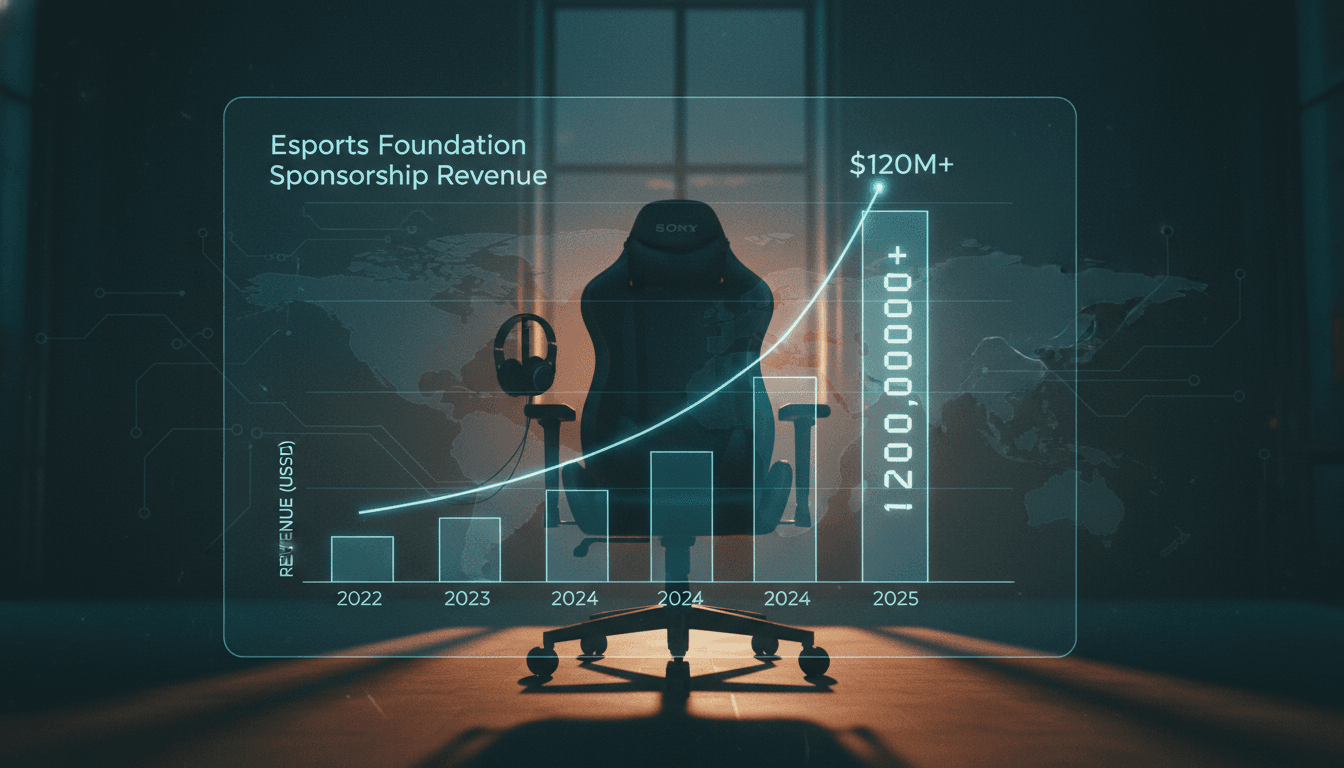
The Esports Foundation sponsorship revenue exceeded $120 million in 2025, a significant milestone for the organization behind the Esports World Cup. This impressive figure was disclosed by Mohammed Al Nimer, the company’s Chief Commercial Officer, during a recent interview with Sport Business Club, highlighting the escalating commercial viability of major esports events.
Al Nimer emphasized that sponsorship integrations remain a pivotal revenue driver for leading esports tournament operators. The Esports Foundation employs a tiered partnership model to maximize its commercial outreach. This includes ‘Global Partner’ status, which offers extensive worldwide exposure across all the foundation’s platforms and assets, demanding investments in the multi-million euro range. In contrast, ‘Regional Partners’ focus on specific geographical markets, such as China or the Middle East, tailoring their engagement to local audiences and market dynamics.
For the upcoming Esports World Cup in Paris, the French market presents a unique opportunity. Partnership packages for France are available at lower price points, typically in the hundreds of thousands of euros. This adjustment is due to the shorter preparation window for the event in the host nation. Despite this, Al Nimer noted strong interest from local brands and specialized agencies eager to collaborate with the organization, underscoring the broad appeal of esports even within specific national contexts.
Esports Foundation Sponsorship Revenue & Funding Model
The funding for the forthcoming Esports World Cup 2026 is entirely secured by the Esports Foundation itself. The financial strategy relies on a dual approach: robust commercial revenue streams and strategic governmental support. Commercial revenues encompass media rights, sponsorships, ticket sales, and merchandise. Crucially, Al Nimer clarified that the financial backing from the government of Saudi Arabia does not involve the country’s Sovereign Wealth Fund (PIF), a distinction that may address potential scrutiny regarding funding sources.
While the French government is not providing direct financial support, it is playing a crucial organizational role through a dedicated interministerial task force. This task force is instrumental in facilitating logistical aspects such as visas, marketing initiatives, and ensuring smooth venue access, demonstrating a commitment to the event’s success without direct monetary investment. The Esports Foundation’s substantial investment of €250 million into hosting the Esports World Cup in Paris further solidifies its commitment to establishing a premier global esports spectacle. This significant capital outlay is a testament to the scale and ambition of the event.
“Sponsorship integrations remain one of the primary revenue drivers for major esports tournament operators,” said Mohammed Al Nimer, Chief Commercial Officer of the Esports Foundation.
The growth in the Esports Foundation sponsorship revenue underscores a broader trend within the gaming industry: the increasing attractiveness of esports as a marketing platform for global brands. As esports viewership continues to expand, companies are recognizing the value in connecting with a highly engaged, often young and tech-savvy audience. This commercial validation is vital for the long-term sustainability and expansion of competitive gaming. Related gaming articles on our platform have frequently highlighted the escalating brand interest in this sector.
Market Impact and Future Outlook
This substantial sponsorship revenue figure signals strong investor confidence in the esports ecosystem, particularly in large-scale, international tournaments. For the broader gaming industry, it reinforces the narrative that esports is not just a niche entertainment segment but a burgeoning economic force capable of generating significant commercial returns. This financial health could attract further institutional investment, potentially leading to increased prize pools, enhanced production values, and greater professionalization across the entire esports landscape.
Looking ahead, the successful securing of over $120 million in sponsorship revenue positions the Esports Foundation favorably for future iterations of the Esports World Cup. The tiered partnership model, catering to both global and regional interests, demonstrates a sophisticated approach to commercialization that other tournament organizers may seek to emulate. The strategic blend of commercial revenue and governmental support, without reliance on sovereign wealth funds, could also set a precedent for how major international esports events are financed, balancing private sector investment with public sector facilitation.
The strong performance in sponsorship revenue for 2025 provides a robust foundation for the Esports World Cup 2026 in Paris. It signals the continued maturation of the esports industry as a legitimate and lucrative commercial venture, attracting significant corporate interest and paving the way for even grander spectacles.