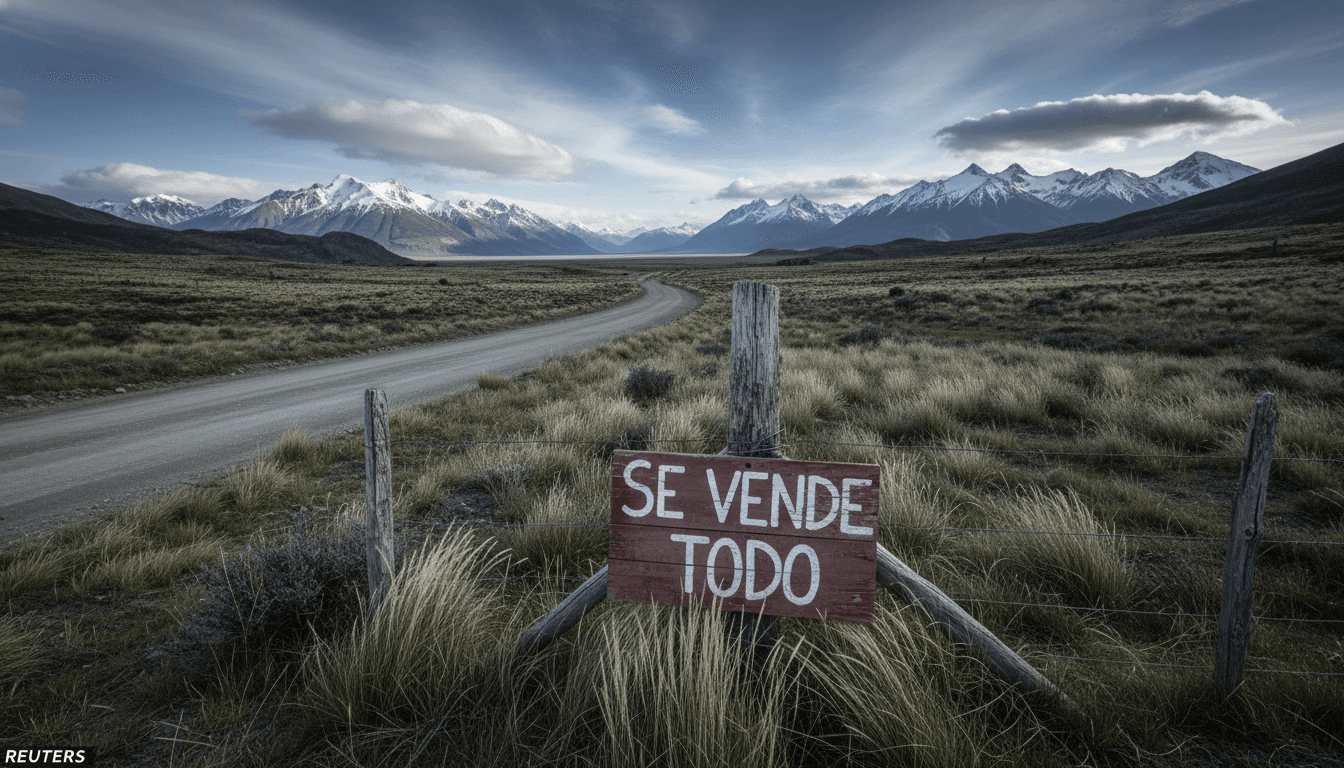
President Javier Milei proposes the unlimited sale of Argentine land to foreign investors, a controversial move detailed in a recent report by Naked Capitalism. This radical shift in policy aims to eliminate existing restrictions on foreign ownership, potentially unlocking billions in capital but also raising significant concerns about national sovereignty and territorial integrity.
Milei Seeks Unlimited Sale of Argentine Land
The Milei administration is actively seeking to overturn Law 26,737, enacted in 2011, which currently limits foreign land ownership to 15% of any given province. This law also restricts individual foreign owners to 1,000 hectares in core areas and prevents foreign nation-states from acquiring land in strategic zones like border security areas or those containing permanent bodies of water. The proposed deregulation, championed by Minister of Deregulation Federico Sturzenegger, promises to attract over $15 billion in foreign investment by removing these barriers.
However, this legislative push has already faced legal challenges. A previous attempt to eliminate Law 26,737 via a ‘Mega-Decree’ was halted by an injunction from the Malvinas Islands La Plata Center for ex-combatants, who argued that such a move poses a direct threat to Argentina’s territorial integrity and national sovereignty. The government’s renewed efforts indicate a strong commitment to this policy, despite widespread opposition.
Peter Thiel’s Argentine Interest and “Parallel States”
The timing of this proposed legislative change coincides with Peter Thiel’s temporary relocation to Argentina, sparking speculation about his motives. While various reasons have been floated, including Thiel’s alignment with Milei’s libertarian ideology and Argentina’s subservience to US and Israeli interests, the prospect of an unlimited sale of Argentine land emerges as a compelling factor. Investigative journalist Whitney Webb suggests that Argentina could become a testing ground for Thiel’s vision of “parallel states” or “network states,” where foreign entities operate with minimal government oversight.
“This is not a man running from the state; this is a man shopping for the next state to optimise…”
The precedent for such arrangements already exists in Argentina, as exemplified by British billionaire Joe Lewis’s acquisition of 13,000 hectares around Lago Escondido. Despite legal battles, Lewis effectively created a private enclave, controlling public access and even operating a private airport without federal government intervention. Thiel, a known proponent of charter cities and autonomous territories like Próspera in Honduras, could find Argentina’s vast, resource-rich landscape an ideal location to experiment with similar models, especially if the government allows the unlimited sale of Argentine land.
Economic Opportunity Versus National Sovereignty
The debate surrounding the unlimited sale of Argentine land pits the promise of economic revitalization against deeply rooted concerns about national sovereignty and the potential for foreign exploitation. Proponents argue that unrestricted foreign investment will stimulate growth across various productive sectors, bringing much-needed capital to Argentina’s struggling economy. They highlight the country’s abundant natural resources, including energy, lithium, and water, as attractive assets for global investors.
Conversely, critics warn that removing all limits on foreign ownership could lead to the large-scale acquisition of strategic territories by foreign corporations or even nation-states, compromising Argentina’s control over its own resources and borders. The historical context of foreign land accumulation, particularly in Patagonia, underscores these anxieties. The Milei government’s close alignment with the US and Israel, and its promotion of initiatives like the Isaac Accords, further complicates the geopolitical implications of such a policy.
Ultimately, the push for the unlimited sale of Argentine land represents a high-stakes gamble for the Milei administration. While it promises significant foreign capital, it also risks fundamentally altering Argentina’s economic and political landscape, with profound implications for its national identity and future trajectory.