
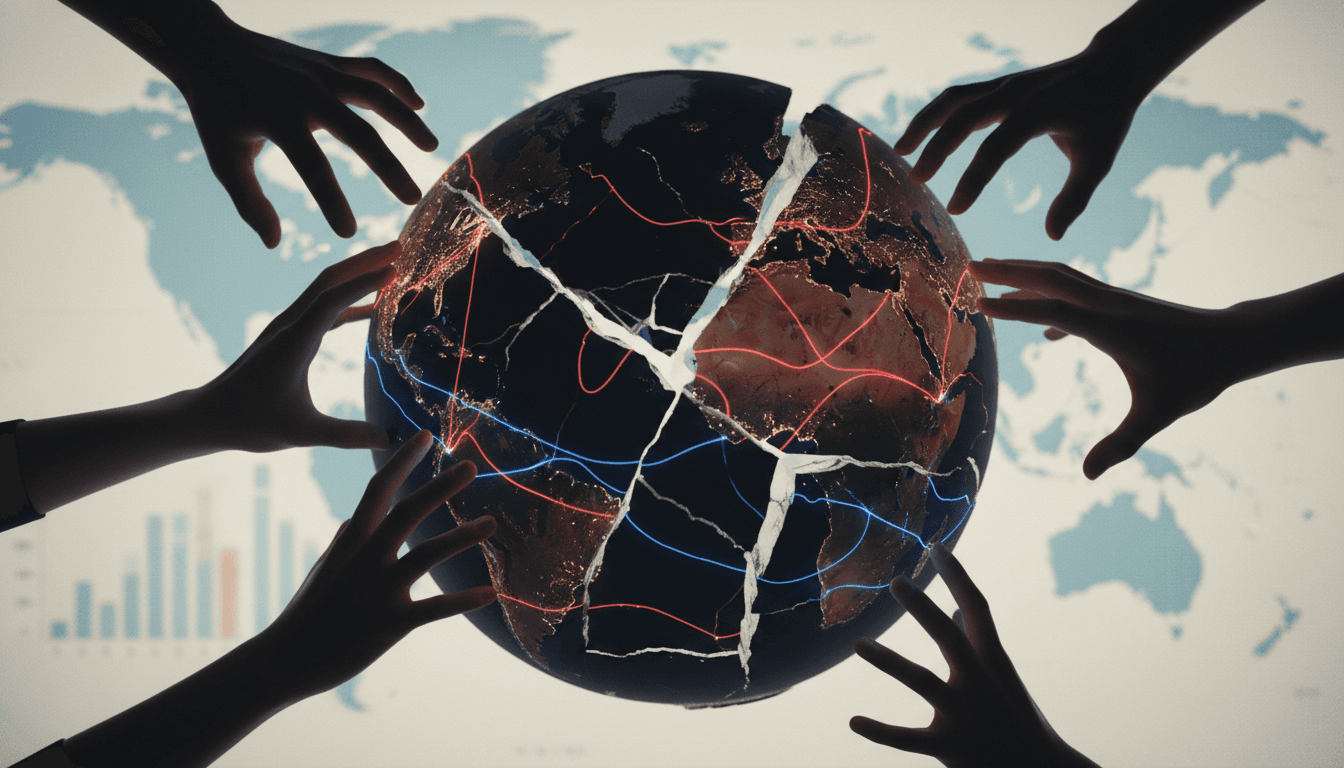
Michael Hudson defines ‘Geopathology’ and ‘Econopathology’ as critical modern diseases devastating societies and the global order, shedding light on the underlying pathologies driving reckless international and economic behaviors. In a recent analysis published by Naked Capitalism, Hudson, a distinguished research professor of Economics at the University of Missouri, Kansas City, and research associate at the Levy Economics Institute of Bard College, dissects the mechanisms behind what he describes as a systemic breakdown of global ethics and economic reciprocity.
Hudson’s insights arrive as America’s 2025 National Security Strategy reportedly aims to control the world’s oil trade, exemplified by actions against Iran, Iraq, and Venezuela. This aggressive posture, he argues, mirrors the clinical definition of a sociopath: a consistent disregard for right and wrong, indifference to others’ rights and feelings, and a lack of remorse. This diagnosis, Hudson suggests, can be applied to nations pursuing empire through conquest, with U.S. foreign policy pushing these tendencies to new extremes.
Understanding Geopathology and Econopathology
The disregard for international law, from the UN Charter to maritime regulations, forms a core tenet of Hudson’s critique. He highlights how American weaponry and missile systems are deployed in regions like Ukraine and the Middle East, serving what he terms as ‘religious and ethnic genocide’ through client armies. This behavior, reminiscent of former President Trump’s ‘impulsive, aggressive and manipulative demands,’ fundamentally violates international norms established by treaties like the 1648 Treaty of Westphalia.
“America’s 2025 National Security Strategy calls for gaining control of the world’s oil trade… Such reckless (and wreckful) behavior conforms to the letter of what psychologists call a sociopath.”
Hudson draws parallels between U.S. foreign policy and the predatory tactics of a real estate developer, where fines and penalties are mere costs of doing business, and contracts are broken with impunity. This ‘natural kinship’ extends to the financial and real estate magnates who, along with ambitious politicians, are reducing a vast segment of the U.S. population to debt dependency. The fear driving these actions, both domestically and internationally, is a perceived threat to control – whether it’s foreign independence from U.S. trade dominance or the potential for government regulation to limit the concentration of wealth among the ‘rentier’ One Percent. This relentless pursuit of power, often celebrated as progress, leads to economic polarization and societal decadence, mirroring the fall of empires like Rome. For more context on such economic trends, explore our related Finance news.
The Core of Global Fracture and Civilizational War
To articulate these modern maladies, Hudson introduces two crucial terms: Geopathology and Econopathology. Geopathology describes the abusive conduct of international relations, where a unilateral double standard is imposed, injuring and victimizing other countries. It is, in essence, the defining characteristic of imperialism. Econopathology, on the other hand, is the doctrine that defends the absence of social empathy, rooted in a ‘greed is good’ libertarian individualism that rejects any government constraint on unlimited self-interest. This ideology undermines the foundational principles of reciprocity and mutual aid that enabled early civilizations to flourish.
Hudson argues that civilization could not have advanced if it had adopted the neoliberal tenets of figures like Margaret Thatcher or Milton Friedman. Early societies thrived on mutual aid, protecting citizens from debt bondage and land loss – luxuries that today’s polarized economies can ill afford. The addiction to wealth and power, while natural drives, requires societal checks and balances, a concept recognized by ancient Greek philosophers like Socrates and Aristotle. However, democracies often devolve into oligarchies, which then seek to ‘free’ kindred oligarchies from public regulation, both domestically and internationally. This exacerbates the global threats posed by these pathologies.
Addressing Societal Pathologies in a Multipolar World
The challenge lies in coping with these embedded pathologies. Hudson asserts that sociopathology, econopathology, and geopathology are not self-curing. Ancient societies had mechanisms, like cities of refuge, to address such behaviors. Today, the U.S. foreign policy, shaped by eighty years of neoliberal anti-government doctrine, actively resists diplomatic and domestic economic reform. The urgent task for the ‘Global Majority’ is to forge an alternative multipolar system of international institutions and alliances based on mutual aid and respect for autonomy.
This requires not only an alternative doctrine to neoliberalism but also a re-establishment of fundamental international laws. Crucially, Hudson notes that for the first time since 1945, a critical mass of countries exists to establish these new institutions, offering a path to protect their collective autonomy and sovereignty against the pervasive influence of geopathology and econopathology. Understanding these deep-seated issues is vital for navigating the complex financial landscape of today.


