A gold-fueled mining rush scars Brazil’s Amazon, spiking deforestation and mercury risks across critical ecosystems, as reported on Monday, June 8, 2026. This surge in illicit and often unregulated gold extraction is accelerating the destruction of the world’s largest rainforest, threatening biodiversity, indigenous communities, and global climate stability.
The Gold-Fueled Mining Rush
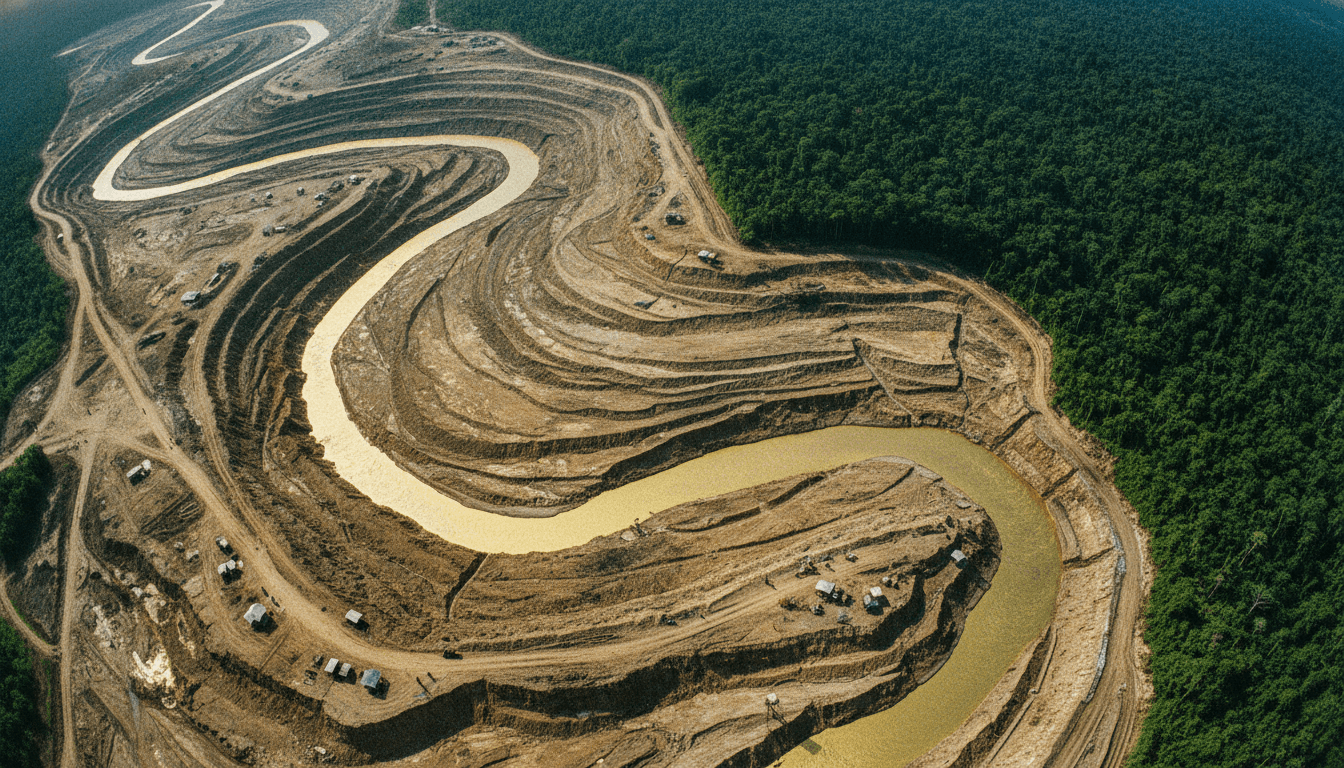
The current gold-fueled mining rush involves a complex web of small-scale miners, often operating illegally, driven by rising gold prices and a perceived lack of enforcement in remote Amazonian regions. These operations typically employ rudimentary and highly destructive methods, including the use of mercury to amalgamate gold, which then contaminates rivers and soil. The scale of this activity is significant, leading to widespread environmental degradation. While specific actors are not named in the source, the collective impact points to a decentralized but powerful force reshaping the Amazonian landscape.
The immediate consequence of this surge in mining is a dramatic increase in deforestation. Miners clear vast tracts of forest to access mineral deposits and to create infrastructure such as makeshift airstrips and roads. This habitat loss directly impacts countless species, many of which are endemic to the Amazon and already endangered. Furthermore, the practice of diverting rivers and excavating riverbeds disrupts hydrological cycles, leading to erosion and further ecosystem collapse.
Impact Analysis: Deforestation and Mercury Risks
The environmental ramifications of this gold-fueled mining rush extend far beyond the immediate sites of extraction. Deforestation in the Amazon has profound implications for global climate regulation. The rainforest acts as a massive carbon sink, absorbing vast amounts of atmospheric carbon dioxide. Its destruction releases stored carbon, contributing to greenhouse gas emissions and accelerating climate change. Scientists warn that continued deforestation could push the Amazon past a critical tipping point, transforming parts of it into a drier, savanna-like ecosystem, with irreversible consequences for global weather patterns and biodiversity.
Beyond deforestation, the widespread use of mercury presents a severe public health and ecological crisis. Mercury, a potent neurotoxin, is released into rivers and the atmosphere, contaminating water sources and entering the food chain. Fish, a primary food source for many indigenous communities and local populations, accumulate mercury, leading to biomagnification as it moves up the trophic levels. Consumption of contaminated fish can cause severe health problems, including neurological damage, developmental disorders in children, and kidney failure. Indigenous communities, who rely heavily on river systems for sustenance and transport, are particularly vulnerable to these mercury risks. Related environment & climate articles have frequently highlighted the disproportionate impact of environmental degradation on vulnerable populations.
“The unchecked expansion of gold mining in the Amazon represents a dual crisis: a direct assault on biodiversity through deforestation and a silent poisoning of ecosystems and communities through mercury contamination,”
one expert might note, emphasizing the intertwined nature of these threats.
Context & Background
Brazil’s Amazon has long been a battleground for environmental protection against economic exploitation. Historically, periods of economic instability or high commodity prices have often correlated with increased illegal mining activity. Enforcement efforts by Brazilian authorities have varied over time, often influenced by political shifts and resource allocation. The vastness and remoteness of the Amazon make policing illegal operations incredibly challenging, allowing miners to operate with a degree of impunity. This current gold-fueled mining rush underscores a persistent challenge in balancing economic development with environmental stewardship in resource-rich regions.
Previous attempts to curb illegal mining have included military operations, satellite monitoring, and legal frameworks designed to protect indigenous lands and conservation units. However, these measures have often been insufficient to stem the tide of illegal operations, particularly when gold prices are buoyant. The international demand for gold, coupled with its status as a safe-haven asset during global uncertainties, provides a continuous incentive for illicit mining, making it a lucrative, albeit destructive, enterprise.
What’s Next
The immediate future will likely see continued pressure on Brazil to strengthen its environmental enforcement and implement more effective strategies to combat illegal mining. International scrutiny and pressure from environmental organizations will undoubtedly play a role in advocating for stronger protections. There is a critical need for innovative solutions that combine robust monitoring technologies with on-the-ground enforcement and sustainable economic alternatives for local communities. Policy decisions regarding land use, indigenous rights, and environmental licensing will be crucial in determining the trajectory of the Amazon’s future. The global community will be watching for any new initiatives or shifts in governmental policy that could either exacerbate or mitigate the current crisis. For more insights on global environmental policy, visit our section on global environmental policy.
Key Takeaway
The gold-fueled mining rush in Brazil’s Amazon is a stark reminder of the complex interplay between economic forces, environmental degradation, and human health. The accelerating deforestation and rising mercury risks are not merely local issues; they represent a significant threat to global climate stability, biodiversity, and the well-being of indigenous populations. Addressing this crisis requires a concerted effort from national governments, international bodies, and civil society to enforce environmental laws, promote sustainable development, and protect one of the planet’s most vital ecosystems from irreparable harm.