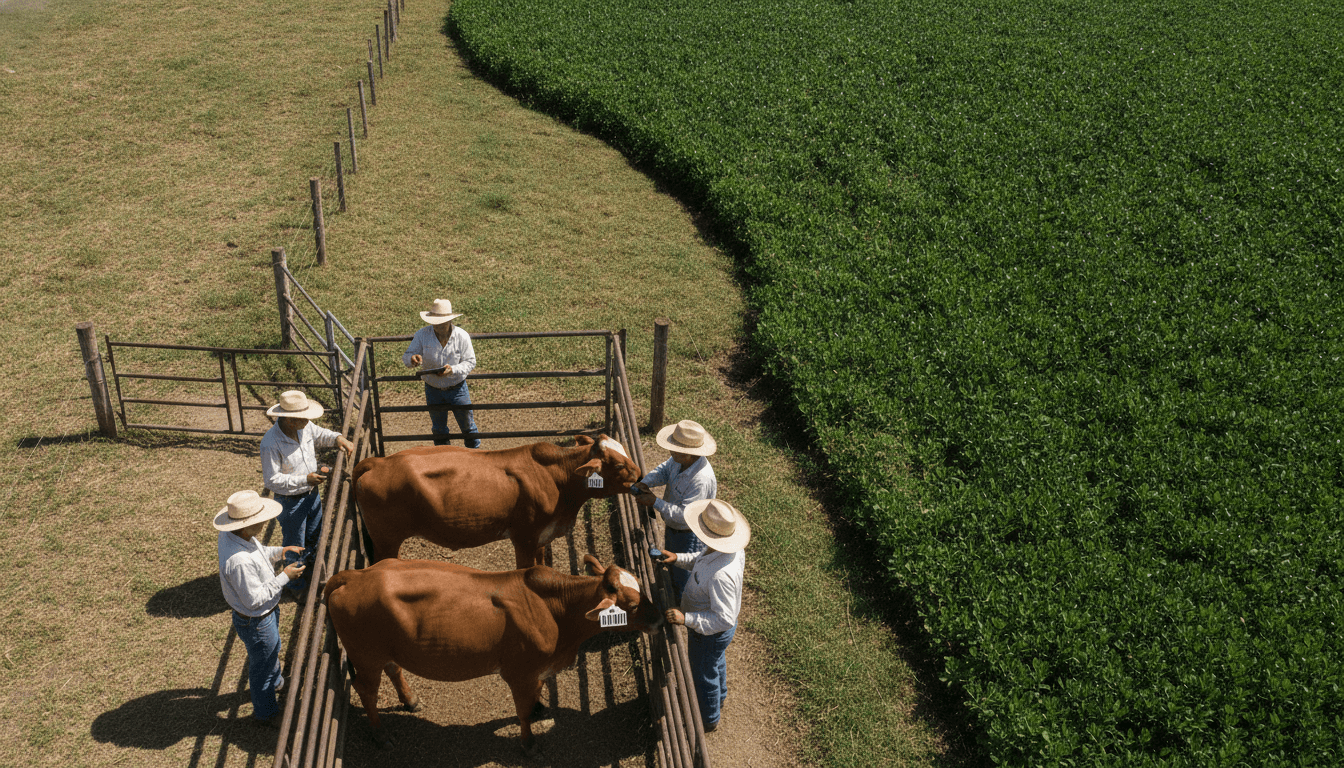
Colombia approves cattle traceability law, a landmark move set to combat illegal deforestation driven by agricultural expansion. The legislation, passed on Wednesday, June 10, 2026, marks a significant step in the nation’s efforts to protect its vital Amazon rainforest and other biodiverse ecosystems from the persistent threat of cattle ranching.
This new law mandates a comprehensive system for tracking cattle from birth to slaughter, aiming to sever the link between livestock supply chains and illegally deforested land. By establishing clear accountability, the Colombian government intends to prevent products from environmentally destructive practices from entering domestic and international markets. This initiative is particularly crucial given that cattle ranching is widely recognized as the primary driver of deforestation in the Colombian Amazon.
Impact Analysis
The implementation of Colombia’s cattle traceability law is expected to have far-reaching implications for both environmental conservation and the nation’s agricultural sector. Environmentally, it provides a powerful tool to curb the rapid loss of forest cover, which is critical for carbon sequestration, biodiversity preservation, and indigenous communities. The Amazon rainforest, a global ecological treasure, has faced relentless pressure from land clearings for pasture, often conducted illegally and with devastating consequences for local ecosystems.
Economically, the law could reshape the beef industry, pushing producers towards more sustainable practices. While it may initially present compliance challenges for smaller farmers, it also offers an opportunity for Colombian beef to gain a competitive edge in markets increasingly demanding ethically and sustainably sourced products. International buyers and consumers are becoming more discerning, and a robust traceability system can enhance the reputation and market access for Colombian agricultural exports. Furthermore, this move aligns Colombia with global efforts to achieve net-zero emissions and meet international climate commitments, positioning the nation as a leader in sustainable land use within Latin America.
“This legislation is not just about tracking cows; it’s about tracking responsibility. It’s a clear signal that Colombia is serious about protecting its natural heritage and holding actors accountable for environmental degradation.”
The law also sets a precedent for other countries grappling with similar issues, particularly those in the Amazon basin. Success in Colombia could inspire similar legislative actions elsewhere, creating a regional push towards more sustainable agricultural practices and stronger environmental governance.
Context & Background
Deforestation in Colombia has been a persistent and complex challenge, exacerbated by decades of internal conflict, illicit crop cultivation, and the expansion of the agricultural frontier. Cattle ranching, in particular, has been a dominant force, with vast tracts of forest cleared to create grazing land. This has led to significant biodiversity loss and a substantial increase in greenhouse gas emissions.
Previous efforts to combat deforestation have included protected areas, forest monitoring programs, and international aid initiatives. However, the lack of a robust, enforceable system to track agricultural products has often undermined these efforts, allowing illegally sourced goods to enter supply chains. The new cattle traceability law directly addresses this critical gap, aiming to create a transparent system that can identify and penalize those engaged in illegal deforestation. This legislative action reflects a growing national and international awareness of the urgent need to protect the Amazon, often referred to as the ‘lungs of the Earth’. For more insights into regional conservation efforts, see our related environment & climate articles.
What’s Next
The immediate next steps involve the development and implementation of the technical infrastructure required for the cattle traceability law. This will include establishing databases, training personnel, and engaging with ranchers across the country to ensure compliance. The government will need to work closely with industry stakeholders, environmental organizations, and local communities to ensure the law is effectively enforced and does not inadvertently harm small-scale farmers who are not involved in illegal activities.
Monitoring and enforcement will be crucial for the success of this initiative. Challenges may arise in remote areas, where illegal activities are harder to track, and from potential resistance within sectors of the cattle industry. International partnerships and financial support could play a significant role in bolstering Colombia’s capacity to implement and sustain this ambitious program. Future decisions will likely focus on refining the system, addressing any unforeseen loopholes, and expanding its scope to cover other agricultural commodities linked to deforestation.
Key Takeaway
Colombia’s new cattle traceability law represents a powerful and practical strategy to tackle illegal deforestation. By targeting the economic drivers behind forest destruction, it offers a tangible pathway towards more sustainable land use and a healthier planet. Its success will not only benefit Colombia’s environment and economy but also serve as an important model for global efforts to combat climate change and protect vital ecosystems.