Amid escalating global instability, Ukraine decentralised renewables are emerging as a critical solution to the persistent fossil fuel crisis cycle. As geopolitical tensions, exemplified by the recent war involving Iran, send shockwaves through global energy markets, communities in war-torn Ukraine are actively pioneering independent, decentralised clean energy networks, offering a profound lesson in resilience and self-sufficiency for the rest of the world.
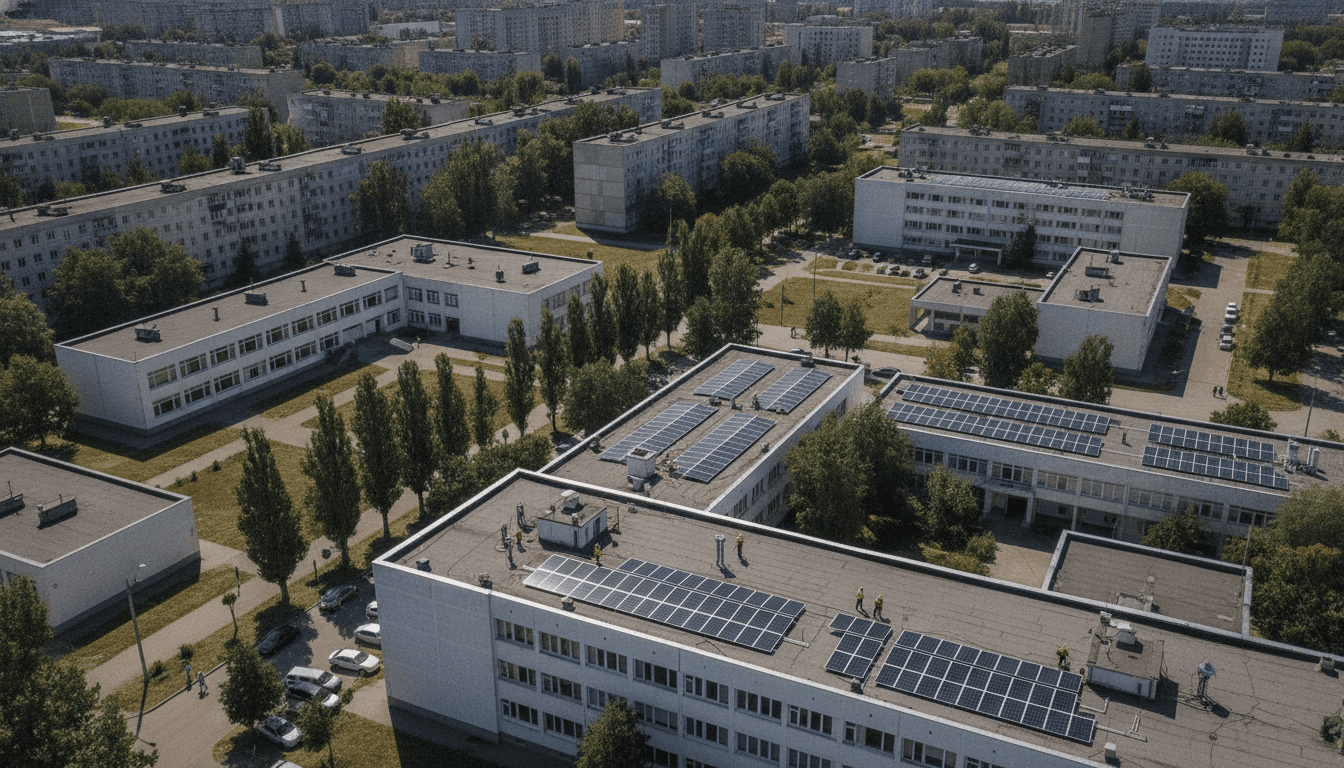
This transformative shift is most poignantly illustrated in Slavutych, the city purpose-built for those displaced by the 1986 Chornobyl nuclear disaster. Decades after that catastrophe, this community has forged Ukraine’s first municipal solar cooperative, installing crowd-funded solar arrays on public rooftops. This initiative not only reclaims local economic power but also provides a tangible model for energy autonomy in the face of external threats. Similar distributed networks are proliferating across the nation, from the solar-and-heat-pump reconstruction of the Horenka primary care clinic to the resilient power-sharing models of the Kyiv Green Apartment Building Association and the Trostyanets multi-apartment building reconstruction project.
Perhaps the most significant commitment to this new energy paradigm comes from Chortkiv, which became the first city to sign the Gas-Free Cities Declaration on May 26, 2026. This historic move signifies a complete phase-out of fossil gas, actively severing dependence on a volatile global system in favor of community resilience, safety, and long-term economic prosperity. These pioneer projects in Ukraine underscore a fundamental truth: decentralised renewable energy is not merely a climate solution but a foundational global security imperative.
Fossil Fuel Systems Engineered for Crisis
While Ukrainian municipalities build robust local resilience, much international commentary continues to frame modern energy crises as isolated incidents. However, the issue is deeply structural. The global reliance on hyper-centralised oil and gas infrastructure inherently exposes nations and households to constant, unmanageable risks. The current economic shocks emanating from the war involving Iran vividly demonstrate this vulnerability. Gas prices have surged across European capitals, and energy-importing nations in Africa and Asia are bearing the brunt, facing energy rationing, mandated power cuts, and even restrictions on household cooking gas. This volatility directly impacts domestic budgets, forcing families to navigate soaring utility bills alongside rising food costs. This disruption is not a flaw in the fossil fuel system; it is, in fact, the predictable outcome of its design.
For decades, the public has been presented with a corporate narrative that fossil gas acts as a reliable “bridge fuel” to stabilize energy networks. Yet, history consistently reveals a pattern of cyclical crises. From the 1970s OPEC oil embargoes to the global price spikes triggered by Russia’s full-scale invasion of Ukraine in 2022, and modern supply crunches around the Strait of Hormuz, global commodity prices predictably skyrocket whenever geopolitical hostility erupts. These are not disparate events; they are recurring symptoms of an energy system built around two core vulnerabilities.
“The moment geopolitical hostility ignites, global financial markets immediately panic over potential supply cuts. Speculative trading floors violently spike global commodity prices before a single drop of fuel is even lost.”
First, physical infrastructure is inherently fragile. Fossil fuel systems depend on rigid, highly concentrated bottlenecks—vulnerable shipping choke points, international pipelines, and massive processing plants—which are prime military targets. This fragility was starkly evident in Ukraine, where Russian strikes systematically targeted centralized thermal power plants and the energy grid, plunging millions into darkness and leaving entire communities vulnerable. This demonstrates how easily a centralized energy architecture can be weaponized to trigger global financial panic.
Second, this physical fragility is directly converted into massive private wealth through corporate war profiteering. The system is engineered to capitalize on crises. During Russia’s full-scale invasion of Ukraine, for example, LNG suppliers aggressively exploited the supply shock as Europe phased out Russian pipeline gas. They outbid vulnerable regions and locked countries into expensive, decades-long contracts. These corporations do not absorb geopolitical shocks; instead, they immediately pass inflated costs to consumers. Consequently, while ordinary families face devastating energy poverty, fossil fuel corporations consistently register record-breaking windfall profits during wartime. The moment peace appears on the horizon, this profit machine stalls, as evidenced by the immediate tumble in oil giants’ shares when a ceasefire to pause hostilities was announced.
What’s Next for Ukraine Decentralised Renewables
The pioneering efforts in Ukraine provide a compelling blueprint for how nations worldwide can dismantle their dependence on volatile fossil fuel markets. The rapid adoption of Ukraine decentralised renewables, even amidst active conflict, showcases the resilience and strategic advantages of local, community-driven energy solutions. Future implications suggest that governments globally could learn from these models, investing in distributed renewable energy to enhance national security, stabilize household bills, and foster economic prosperity independent of unpredictable geopolitical events. The decisions made in the coming months by international bodies and individual nations regarding energy infrastructure investment will be critical in determining whether the world moves towards a more secure, decentralized energy future or remains tethered to the volatile fossil fuel cycle.
Key Takeaway
The Ukrainian experience unequivocally demonstrates that transitioning to decentralised renewable energy is not merely an environmental choice but a strategic imperative for global security and economic stability. By embracing local grids and community solar, nations can insulate their citizens from price spikes and war-fuelled crises, effectively ending the predictable volatility trap of fossil fuels and building a truly resilient energy future.