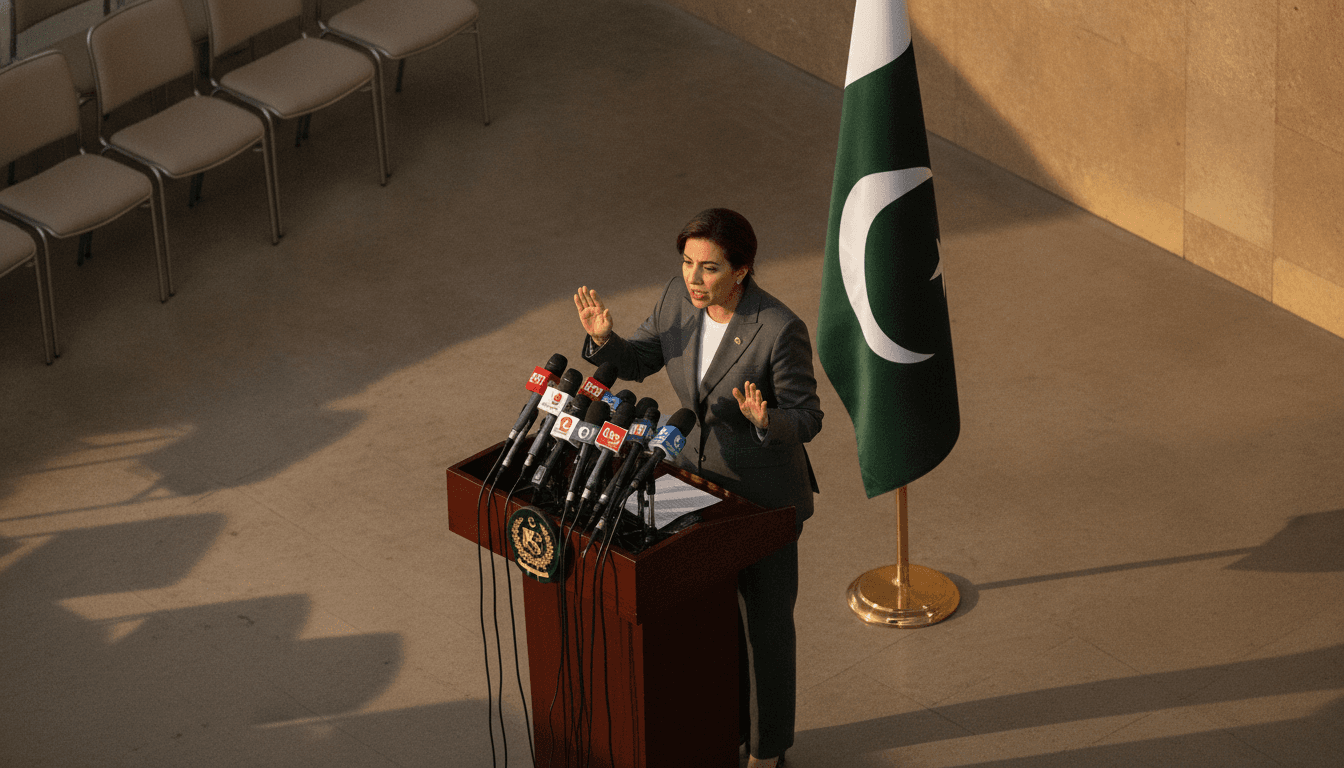
Pakistan rejects Indian remarks on Gilgit-Baltistan elections, signaling a renewed diplomatic spat over the disputed territory. The strong condemnation from Islamabad, reported on Sunday, June 7, 2026, by The Nation (Pakistan), underscores the deeply entrenched differences between the two nuclear-armed neighbors regarding the region’s political status and electoral processes. This latest exchange highlights the persistent tension that defines the India-Pakistan relationship, particularly concerning Kashmir and its surrounding territories.
The Story: Diplomatic Firestorm Over Gilgit-Baltistan Elections
The core of the recent dispute revolves around India’s commentary regarding the electoral proceedings in Gilgit-Baltistan. While the precise nature of India’s remarks was not detailed in the available source, Pakistan’s swift and unequivocal rejection indicates that Delhi’s statements were perceived as an infringement on its sovereignty and a challenge to the legitimacy of the electoral exercise in a region Pakistan considers its administrative territory. The elections themselves, held in Gilgit-Baltistan, are a recurring point of contention, with India consistently asserting its claim over the entire former princely state of Jammu and Kashmir, which includes Gilgit-Baltistan.
Islamabad’s response, as reported by The Nation, suggests a firm stance against any external interference in what it views as its internal affairs. Such rejections are a standard diplomatic maneuver in the long-running dispute, but their timing often provides insight into the current state of bilateral relations. The date of the report, Sunday, June 7, 2026, places this incident in a contemporary context, indicating that the issue of Gilgit-Baltistan remains a live wire in regional geopolitics.
Impact Analysis: Escalating Rhetoric in a Volatile Region
The rejection of Indian remarks on Gilgit-Baltistan elections carries significant weight for regional stability. Such diplomatic skirmishes, while not leading to immediate military confrontation, contribute to a broader atmosphere of distrust and antagonism. For international observers, this incident serves as a reminder of the fragility of peace in South Asia and the enduring challenges in resolving historical territorial disputes. The rhetoric surrounding Gilgit-Baltistan elections often mirrors the broader political temperature between India and Pakistan.
The ongoing dispute over Gilgit-Baltistan impacts not only bilateral relations but also has implications for regional development and connectivity initiatives, such as the China-Pakistan Economic Corridor (CPEC), which passes through the region. India has consistently voiced objections to CPEC projects in Gilgit-Baltistan, viewing them as an encroachment on disputed territory. This latest diplomatic friction could further complicate efforts to foster regional economic cooperation and stability.
“The persistent diplomatic friction over Gilgit-Baltistan underscores the deep-seated historical grievances that continue to shape the India-Pakistan dynamic, making any path to resolution exceptionally challenging.”
Context & Background: A History of Contested Claims
The status of Gilgit-Baltistan is intrinsically linked to the larger Kashmir dispute, a flashpoint since the partition of British India in 1947. Both India and Pakistan claim the entirety of the former princely state of Jammu and Kashmir. Gilgit-Baltistan, administered by Pakistan, is not officially integrated as a province due to its disputed status, but it enjoys a degree of autonomy. India, however, considers Gilgit-Baltistan an integral part of its union territory of Jammu and Kashmir.
Elections in Gilgit-Baltistan have historically been a source of diplomatic friction. When Pakistan holds elections or introduces administrative changes in the region, India routinely protests, reiterating its claim. Conversely, Pakistan condemns any Indian actions or statements regarding the Indian-administered Kashmir. This tit-for-tat diplomacy has been a consistent feature of their relationship for decades, with each side using these opportunities to reassert their territorial claims on the international stage. Related world news articles frequently cover these long-standing territorial disputes.
What’s Next: Continued Diplomatic Standoff
Looking ahead, the rejection of Indian remarks on Gilgit-Baltistan elections suggests that this particular diplomatic impasse is unlikely to be resolved swiftly. Future implications will likely include continued rhetorical exchanges, with both nations reiterating their positions in various international forums. There is little indication that either side is prepared to alter its fundamental stance on the territorial dispute. The focus will now shift to how India chooses to respond to Pakistan’s rejection, and whether this leads to further escalation in diplomatic statements.
For investors and businesses operating in the region, such political uncertainties can create an environment of cautious optimism at best, and significant risk at worst. The ongoing dispute over Gilgit-Baltistan elections and the broader Kashmir issue remain significant geopolitical risks in South Asia, influencing everything from trade routes to security postures. Further analysis of regional tensions will be crucial.
Key Takeaway: Entrenched Positions and Regional Instability
The latest diplomatic exchange, where Pakistan rejects Indian remarks on Gilgit-Baltistan elections, underscores the deeply entrenched positions of India and Pakistan on their territorial disputes. This incident is not an isolated event but a continuation of a long-standing pattern of diplomatic confrontation over Gilgit-Baltistan and the broader Kashmir issue. It highlights the persistent challenge in fostering genuine peace and cooperation in South Asia, with each nation’s actions and statements meticulously scrutinized by the other, contributing to an environment of enduring regional instability.