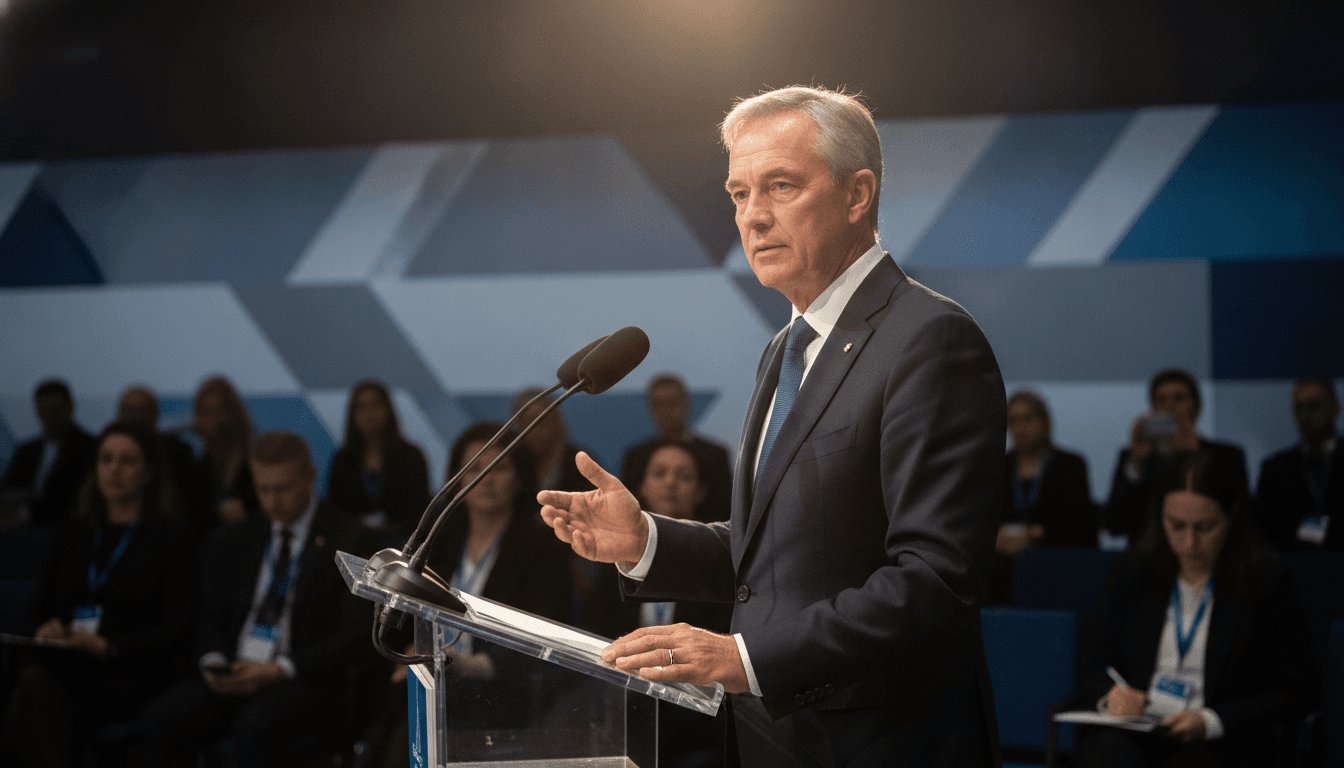
NATO lacks a victory strategy for Ukraine, a candid admission made by Admiral Rob Bauer, former Chair of NATO’s Military Committee, at the GLOBSEC forum in Prague. Speaking in an interview with Euromaidan Press on Monday, June 8, 2026, Bauer revealed that the alliance never explicitly framed its actions as aiming for a Ukrainian triumph, but rather as supporting Kyiv “for as long as it takes.” This revelation casts a stark light on the internal divisions and strategic ambiguities that have characterized Western support for Ukraine since the full-scale invasion.
Bauer’s remarks underscore a critical missed opportunity: had Ukraine received Western weaponry in the summer of 2022, the conflict might have concluded differently. By late spring and early summer of that year, Ukrainian forces had remarkably reclaimed half of the territories initially seized by Russia. However, protracted debates over arms deliveries allowed Russia ample time to construct extensive defensive fortifications, blunting the impact of later-arriving Western aid, including tanks, HIMARS systems, ATACMS, and F-16 fighter jets.
Impact Analysis: Acknowledging No Clear Path to Victory
The acknowledgment that NATO lacks a victory strategy for Ukraine has profound implications for the ongoing conflict and future geopolitical stability. It highlights the inherent challenges of consensus-based decision-making within a large alliance, where the diverse geopolitical interests and domestic political considerations of member states often impede swift, decisive action. Bauer specifically cited the positions of the U.S. administration, Hungary, and Slovakia as complicating factors in developing a coherent strategy. This fundamental structural issue within NATO directly contributes to the perceived lack of a clear path to victory.
Moreover, Bauer’s comments illuminate the delicate balance NATO has sought to maintain, avoiding direct military confrontation with Russia while providing substantial aid to Ukraine. He recalled Russia’s direct nuclear threats to Paris, London, and Washington in the fall of 2022, to which Western nations responded with a clear deterrent: U.S. forces would destroy Russian troops in Ukraine with conventional weapons if a nuclear strike occurred. This high-stakes brinkmanship underscores the careful tightrope walk NATO has undertaken, attempting to support Ukraine without triggering a broader, potentially nuclear, conflict.
Context and Background: The Evolving Landscape of Support
The debate over military aid timelines and strategic objectives has been a constant feature of the Ukraine conflict. From the initial reluctance to supply advanced weaponry to the eventual delivery of sophisticated systems, Western support has often been reactive rather than proactive. This incremental approach, while providing essential capabilities, may have inadvertently prolonged the conflict and allowed Russia to adapt. The former NATO Military Committee Chair’s insights confirm what many analysts have long suspected: the alliance’s strategy has been more about containment and attrition than a definitive win for Kyiv. The ongoing discussions about Ukraine’s integration into the European Union and NATO are presented by Bauer as crucial steps to rectify the “grave mistake” of excluding a nation with recent combat experience against Russia from these vital structures. This perspective suggests a longer-term vision for European security, even as the immediate military strategy remains undefined.
“It was never formulated as ‘we are doing this so Ukraine can win the war.’ It was also not formulated as ‘we are doing this so Russia loses this war.’ So the formulation became: ‘We will support Ukraine for as long as it takes,’” Bauer said.
This sentiment, articulated by Bauer, encapsulates the cautious and often ambiguous stance taken by many Western leaders, reflecting a desire to avoid direct confrontation while preventing a complete Russian victory. It also sets the stage for future policy debates within NATO regarding the ultimate goals of its support. While some, like General Hodges, express optimism about Ukraine’s potential to emerge as a leading defense power in Europe, Bauer’s admission highlights the current strategic void that needs to be addressed.
What’s Next: Charting a Path Forward Amidst Uncertainty
Admiral Bauer’s frank assessment that NATO lacks a victory strategy for Ukraine will undoubtedly fuel further discussions within the alliance about its long-term objectives and the nature of its commitment. The ongoing war necessitates a re-evaluation of current policies, potentially leading to more assertive strategies or a clearer articulation of what “victory” for Ukraine entails. Future decisions regarding military aid, economic sanctions, and diplomatic efforts will be scrutinized through the lens of this strategic ambiguity. The integration of Ukraine into European and transatlantic structures, as advocated by Bauer, remains a critical long-term objective, promising to reshape the continent’s security architecture. The coming months will likely see renewed pressure on NATO members to align on a more cohesive and outcome-oriented approach to the conflict, moving beyond the “as long as it takes” mantra to a more defined pathway for Ukraine’s success. Related world news articles frequently discuss these evolving dynamics.
Ultimately, the admission by a former high-ranking NATO official that the alliance lacks a clear victory strategy for Ukraine is a pivotal moment, forcing a critical examination of past decisions and future directions. It underscores the immense complexities of modern warfare, alliance politics, and the enduring challenge of confronting a nuclear-armed adversary. The strategic choices made in the wake of this revelation will not only determine the fate of Ukraine but also significantly influence the trajectory of European security and the broader international order for years to come.