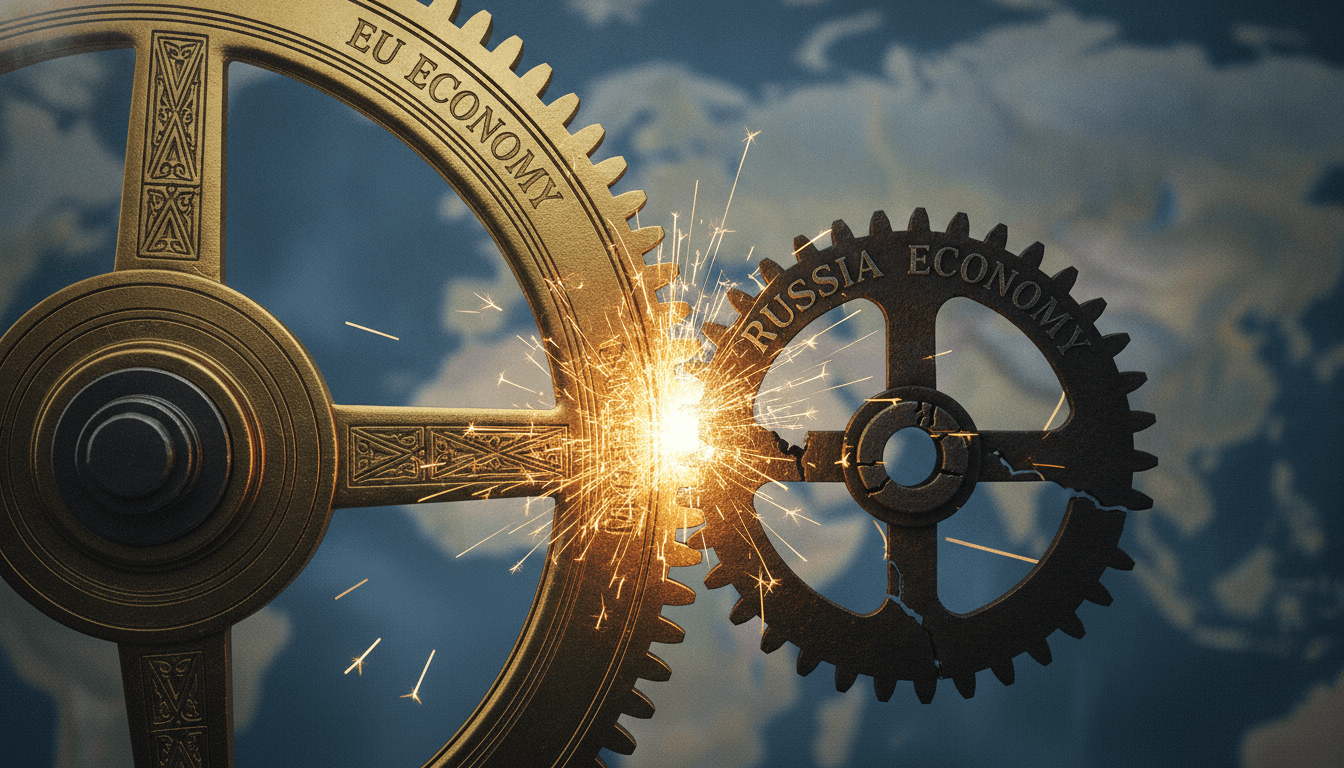
The European Union’s 21st sanctions push, announced Wednesday, June 10, 2026, marks a significant escalation in its efforts to cripple Russia’s war economy, raising critical questions about the efficacy and ultimate impact of such measures. This latest package, detailed by EUalive, signifies a deepening resolve within the bloc to tighten the screws on Moscow’s financial lifelines, aiming to constrict its ability to fund ongoing military operations.
The Story: Intensifying Economic Pressure
The latest punitive measures, comprising the 21st sanctions push, target key sectors of the Russian economy that continue to underpin its military capabilities. While specific details of the new restrictions were not fully enumerated in the initial report, the consistent application of sanctions over more than two decades indicates a strategy of incremental but sustained pressure. The EU’s approach has evolved from broad financial restrictions to more targeted measures aimed at specific industries, individuals, and entities deemed crucial to the Kremlin’s war machine. This ongoing effort involves a complex web of export controls, asset freezes, travel bans, and restrictions on access to international financial markets. The cumulative effect is intended to degrade Russia’s industrial base, limit its access to critical technologies, and diminish its foreign currency reserves.
Impact Analysis
The impact of this latest 21st sanctions push reverberates across the global economic landscape, particularly for European businesses and energy markets. While the immediate goal is to weaken Russia, the EU itself faces challenges in navigating the economic fallout, including inflationary pressures and the need to secure alternative energy supplies. The measures are designed to increase the cost of Russia’s war, making it increasingly difficult for the Kremlin to sustain its military efforts. However, the effectiveness of sanctions is often a long-term proposition, and Russia has demonstrated a capacity for economic resilience, often rerouting trade and forging new partnerships. The global south, in particular, has become a crucial avenue for Russia to circumvent some restrictions, highlighting the need for broader international consensus and enforcement. Related world news articles often discuss the complex interplay between sanctions and global trade dynamics.
Context & Background: A Long Road of Restrictions
The European Union’s journey of imposing sanctions on Russia began long before the current conflict, with initial measures introduced following the annexation of Crimea in 2014. These early sanctions were largely incremental, focusing on specific individuals and entities. However, the full-scale invasion in 2022 triggered an unprecedented wave of punitive actions, rapidly expanding the scope and severity of restrictions. Since then, the EU has consistently rolled out new packages, each designed to close loopholes, broaden the net, and increase the economic pain for Moscow. Previous rounds have targeted Russia’s banking sector, energy industry, defense complex, and key oligarchs. Despite these efforts, Russia’s economy has shown a degree of adaptability, partly due to high global energy prices in previous years and the ability to pivot trade towards non-sanctioning countries. The 21st sanctions push reflects the EU’s ongoing commitment to this strategy, even as it seeks to refine its approach for maximum impact.
“The persistent layering of sanctions, even after years, underscores the EU’s long-term strategic commitment to weakening Russia’s capacity for aggression, forcing a fundamental re-evaluation of its economic and geopolitical calculus.”
What’s Next: The Path Ahead
Looking ahead, the effectiveness of this 21st sanctions push will depend on several factors, including the vigilance of enforcement, the willingness of third countries to comply or cooperate, and Russia’s continued ability to adapt. The EU will likely continue to monitor Russia’s economic indicators closely, looking for signs of distress in key sectors like oil and gas revenues, technology imports, and industrial output. Future decisions could involve further targeting of specific industries, expanding the list of sanctioned individuals and entities, or increasing pressure on countries that facilitate sanctions circumvention. There is also an ongoing debate within the EU about the long-term strategy: whether to aim for complete economic collapse or a more sustainable degradation of Russia’s war-making capabilities. The geopolitical landscape will undoubtedly continue to shift, influencing the scope and nature of future sanctions. Another area of focus will be tracking the impact on global supply chains and commodity prices.
Key Takeaway: A Sustained Pressure Campaign
The 21st sanctions push by the EU against Russia’s war economy is not merely another round of restrictions; it represents a sustained, methodical pressure campaign designed to fundamentally alter Russia’s economic trajectory and its capacity for military action. While the immediate effects of each package may vary, the cumulative impact over time is intended to be profound. The enduring challenge for the EU and its allies remains ensuring rigorous enforcement and adapting to Russia’s countermeasures. The success of this strategy hinges on patience, unity, and a clear understanding that economic warfare is a long game, with far-reaching implications for global stability and the future of international relations.