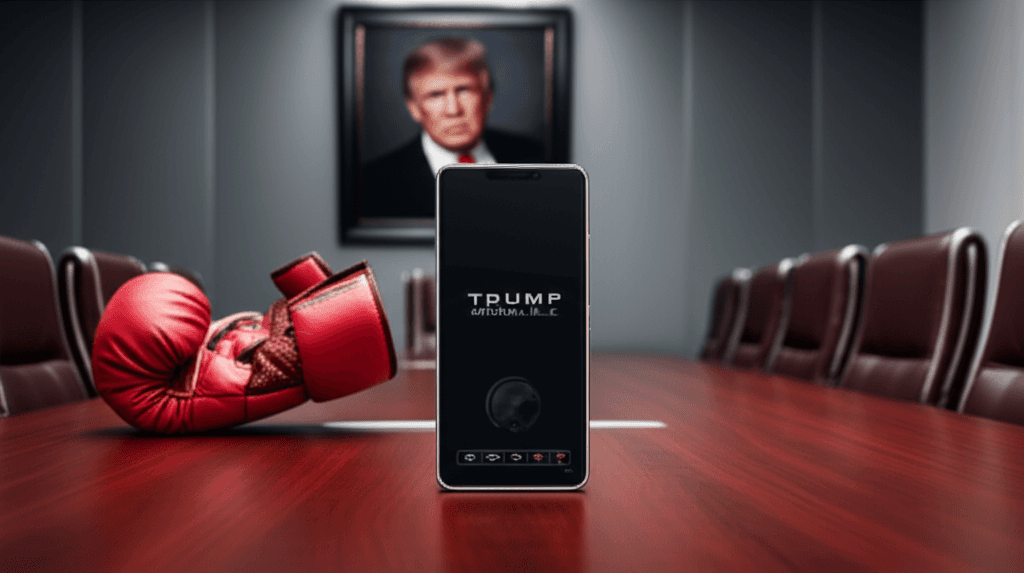
The surprising Trump Mobile origins can be traced back to an unexpected source: a partnership with a Mexican middleweight boxer. Before the Trump Mobile venture, there was Canelo Mobile, a similar project spearheaded by the same executives.
According to a recent report by The Verge, Don Hendrickson and Eric Thomas, key figures at Trump Mobile, initially tested their mobile network operator (MVNO) strategy with world champion boxer Canelo Álvarez five years prior. This revelation sheds light on the strategic thinking behind the Trump-branded phone and its target audience.
Trump Mobile’s Predecessor: Canelo Mobile
Canelo Mobile launched in May 2020, promising affordable Android phones, wide-ranging cell coverage, and perks like free international calling. The target demographic was the Mexican-American community in the United States. The service, like Trump Mobile, was powered by Liberty Mobile, an MVNO owned by Hendrickson, Thomas, and Pat O’Brien.
The Canelo Mobile phones, dubbed The Legend, The Champ, and The Contender, were rebranded handsets from Hotpepper, a budget phone manufacturer. While the hardware lacked Canelo branding, the software included pre-installed Canelo apps such as Broxel (a money-sending app), Álvarez’s I Can workout app, and CaneloRx (a platform for discount prescription drugs), mirroring Trump Mobile’s plans in the healthcare space. There are related Tech news on similar ventures.
“We’re in the razor blade business, we’re not in the razor business,” Hendrickson says, emphasizing that Trump Mobile’s business is selling mobile plans.
The Canelo Mobile venture appears to have faded out of existence by 2025, with its website and social media presence disappearing. However, it seemingly provided the blueprint for the Trump Mobile project, showcasing the potential of leveraging a celebrity brand to market mobile services.
Trump Mobile’s Hardware Ambitions
A key difference between Canelo Mobile and Trump Mobile is the emphasis on custom hardware. Trump Mobile claims to be more directly involved in the manufacturing process of its T1 Phone, with “final assembly” taking place in Miami. Hendrickson positions this as a way to differentiate the company from other MVNOs.
However, despite the focus on hardware, Hendrickson emphasizes that Trump Mobile is primarily an MVNO, with plans to expand its service offerings and international reach. The T1 Phone, according to Thomas, is simply “a tool that helps” acquire subscribers. The ultimate goal is selling mobile plans, not necessarily selling phones.
While Trump Mobile aims to offer value to its customers, some analysts question whether the T1 Phone and its associated plans are truly competitive in the current market. The phone’s specifications are comparable to other mid-range Android devices, and the company’s refurbished Apple and Samsung phones are considered overpriced.
The Future of Trump Mobile
The success of Trump Mobile remains to be seen. The failure of Canelo Mobile raises questions about the long-term viability of celebrity-endorsed mobile services. However, the Trump brand carries significant weight, and the company’s focus on building a loyal subscriber base could potentially lead to a different outcome. The Trump Mobile origins, rooted in a boxing star’s mobile venture, present an interesting case study in brand leveraging and market targeting.
Source: The Verge