Redwood Materials shifts focus with a strategic layoff of approximately 135 employees, or 10% of its workforce, as part of a significant restructuring to prioritize its rapidly expanding energy storage business. This pivotal move, reported by TechCrunch on April 21, 2026, underscores the company’s commitment to capitalizing on the surging demand for robust energy solutions.
The April 2026 layoffs are a direct response to the accelerated growth in energy storage requirements, particularly from power-hungry AI data centers and diverse commercial applications. This isn’t Redwood Materials’ first such adjustment; a smaller round of layoffs occurred in November 2025, affecting 5-6% of staff, including cathode material engineering roles, to reallocate resources towards critical minerals and energy storage initiatives.
Pivoting Towards Grid-Scale Power
Founded in 2017 by former Tesla CTO JB Straubel, Redwood Materials initially carved its niche by reclaiming and refining critical materials such as lithium, nickel, cobalt, and copper from used electric vehicle (EV) and consumer batteries. These recovered metals were then processed into new anode and cathode materials for battery manufacturers. However, the company has increasingly expanded its operations to repurpose these very batteries for large-scale, grid-connected energy storage systems.
This strategic pivot is evidenced by several key developments:
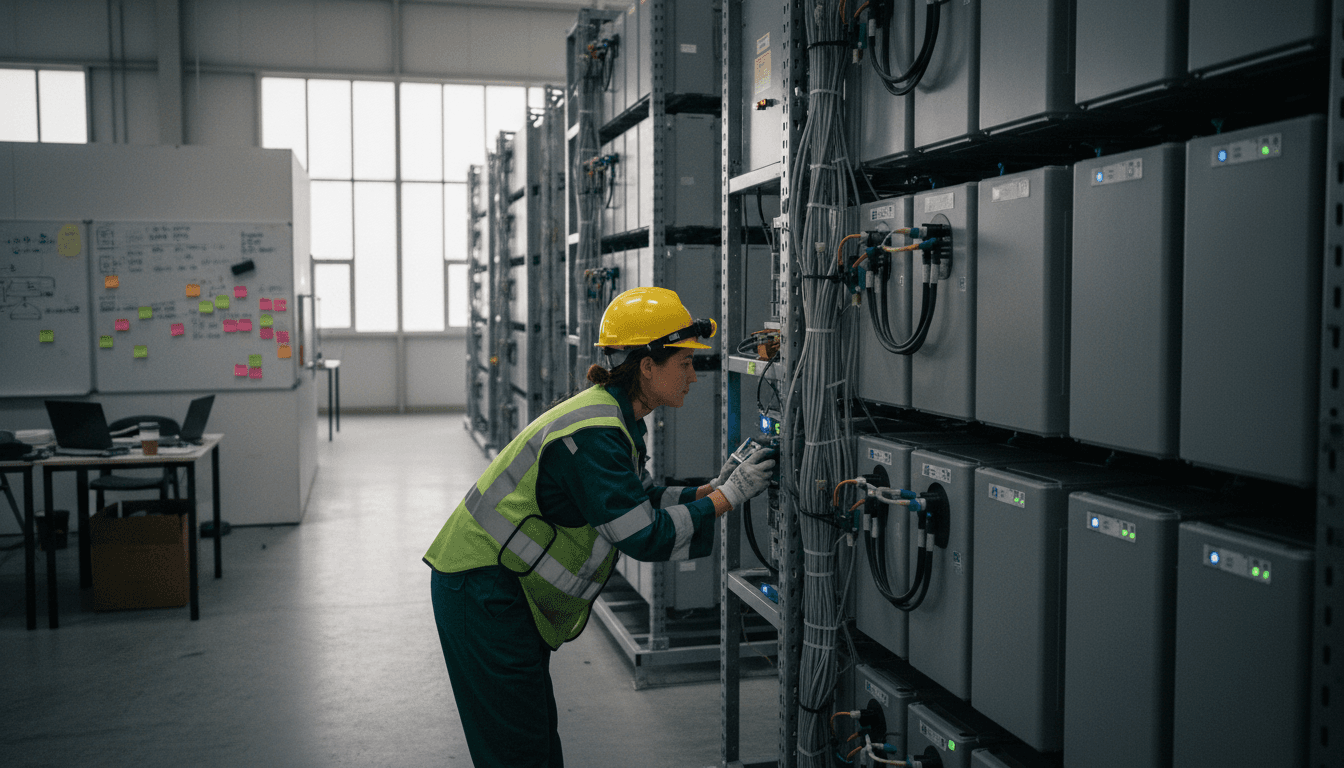
- Redwood Energy Launch: In June 2025, Redwood Materials introduced Redwood Energy, a dedicated business unit focused on assembling and deploying cost-effective stationary energy storage systems.
- Significant Funding Rounds: The company recently closed a Series E funding round, securing $425 million, with Google joining as a new investor alongside existing backers like Capricorn and Goldman Sachs Alternatives. This capital is earmarked to accelerate its energy storage platform and bolster its recycling and critical minerals business. Prior to this, in November 2025, Redwood Materials secured $350 million in Series E funding led by Eclipse Ventures and Nvidia’s NVentures, also aimed at expanding its energy storage operations.
- Strategic Partnerships: April 2026 saw Redwood Materials announce a partnership with EV manufacturer Rivian to deploy an energy storage system at Rivian’s Normal, Illinois plant. This innovative system will utilize over 100 second-life Rivian battery packs to provide 10 megawatt-hours of energy, designed to cut utility costs and reduce grid demand during peak periods. Furthermore, in July 2025, GM signed a non-binding agreement with Redwood Materials to expedite the deployment of stationary energy storage systems, leveraging both new modules and second-life EV batteries.
Redwood Materials Shifts Focus to Meet AI Demand
The company’s innovative strategy of repurposing EV batteries for energy storage is increasingly vital for addressing the escalating electricity demand, particularly from related Tech news AI and data centers, and for strengthening the U.S. energy infrastructure. This forward-looking approach positions Redwood Materials at the forefront of a critical industry. The company projects that by 2030, repurposed EV batteries could potentially supply up to 50% of the North American battery energy storage market.
“Redwood Materials’ strategic pivot highlights the immense potential of circular economy principles in addressing critical energy infrastructure needs, especially with the rise of AI data centers.”
In summary, Redwood Materials’ recent workforce adjustments and strategic investments underscore a clear and decisive shift towards dominating the energy storage sector. By leveraging its expertise in battery recycling and repurposing, the company is positioning itself as a crucial player in meeting the escalating global demand for sustainable and efficient energy solutions, particularly those driven by advanced technological infrastructure.