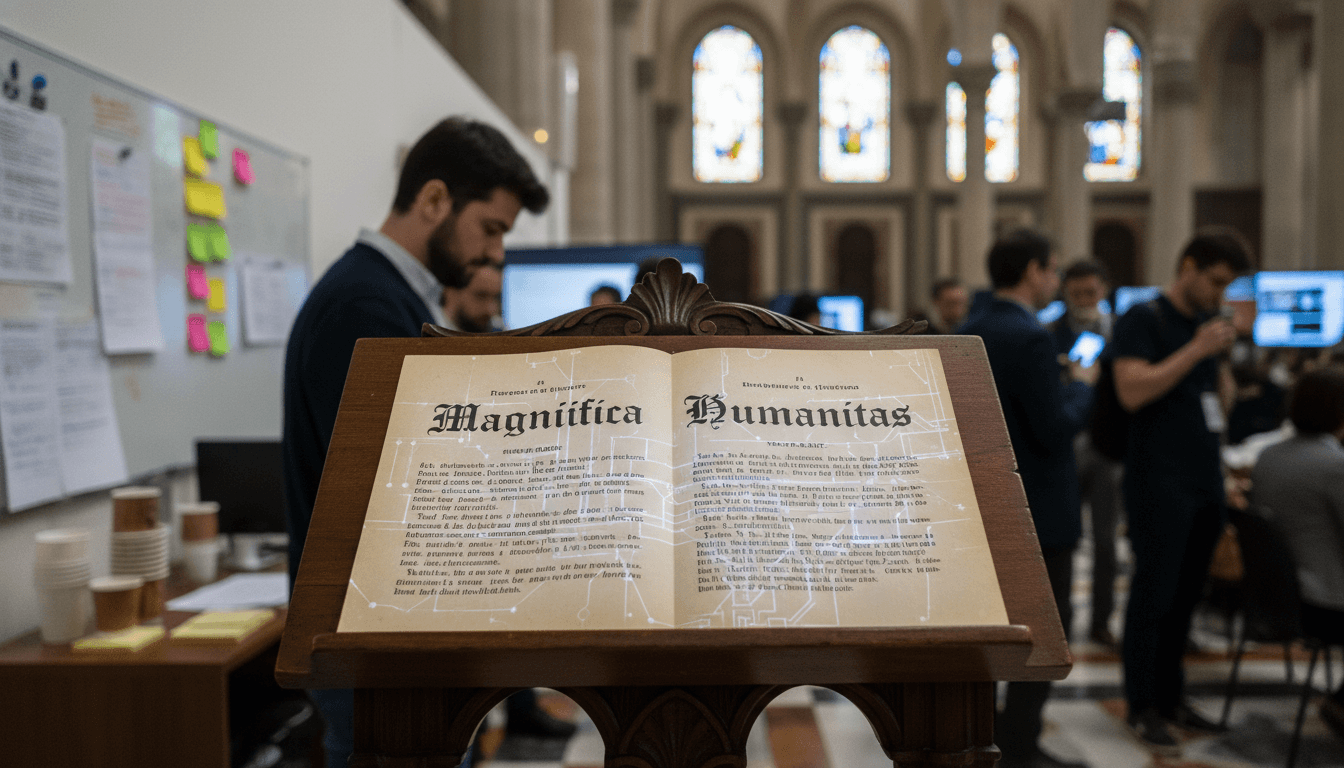
Pope Leo XIV’s AI encyclical, _Magnifica Humanitas_, has sparked a global debate regarding its authenticity, with analyses suggesting significant portions may have been generated by artificial intelligence. This revelation, first highlighted by Linch Zhang on LessWrong, casts a shadow over the Vatican’s first-ever encyclical specifically addressing the profound impact of AI on humanity, a document presented alongside Anthropic co-founder Christopher Olah.
The controversy stems from findings by popular AI detector Pangram, which flagged various sections of _Magnifica Humanitas_ as being between 40 percent and 100 percent AI-written. Zhang’s analysis pointed to stylistic anomalies, such as an unusually high frequency of the word “genuinely,” a known characteristic of writing produced by Anthropic’s Claude. Further independent checks, including one by The Verge, corroborated these findings, with up to 46 percent of the text exhibiting AI-generated traits.
Understanding the Implications of AI-Generated Papal Text
The potential use of AI in such a foundational religious document raises complex questions about authorship, spiritual authority, and the very nature of human expression in an increasingly automated world. While encyclicals are traditionally lengthy letters from the Pope, intended to guide the faithful on pressing moral and social challenges, the idea that AI could contribute to their composition presents a novel ethical dilemma. The Vatican has yet to issue a statement addressing these claims.
“The implications of AI influencing papal writings are profound, touching upon theological integrity and the future of human-divine communication.”
It is crucial to acknowledge that AI detection tools are not infallible. Different detectors can yield varied results, and false positives, though rare with respected tools like Pangram, are a possibility. Pangram itself reported a false positive rate of approximately 1 in 10,000 in March 2025. However, the stark contrast with previous encyclicals and Pope Leo’s own speeches – which Pangram confidently identified as 100 percent human-written – adds weight to the current suspicions surrounding _Magnifica Humanitas_.
The Broader Debate on AI and Authenticity
This incident transcends mere technological curiosity; it ignites a broader discussion about authenticity and trust in an age where AI can mimic human creativity and thought with increasing sophistication. For institutions built on millennia of human tradition and spiritual guidance, the integration, or even perceived integration, of AI into core communications presents an unparalleled challenge. As we navigate this evolving landscape, discerning the genuine from the generated becomes an ever more critical task across all sectors, from finance to faith.
The debate surrounding Pope Leo XIV’s AI encyclical serves as a potent reminder of the ethical frontiers we are rapidly approaching. It underscores the urgent need for clear guidelines and transparency regarding the use of AI in sensitive areas, ensuring that human intent and originality remain paramount.