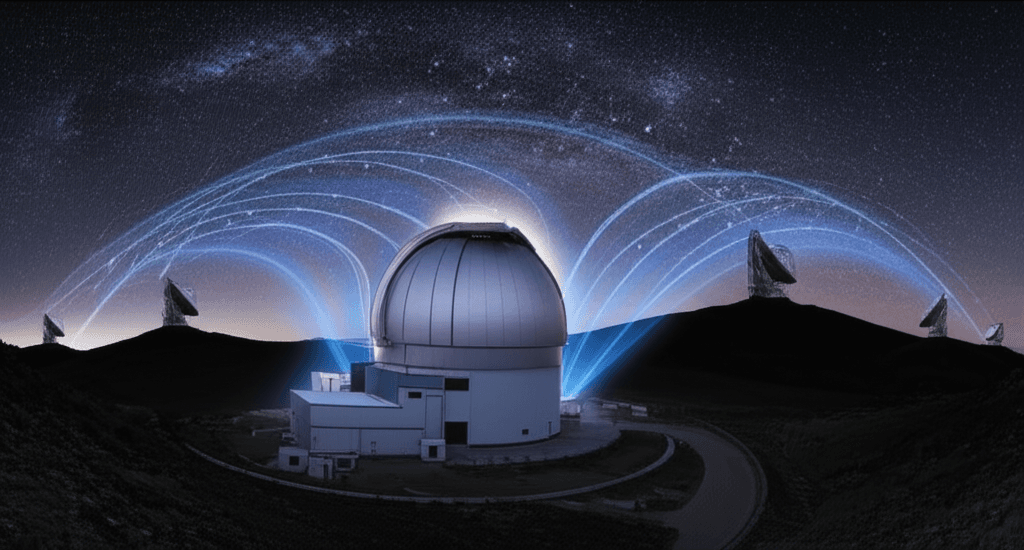
The **observatory alert system** is now live, and astronomers are being inundated with data after the Vera C. Rubin Observatory’s automated system went online. On its first night of public operation, Tuesday, February 24th, the system generated approximately 800,000 alerts about celestial events, including potential supernovas, approaching asteroids, and black holes. The number of alerts is expected to grow into the millions per night, presenting both a challenge and an opportunity for researchers.
The Vera C. Rubin Observatory, equipped with its massive Legacy Survey of Space and Time (LSST) camera, captures around 1,000 images nightly. These images are then compared to a reference image, and any differences are flagged. The system uses an algorithm to classify these differences, identifying potential supernovas or approaching asteroids, and issues alerts to interested parties within minutes. This rapid detection and notification process is designed to enable scientists to quickly investigate fleeting celestial phenomena.
The Significance of Rapid Alerts
The speed with which the **observatory alert system** operates is transformative. Traditionally, discovering and responding to transient astronomical events has been a slow and laborious process. Now, astronomers can receive near-instantaneous notifications, allowing them to mobilize resources and conduct follow-up observations in real-time. This capability is particularly crucial for studying events like supernovas, where the early stages of the explosion provide critical insights into the physics involved. The influx of data will also greatly increase our knowledge and understanding of Near Earth Objects.
Filtering the Data Flood
Recognizing the potential for alert fatigue, the Rubin Observatory has implemented sophisticated filtering mechanisms. Astronomers can customize their alert streams based on various criteria, including event type, brightness, and the frequency of events within a given time period. This allows researchers to focus on the events most relevant to their specific research interests, preventing them from being overwhelmed by the sheer volume of data. The **observatory alert system** is designed to be user-friendly, too.
The Future of Astronomical Discovery
The Rubin Observatory’s alert system marks a significant step forward in astronomical research. By providing astronomers with rapid and targeted alerts about celestial events, the system is poised to accelerate the pace of discovery. The potential for new insights into the nature of supernovas, asteroids, and other transient phenomena is immense. This new era of data-driven astronomy promises to revolutionize our understanding of the universe. The **observatory alert system** is a tool that will be used for many years.
“The Rubin Observatory’s alert system represents a paradigm shift in how astronomers study the dynamic universe.”
This surge of data is also creating opportunities for innovation in data analysis and machine learning. Astronomers are developing new algorithms and techniques to efficiently process and interpret the vast streams of alerts generated by the Rubin Observatory. This, in turn, will lead to even more discoveries and a deeper understanding of the cosmos. For related Tech news, see our other articles.
How the Observatory Alert System Works
The system operates by comparing nightly images with a pre-existing reference image. Sophisticated algorithms then identify any changes, which could indicate new or moving objects. These changes are then classified based on various parameters. Finally, alerts are sent to researchers who have subscribed to specific types of events. The **observatory alert system** is a major breakthrough.
In conclusion, the Vera C. Rubin Observatory’s alert system represents a monumental leap forward in astronomical observation. The initial flood of 800,000 alerts on its first night signals a new era of data-rich discovery, empowering astronomers with the tools to rapidly investigate fleeting celestial events and unlock deeper mysteries of the universe.