Nuro secures driverless permit from the California DMV, a pivotal step forward for its collaboration with Uber to launch a premium robotaxi service. This updated permit allows the Silicon Valley autonomous vehicle (AV) startup to commence driverless testing of its advanced autonomous technology in Lucid Gravity crossovers on California public roads, paving the way for a major deployment in late 2026.
Nuro’s Strategic Pivot and Key Partnerships
Founded in 2016 by Jiajun Zhu and Dave Ferguson, Nuro has evolved its strategy significantly. Initially known for its low-speed delivery vehicles, the company announced a pivot in September 2024 to license its proprietary Level 4 “Nuro Driver” autonomous driving system. This shift is clearly evidenced by the new permit, which specifically allows driverless testing in Lucid Gravity SUV models, moving beyond its previous focus on delivery-specific vehicles.
The move is intrinsically linked to a major partnership with Uber and Lucid Motors, established in July 2025. This collaboration positions Uber to acquire and operate a substantial fleet of Lucid Gravity SUVs equipped with Nuro Driver technology. Uber has bolstered its investment in Lucid to $500 million and intends to purchase 35,000 robotaxis. The ambitious goal is to deploy upwards of 20,000 Nuro Driver-powered Lucid vehicles over six years, making this one of the largest robotaxi programs announced to date.
“This permit represents a monumental stride for Nuro’s technology licensing model and its partnership with Uber, signaling a new era for autonomous ride-hailing.”
Advancing Towards Commercial Robotaxi Deployment
While full driverless tests are anticipated to begin by the end of 2026, Nuro has not been idle. Autonomous on-road testing with a human safety operator has been actively underway since December 2025. In a testament to their progress, select Uber employees in San Francisco were already able to request rides in Lucid Gravity robotaxis as early as mid-April 2026, offering a glimpse into the future of urban mobility.
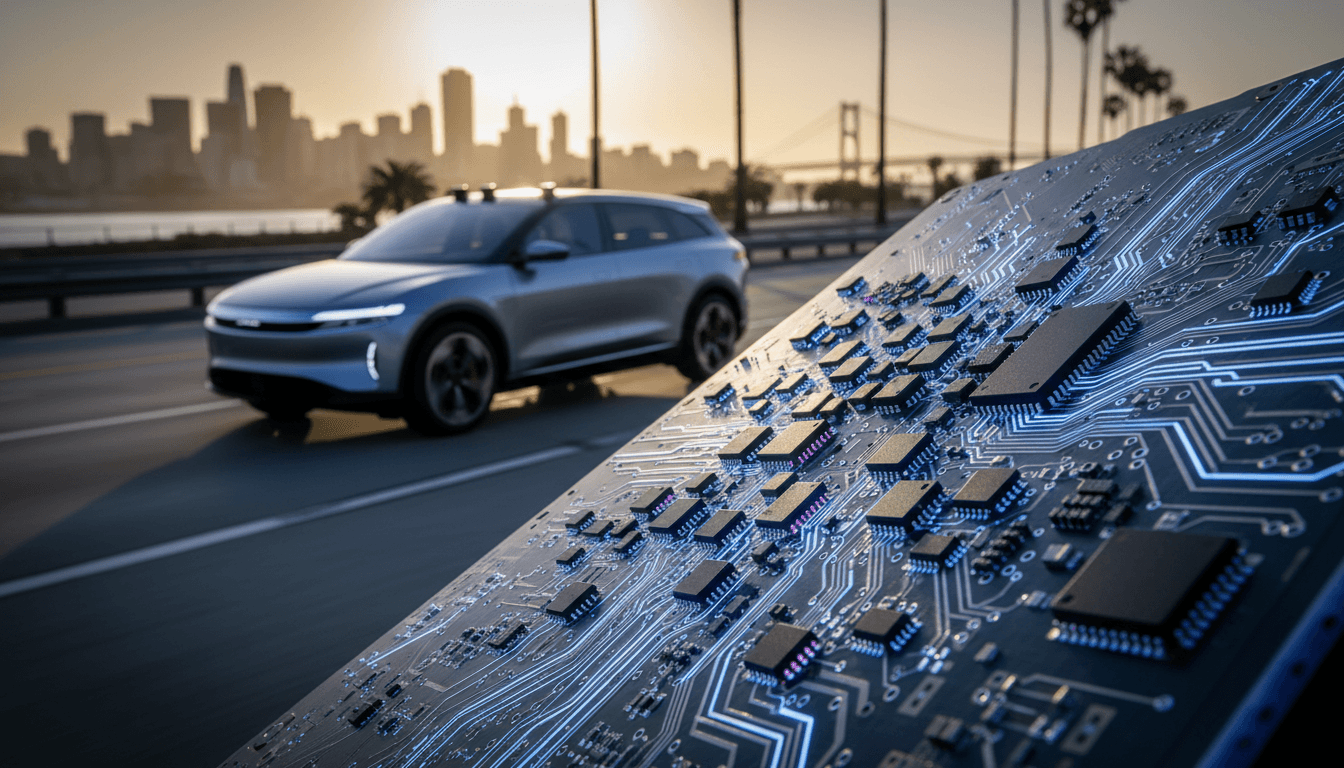
The Lucid Gravity SUVs forming this robotaxi fleet are state-of-the-art, integrating high-resolution cameras, advanced lidar sensors, and radars for comprehensive 360-degree perception. These vehicles are powered by NVIDIA’s Drive AGX Thor computer, ensuring robust and reliable autonomous operation. Designed with passenger comfort in mind, each vehicle can accommodate up to six passengers, promising a premium ride-hailing experience.
Regulatory Milestones and Future Expansion
The first commercial robotaxi service is slated for launch in a major U.S. city, specifically the San Francisco Bay Area, in late 2026. This initial rollout will serve as a springboard for future global expansion. It’s important to note that Uber will require additional permits from the California Public Utilities Commission for the full commercial deployment of the service, highlighting the multi-layered regulatory environment surrounding autonomous vehicles.
The California DMV’s three-stage permitting process – testing with a safety driver, driverless testing, and commercial deployment – underscores the rigorous path to bringing AV technology to market. Nuro has a commendable track record in this space, having been the first company to receive an autonomous exemption from the National Highway Traffic Safety Administration (NHTSA) in February 2020 for its R2 delivery vehicles. Furthermore, the company secured the first permit to commercially deploy autonomous vehicles on California public streets in December 2020. This latest permit to Nuro secures driverless permit testing for its robotaxi program, solidifying its position as a leader in autonomous vehicle innovation.
This latest permit marks a critical juncture for Nuro, not just as a technology provider but as a catalyst for Uber’s ambitious robotaxi expansion. The collaboration sets the stage for a significant transformation in urban transportation, with driverless Lucid Gravity SUVs soon becoming a common sight on California roads, offering a glimpse into the future of premium autonomous ride-hailing.