Novel space computers are poised for a revolution as Sophia Space secures a $10 million seed investment to demonstrate its innovative technology. The funding, led by Alpha Funds, KDDI Green Partners Fund, and Unlock Venture Partners, will enable Sophia Space to validate its passive cooling approach for space-based computing, aiming for an orbital demonstration by late 2027 or early 2028.
The challenge of cooling high-powered processors in space is a critical hurdle for companies seeking to establish advanced computing capabilities in orbit. As NVidia CEO Jensen Huang noted, the lack of airflow in space necessitates efficient conduction for heat dissipation. Sophia Space’s approach offers a unique solution compared to traditional satellite designs.
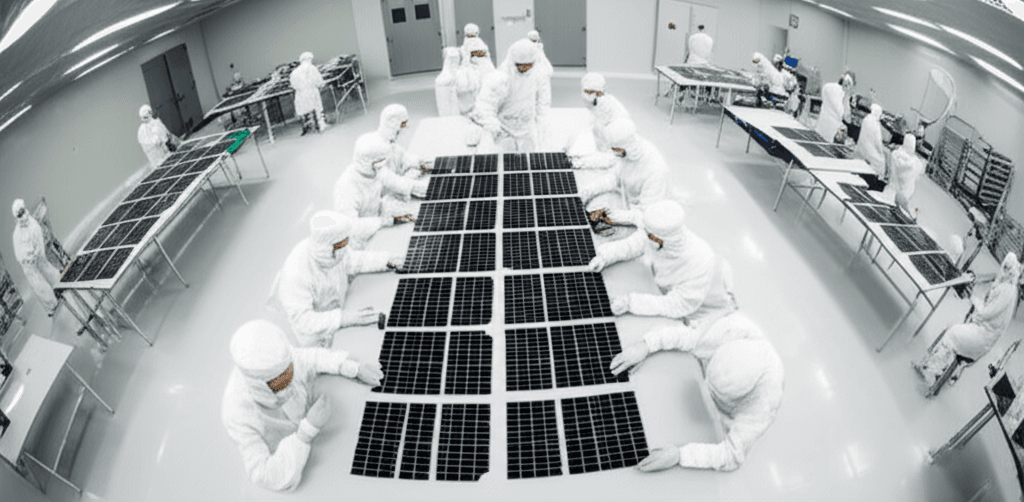
Unlike companies like SpaceX or Google that are exploring conventional satellite form factors and large radiators, Sophia Space is pioneering a modular design based on its TILE system. This technology originated from a Caltech program focused on orbital solar power plants, leading to a thin, flexible structure that’s ideal for heat dissipation and powering space-based processors.
Sophia Space’s Innovative Approach
Sophia Space’s TILEs are one-meter-by-one-meter modular server racks with integrated solar panels. This thin form factor allows processors to sit against a passive heat spreader, eliminating the need for active cooling. CEO Rob Demillo anticipates that 92% of the generated power will be dedicated to processing, a significant improvement over traditional designs. However, this design necessitates a sophisticated software management system to optimize processor activity.
The company envisions constructing larger space data centers composed of thousands of TILEs by the 2030s, creating a 50-meter-by-50-meter structure with 1 MW of computing power. Demillo believes that building space data centers with less efficient systems will be economically unviable, and that a single, integrated structure is more feasible than a distributed network linked by lasers.
Potential Applications and Partnerships
Initially, Sophia Space plans to offer its TILEs to satellite operators needing on-orbit compute solutions. Potential partners include Earth observation satellites, missile warning and tracking systems, and advanced communications networks. These applications generate massive amounts of data that often cannot be processed and transmitted efficiently back to Earth.
“The dirty little secret of the satellite industry is we’ve got all these amazing sensors up there that produce terabytes, or even petabytes, of data every few minutes, and they throw most of it out because they can’t do the computing on board and they can’t get round trip back and forth to the surface fast enough,”
Demillo told TechCrunch, highlighting the urgent need for improved on-orbit computing capabilities. This highlights the potential for **novel space computers** to drastically improve the capabilities of existing satellites.
The Future of Novel Space Computers
The success of Sophia Space’s demonstration could pave the way for a new generation of space-based computing infrastructure. By addressing the critical challenge of thermal management and optimizing power utilization, their TILE technology has the potential to unlock significant advancements in data processing, related Tech news and real-time analysis of space-based data. As the demand for on-orbit computing continues to grow, Sophia Space is positioning itself to be a key player in the future of space technology.
Sophia Space’s $10 million seed funding represents a significant investment in the future of space-based computing. Their innovative approach to thermal management and efficient power utilization promises to revolutionize how data is processed in orbit, potentially transforming industries ranging from Earth observation to national security.