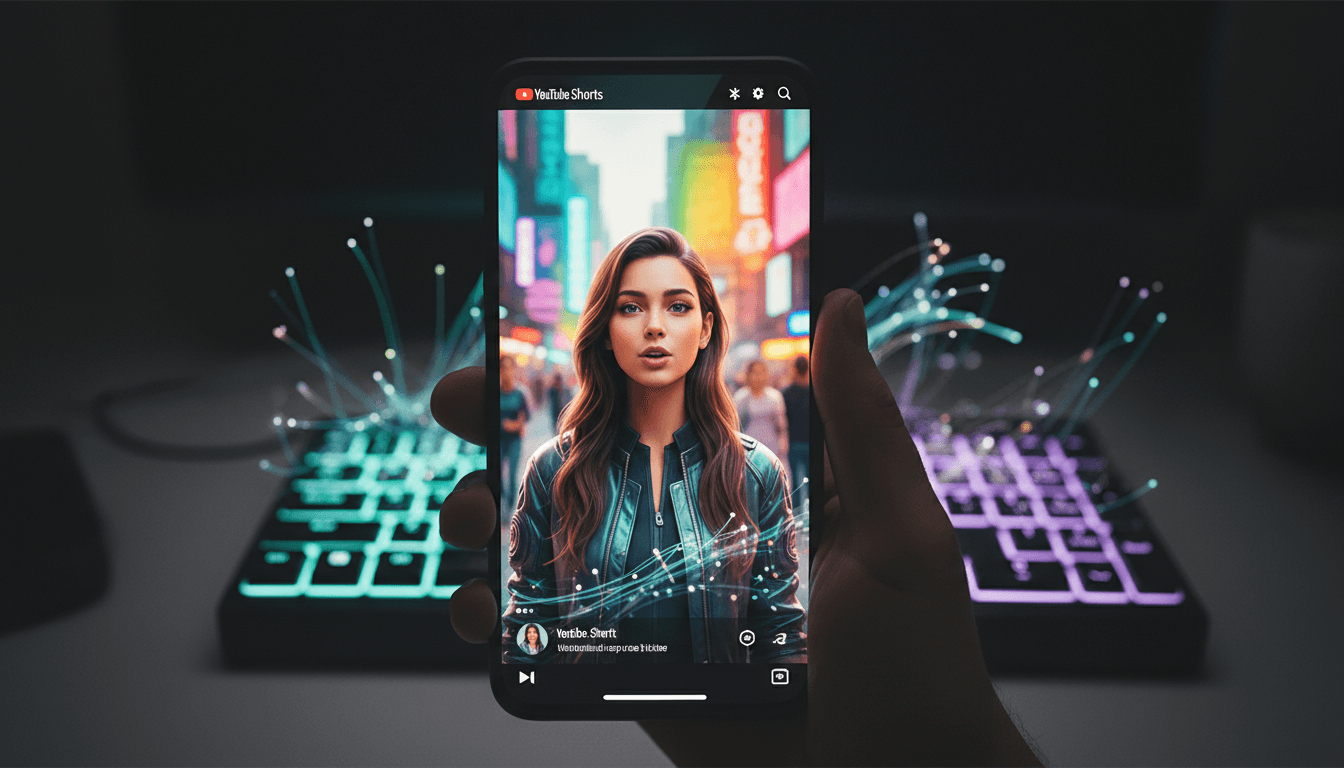
Google makes deepfake yourself a surprisingly straightforward process for creators on YouTube Shorts, rolling out an AI-powered feature that allows users to clone themselves realistically on camera. This new tool arrives as the platform grapples with the proliferation of AI-generated content, from deepfake scams to impersonations, while simultaneously expanding its own generative capabilities.
YouTube’s latest offering enables users to create a ‘digital avatar’ that mirrors their appearance and voice. These avatars can then be seamlessly integrated into existing Shorts videos or used to generate entirely new content, positioned by Google as a more secure and controlled approach to leveraging AI in content creation. The move underscores Google’s commitment to AI innovation, even as competitors like OpenAI recalibrate their strategies in the video generation space.
Creating Your Digital Clone with Ease
The process of creating a personal AI avatar is designed to be user-friendly, though it requires a few specific steps. Users must record a ‘live selfie,’ capturing their face and voice while following on-screen prompts. For optimal results, YouTube recommends ideal lighting, a quiet environment, a background free of other individuals or faces, and holding the phone at eye level. This meticulous capture ensures the avatar’s fidelity to the creator’s real-world likeness, paving the way for highly personalized content.
Once an avatar is successfully generated, creators can select ‘make a video with my avatar’ within the video creation interface. This allows for the generation of short clips, up to eight seconds in length, from text prompts. Additionally, avatars can be added to ‘eligible Shorts’ in a user’s feed, though YouTube has yet to specify the criteria for eligibility. This flexibility offers creators diverse avenues for integrating their digital twins into their content strategy.
“YouTube’s new AI avatar tool signals a significant shift in content creation, offering creators unprecedented control over their digital likeness while navigating the complex ethical landscape of generative AI.”
Navigating Restrictions and Transparency
Despite the ease of creation, the AI avatar feature comes with stringent restrictions designed to mitigate potential misuse. Avatars can only be utilized within the creator’s own original videos, and creators retain full control over whether their Shorts can be remixed. Users also have the option to delete their avatar or any associated videos at any time. Furthermore, avatars that remain unused for three years will be automatically purged, ensuring data hygiene and user control.
Transparency is a core component of this rollout. All videos generated using an avatar will be explicitly flagged as AI-generated. This includes visible watermarking and digital labels such as SynthID and C2PA, a widely supported authentication marker for AI-generated content. These measures aim to clearly distinguish AI-created content from original human-generated material, addressing concerns about deepfakes and authenticity in the digital realm.
The Broader AI Landscape for Google
This new avatar feature is part of YouTube’s expanding suite of AI tools for creators. These include AI-generated video clips on Shorts, AI auto-dubbing, and a channel analytics chatbot. Many of these tools are powered by Google’s Gemini AI models, which already empower users to transform photos into video, make music, and create realistic images from scratch. Google’s aggressive push into generative AI stands in contrast to some of its rivals.
Notably, this development coincides with OpenAI’s decision to sunset its Sora video tool, after facing significant challenges related to high costs, copyright disputes, deepfake controversies, and general ‘AI slop.’ This divergence highlights differing strategic approaches to AI development and deployment within the tech industry. For financial professionals, understanding these shifts is critical, as they impact future investment opportunities and the evolving digital economy. The ability to Google makes deepfake yourself on a major platform like YouTube Shorts could redefine personal branding and digital engagement, opening new avenues for creators and potentially new risks for consumers.