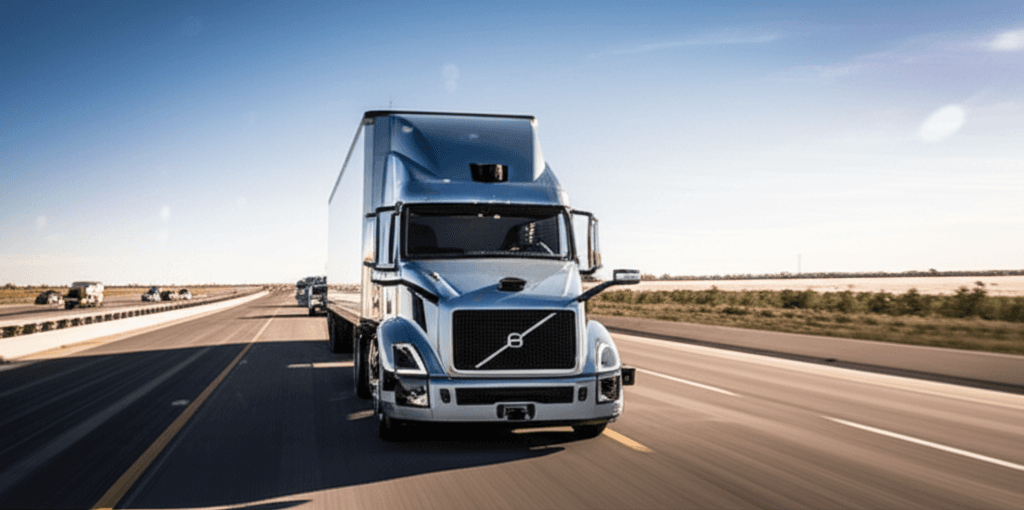
Driverless truck network expansion is accelerating as Aurora, the autonomous trucking company, announces plans to triple its operational routes across the Southern US. Founded by former members of Google’s self-driving car team, Aurora’s latest software update will enable it to expand its driverless truck network to encompass a total of 10 routes. This move signifies a major step forward in the commercialization of autonomous trucking technology and its potential impact on the logistics industry.
Aurora’s Expanding Driverless Truck Network
Currently, Aurora operates 10 autonomous trucks without safety monitors on routes connecting Dallas, Houston, Fort Worth, and El Paso. The company’s progressive software updates have already authorized driverless trips between Dallas and Houston, enabled nighttime driving, and broadened the network to include routes to El Paso. This latest expansion further solidifies Aurora’s position as a leader in the autonomous trucking space.
“After a single manual drive, cloud-based algorithms are able to generate semantic components, which helps to build new maps with little to no human assistance.”
Longer Routes, Greater Efficiency
The new software update will facilitate trips between Fort Worth and Phoenix, a route exceeding 15 hours. This is significant because human truck drivers are legally restricted to 11 hours of driving within a 14-hour duty limit, necessitating breaks. Autonomous trucks, however, are not bound by these regulations, potentially leading to increased efficiency and reduced delivery times. The driverless truck network will also include routes between Dallas and Houston; Fort Worth and El Paso; El Paso and Phoenix; Fort Worth and Phoenix; and Dallas and Laredo.
AI-Powered Mapping for Autonomous Driving
Aurora is leveraging artificial intelligence (AI) to create new maps for its autonomous driving system, aiming to expedite the process from testing and validation to commercial operation. According to Aurora, its cloud-based algorithms can generate semantic components from a single manual drive, enabling the construction of new maps with minimal human intervention. This AI-driven approach significantly reduces the time and resources required for mapping and deployment, accelerating the widespread adoption of autonomous trucking. This development could have massive implications for related Tech news.
The Future of Autonomous Trucking
Aurora’s expansion of its driverless truck network represents a critical milestone in the evolution of the logistics and transportation industries. As autonomous trucking technology matures, it has the potential to address critical challenges such as driver shortages, improve safety, and enhance efficiency across the supply chain. The increasing adoption of AI in map creation and route optimization further underscores the transformative power of technology in reshaping the future of transportation. The driverless truck network is set to revolutionize the industry.
Source: The Verge