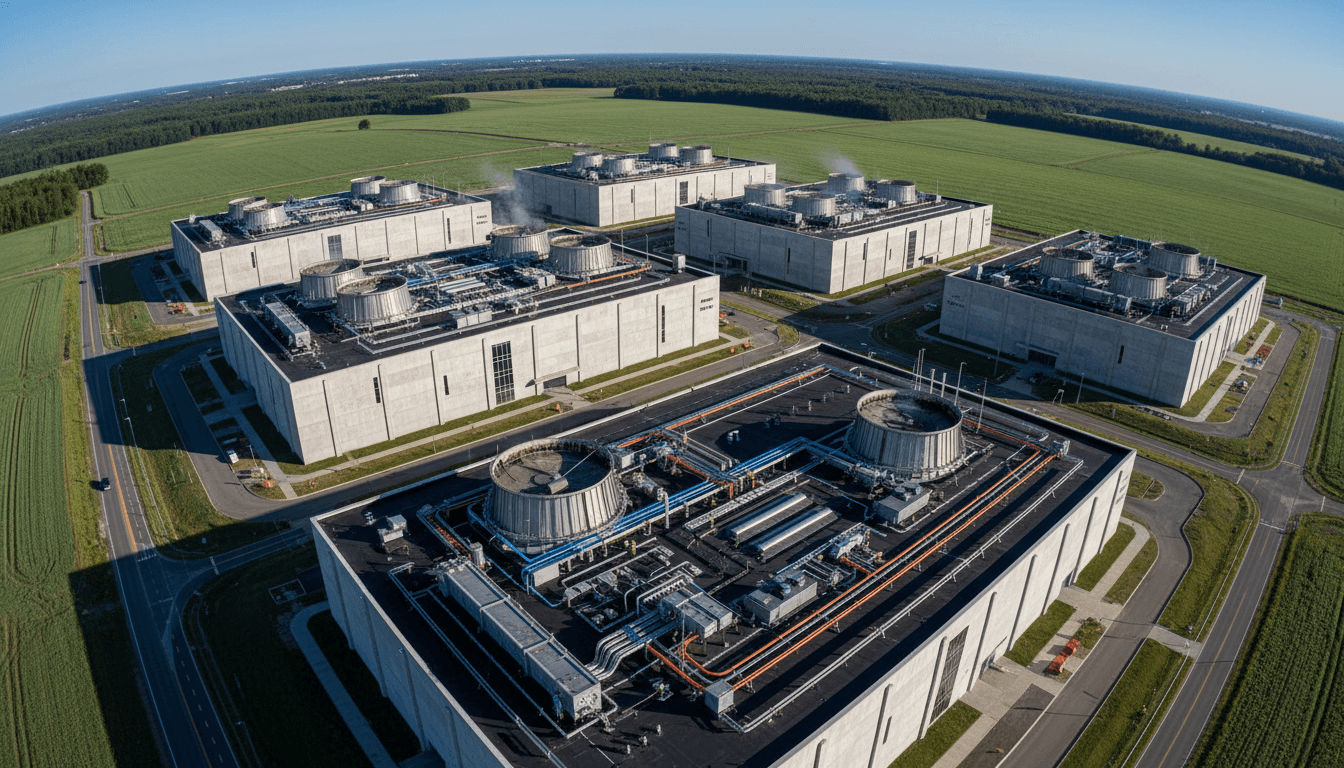
Data centers threaten rural America by promising economic revitalization through job creation, yet emerging evidence suggests these massive industrial facilities deliver minimal long-term employment. As rural towns across the United States, from Jay, Maine, to farm counties in Indiana, grapple with the closure of traditional industries, data center developers are actively courting local governments with enticing offers of high-paying positions and substantial tax revenues. However, a closer look at the economic impact reveals a concerning disparity between the advertised benefits and the actual outcomes, raising critical questions about the sustainability and true cost of this rapid industrial expansion.
The case of Jay, Maine, exemplifies this unfolding narrative. Following the permanent closure of the Androscoggin paper mill, which once employed 1,500 people, a 1.4 million-square-foot facility was purchased for redevelopment. Developer Tony McDonald initially explored various options before pivoting to a data center partnership with Sentinel Data Centers, a move that promised 125 to 150 permanent jobs. This prospect was compelling enough for Maine Governor Janet Mills to veto a state-wide moratorium on large data center construction, prioritizing job creation over a deeper study of environmental and economic impacts. Yet, economists like Michael Hicks of Ball State University, who conducted a causal analysis of data center employment effects in 254 Texas counties, found that net job creation was effectively zero, with temporary construction jobs masking a lack of permanent roles.
The Lure of Data Center Development in Rural Areas
Rural America offers several attractive features for data center developers: cooler climates, often lax land-use regulations, and access to renewable energy sources. Maine, for instance, boasts a 54 percent renewable energy mix, making it an appealing location. More than 35 states have responded by offering incentives and tax breaks to attract the industry, often without fully understanding the long-term implications. Pew Research Center data indicates that 67 percent of planned data centers in the US are headed to rural areas, with 39 percent targeting counties that currently have none. This rapid scaling of development, however, risks leaving these communities with power- and water-hungry industrial facilities that employ roughly the same number of permanent staff as a midsize restaurant.
“Even if it’s 30 jobs, that means a lot to Jay, then, okay, but you’ve swept away protections for 1.4 million Mainers for 30 jobs.”
The proposed neocloud data center in Jay, Maine, specializing in high-performance GPU computing for AI, would require over 100kW of energy per rack and extensive cooling resources. While McDonald maintains he is not seeking tax breaks, the Maine legislature recently passed a law excluding data centers from some state tax incentives, yet leaving the door open for local municipalities to offer their own agreements. This creates a potential pitfall for small towns hoping for a tax windfall to fund community investments, as the actual economic returns may not align with the initial projections.
Understanding the True Economic Impact of Data Centers
The discrepancy between promised jobs and actual employment is a central concern. While construction phases create temporary employment, these workers often move on once the facility is built. The operational needs of a modern data center, particularly highly automated ones, require a specialized, smaller workforce. This contrasts sharply with the thousands of jobs lost in traditional rural industries, leaving a significant gap in local economies. State Representative Melanie Sachs, sponsor of Maine’s moratorium bill, highlighted the lack of a comprehensive framework for towns to evaluate developer claims, arguing that the veto sacrificed broader protections for Mainers for a potentially limited number of jobs in one town.
As rural communities continue to seek new economic drivers, the promise of data centers threaten rural America with a mirage of prosperity. Without robust research and regulatory frameworks, towns risk exchanging their land and resources for facilities that offer minimal long-term job growth and significant demands on local infrastructure, particularly power grids and water supplies. It is imperative that local governments and policymakers conduct thorough, independent assessments to ensure that the benefits of data center development truly outweigh the costs for their communities.