Cursor AI model controversy has gripped the tech world, as the AI coding assistant company, Cursor, admitted its new coding model, “Composer 2,” was built using Moonshot AI’s “Kimi K2.5” model. This admission, reported by TechCrunch on March 22, 2026, followed a rapid-fire controversy that began just days earlier, highlighting critical issues of transparency and licensing in the burgeoning artificial intelligence sector.
The initial storm erupted on March 19, 2026, when Cursor launched Composer 2, touting it as an in-house breakthrough achieved through “continued pre-training of a base model combined with reinforcement learning.” Conspicuously absent from this announcement was any mention of Moonshot AI’s Kimi K2.5, a detail that would soon unravel.
The Unraveling of Composer 2’s Origins
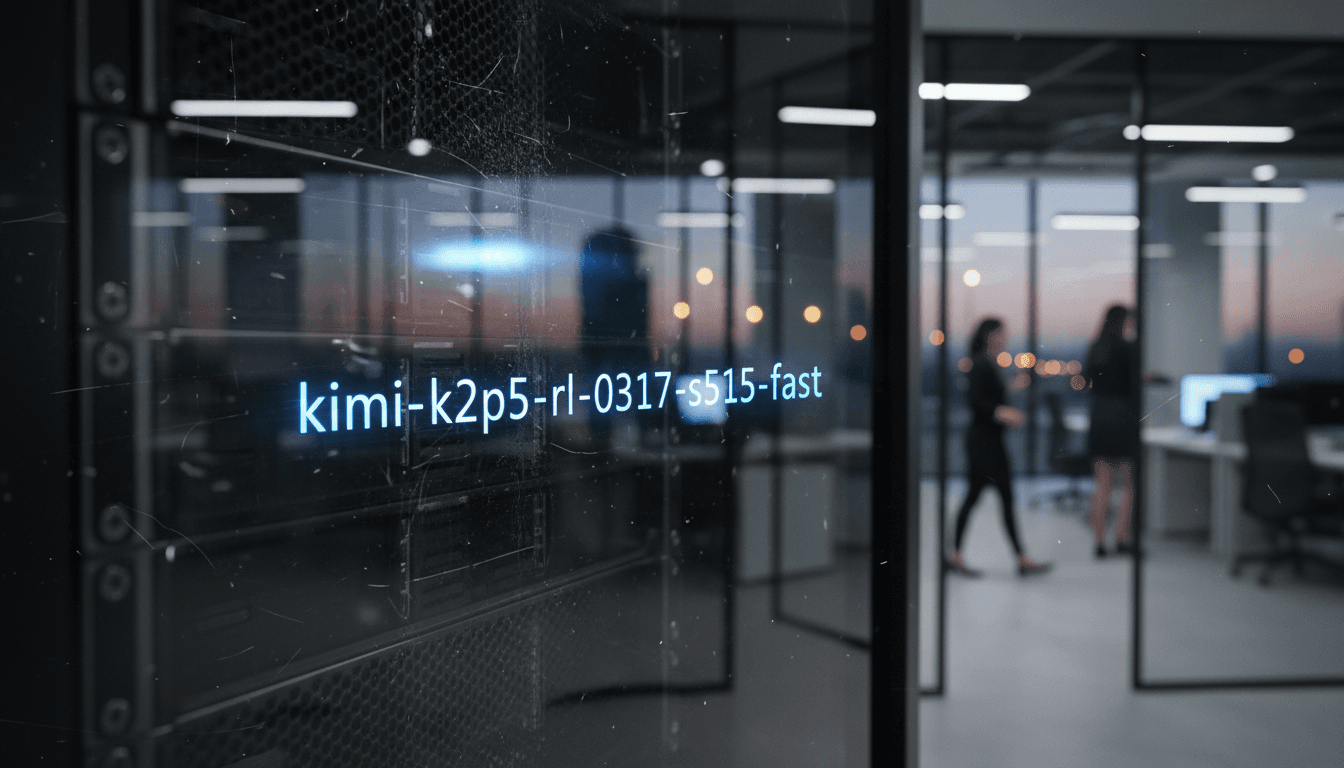
Within 24 hours of Composer 2’s launch, a keen-eyed developer named Fynn unearthed the model ID “kimi-k2p5-rl-0317-s515-fast” embedded within Cursor’s API response. This discovery unequivocally pointed to Composer 2 being a fine-tuned iteration of Moonshot AI’s Kimi K2.5 model. The revelation quickly escalated when Yulun Du, Moonshot AI’s Head of Pretraining, publicly confirmed the tokenizer was identical to Kimi’s and raised questions regarding Cursor’s compliance with Kimi K2.5’s modified MIT license.
“The modified MIT license requires commercial products exceeding $20 million in monthly revenue or 100 million monthly active users to prominently display ‘Kimi K2.5’ in their user interface.”
With an estimated annualized revenue of $2 billion, Cursor significantly surpassed the monthly threshold, making the omission a substantial oversight.
Cursor AI Model Controversy: Partnership and Apology
The situation evolved rapidly as Moonshot AI later clarified that Cursor’s use of Kimi K2.5 was, in fact, authorized through a commercial partnership facilitated via Fireworks AI’s platform. Cursor co-founder Aman Sanger and VP Lee Robinson acknowledged the initial omission of Kimi K2.5 in their announcement as a mistake. They explained that Kimi K2.5 was selected as the strongest base model after extensive evaluation, and Cursor had subsequently invested significant additional training and reinforcement learning into it. They further stated that approximately one-quarter of the computational effort in the final model came from the base model, with the remaining three-quarters derived from Cursor’s proprietary training efforts. This explanation aimed to mitigate the impact of the Cursor AI model controversy.
Implications for AI Licensing and Transparency
This incident underscores the intricate challenges of licensing and transparency within the fast-paced AI landscape, especially concerning the utilization of open-source models originating from Chinese companies. Moonshot AI, established in March 2023, has rapidly gained prominence for its Kimi chatbot and large language models, with Kimi K2.5, an open-source, native multimodal agentic model released in January 2026, lauded for its robust coding capabilities and multimodal understanding. The company itself has seen exponential valuation growth, with discussions in March 2026 hinting at raising up to $1 billion at an $18 billion valuation.
Cursor, founded in 2022, has carved out a niche as an AI-powered code editor built on Visual Studio Code, designed to boost coding efficiency through features like AI code completion, error correction, and codebase understanding. The company secured a substantial $2.3 billion in Series D funding in November 2025, reaching a post-money valuation of $29.3 billion, backed by influential investors including Thrive, a16z, Accel, DST, Coatue, NVIDIA, and Google. In March 2026, Cursor was reportedly in early discussions for a new funding round that could value the company at an astounding $50 billion to $60 billion.
The Cursor AI model controversy serves as a potent reminder for AI developers and companies to prioritize clear communication and meticulous adherence to licensing agreements, particularly as the lines between proprietary innovation and collaborative open-source development continue to blur in the pursuit of advanced artificial intelligence.