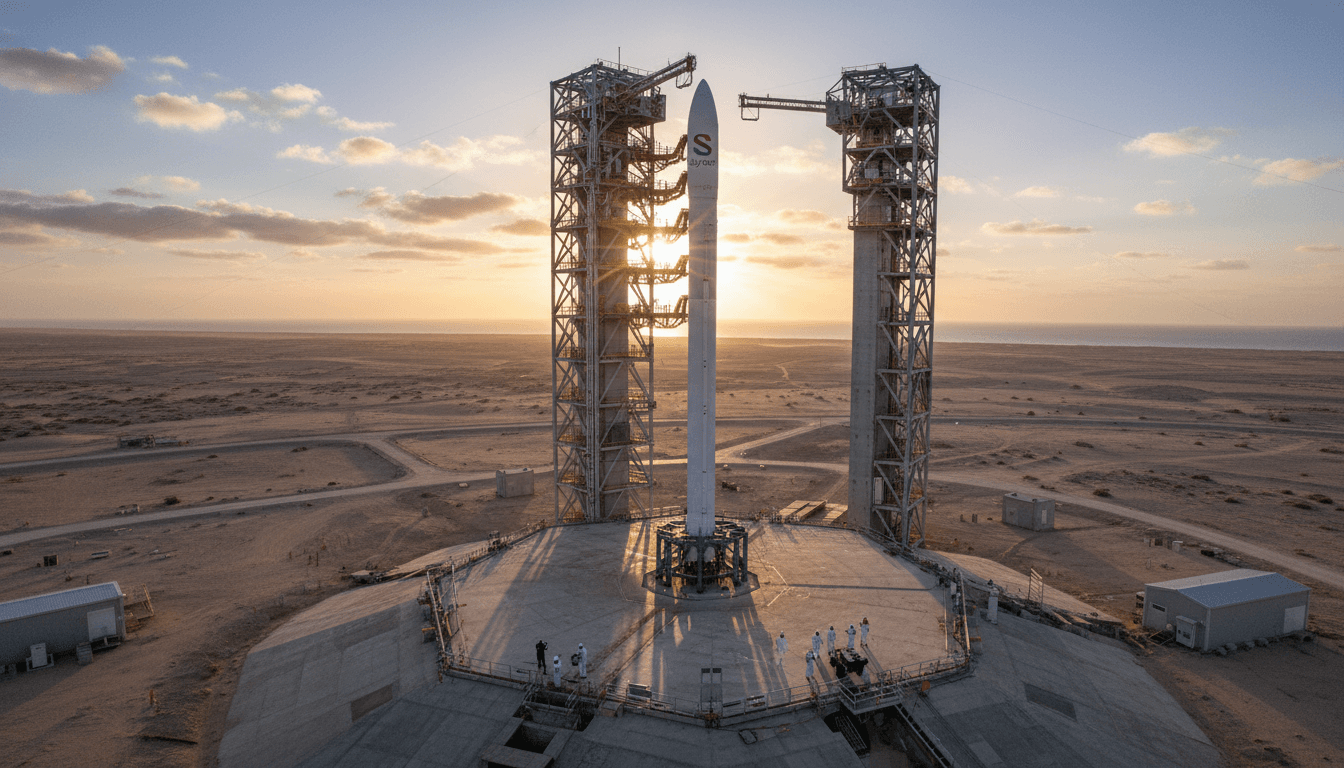
India’s first space-tech unicorn, Skyroot, has officially joined the ranks of billion-dollar startups, a monumental achievement in the burgeoning global space economy. The Hyderabad-based firm secured significant backing from major institutional investors including GIC, Sherpalo, and Blackrock, propelling its valuation past the coveted $1 billion mark. This development, announced on Thursday, May 7, 2026, not only cements Skyroot’s position as a leader in private space technology but also signals a profound shift in investor confidence towards India’s high-tech manufacturing and innovation capabilities.
The Ascent of a Space-Tech Unicorn
The recent funding round is a testament to Skyroot’s rapid ascent and its strategic vision in the competitive space sector. The involvement of global investment heavyweights like GIC, Sherpalo, and Blackrock underscores the immense potential these firms see in Skyroot’s technological prowess and market strategy. Becoming India’s first space-tech unicorn is not merely a financial milestone; it represents a coming-of-age for the nation’s private space industry, demonstrating its ability to attract substantial capital and compete on an international stage. This achievement is a significant win for the ‘Make in India’ initiative, showcasing the country’s capacity to innovate and manufacture cutting-edge aerospace technology.
Skyroot’s journey to becoming a billion-dollar entity has been marked by a series of strategic developments and technological breakthroughs. While specific details of previous milestones are not provided, the company’s success points to a sustained effort in research, development, and market penetration within the space launch services sector. Its ability to attract such prominent investors indicates a strong business model and a clear path to future growth and profitability.
Strategic Trajectory and Competitive Edge
The strategy behind Skyroot’s success likely encompasses a blend of innovation, cost-efficiency, and a deep understanding of the global demand for reliable and affordable space launch solutions. In a market traditionally dominated by government-backed agencies and a few large private players, Skyroot has carved out a niche through its agile approach and potentially disruptive technologies. The backing from GIC, Sherpalo, and Blackrock suggests that these investors see a robust competitive advantage in Skyroot’s offerings, whether it’s in developing smaller, more frequent launch capabilities or pioneering new propulsion systems.
“Skyroot’s ability to attract such significant global capital validates India’s growing prominence as a hub for deep-tech innovation, particularly in the highly complex space sector.”
This investment also highlights a broader trend: the increasing privatization of space. As the cost of launching payloads decreases and the demand for satellite-based services grows, companies like Skyroot are poised to capitalize on this expanding market. Their focus on developing indigenous capabilities positions them strongly within India’s strategic goals for self-reliance in space technology.
Market Impact: India’s First Space-Tech Unicorn
The emergence of India’s first space-tech unicorn is set to send ripples across the global space industry. For competitors, it signals a formidable new player with significant financial backing, potentially intensifying the race for market share in launch services and related space technologies. For investors, Skyroot’s success offers a compelling case study, potentially opening the floodgates for more venture capital and private equity into India’s space sector and other deep-tech industries. This could spur a new wave of innovation and entrepreneurship, creating a vibrant ecosystem for space-related businesses.
This achievement also boosts India’s reputation as a serious contender in the global technology landscape, moving beyond traditional IT services to high-value, complex engineering domains. It demonstrates that Indian startups can not only innovate but also scale to achieve world-class valuations and attract top-tier international investment. Explore more success stories in the rapidly evolving tech landscape.
What’s Next for Skyroot
With its new valuation and substantial capital injection, Skyroot is well-positioned for aggressive expansion and accelerated development. Future plans likely include scaling up production of its launch vehicles, expanding its launch capabilities, and potentially exploring new segments within the space value chain, such as satellite manufacturing or in-orbit services. Analysts will be closely watching for further technological advancements and strategic partnerships that could solidify Skyroot’s market leadership and extend its global reach. The company’s journey as India’s first space-tech unicorn will undoubtedly serve as a blueprint for other aspiring deep-tech startups in the region.
The successful funding round for Skyroot marks a pivotal moment, not just for the company, but for India’s entire space-tech ecosystem. It underscores the immense potential for innovation and growth when coupled with strategic investment and a clear vision. As Skyroot continues its trajectory, it will be a key player to watch in the global race to commercialize space.