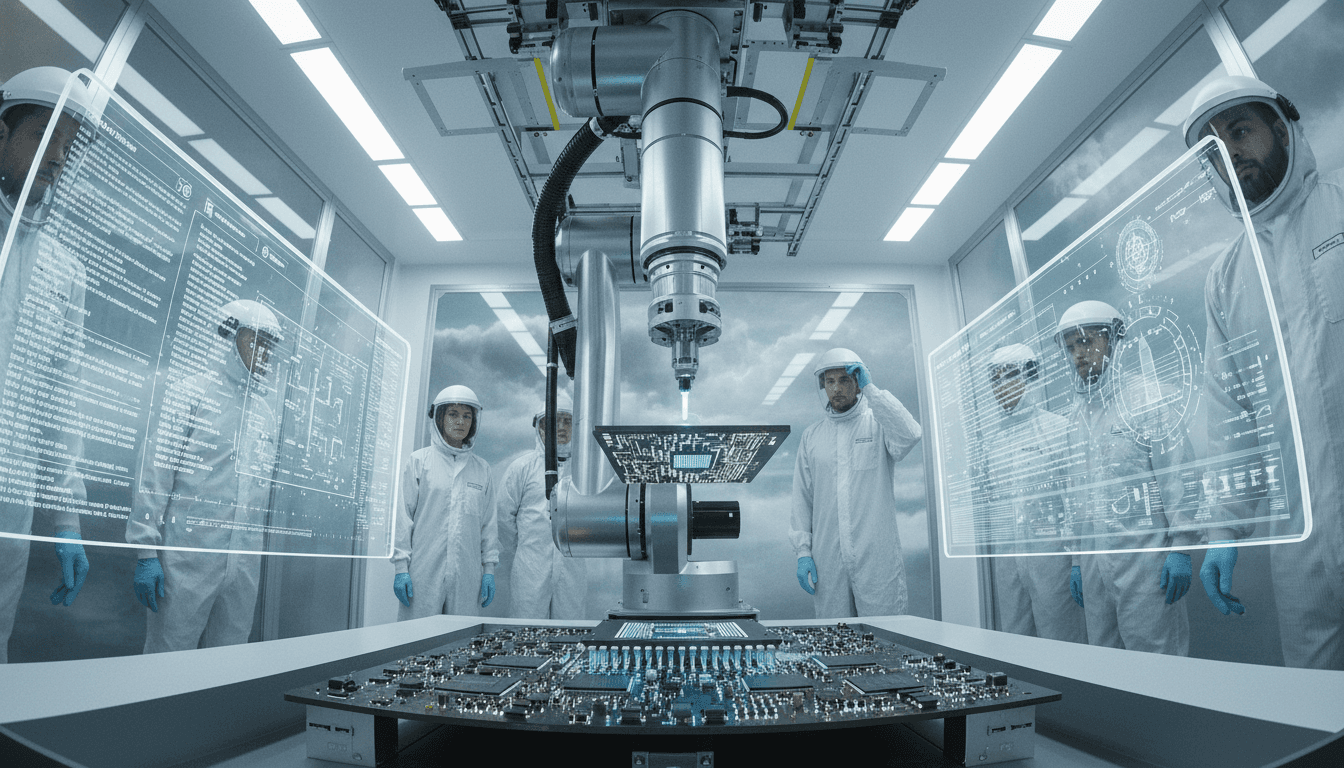
Fractile raises $220 million in a significant funding round, signaling robust investor confidence in its specialized chip technology designed to accelerate artificial intelligence queries. This substantial capital injection, announced on Wednesday, May 13, 2026, positions the startup as a formidable player in the burgeoning AI hardware market, where speed and efficiency are paramount.
The Story Behind the Funding
The $220 million funding round for Fractile marks a pivotal moment for the chip startup. While the specific investors were not disclosed in the WSJ report, the sheer scale of the investment underscores a growing recognition of Fractile’s innovative approach to optimizing AI computations. The company’s core mission is to drastically reduce the time it takes for AI systems to process and respond to queries, a critical bottleneck as AI applications become more complex and pervasive across industries. This achievement is not merely a financial milestone; it’s a validation of Fractile’s technological prowess and its potential to reshape the infrastructure supporting the AI revolution.
Company Background and Vision
Fractile has been quietly developing its specialized chips, focusing on the intricate demands of AI workloads. While its complete history isn’t detailed, this funding round suggests a trajectory of focused innovation and strategic development. The company’s commitment to more success stories in the high-performance computing sector has evidently resonated with investors who are keen to back solutions that can unlock the next generation of AI capabilities. Their journey to this point has likely involved rigorous R&D, strategic talent acquisition, and a clear vision for tackling one of AI’s most pressing challenges: latency.
The Strategy: Accelerating AI Queries
Fractile’s success stems from its targeted strategy: developing chips specifically engineered to speed up AI queries. Unlike general-purpose processors, Fractile’s hardware is optimized for the unique computational patterns and data flows inherent in AI models. This specialization allows for significant gains in processing speed and energy efficiency, offering a compelling alternative to existing solutions. The ability to process AI queries faster means real-time applications, from autonomous vehicles to advanced natural language processing, can operate with unprecedented responsiveness. This competitive advantage is crucial in an industry where milliseconds can translate into billions of dollars in value.
“The ability to process AI queries faster is not just an incremental improvement; it’s a foundational shift that will enable entirely new classes of applications and services.”
This strategic focus on optimization for AI queries demonstrates a deep understanding of market needs and technological trends.
Market Impact and Future Outlook
The capital injection into Fractile is poised to have a significant ripple effect across the AI hardware landscape. Competitors, from established giants to other startups, will undoubtedly take note of this substantial investment, potentially spurring further innovation and consolidation. For investors, Fractile’s successful funding round highlights the lucrative opportunities within specialized AI infrastructure, suggesting that the market is maturing beyond general-purpose hardware. The demand for faster, more efficient AI processing is only set to intensify as AI permeates more aspects of business and daily life.
What’s Next for Fractile
With $220 million in fresh capital, Fractile is well-positioned for aggressive expansion. The immediate future will likely involve scaling up production, accelerating R&D for next-generation chips, and potentially expanding its market reach. Analysts predict that companies like Fractile, which offer specialized solutions to critical AI bottlenecks, will be key drivers of technological advancement in the coming years. This funding empowers Fractile to solidify its position and continue its mission to speed up AI queries, potentially setting new benchmarks for performance and efficiency in the AI domain. The company’s trajectory will be closely watched as it aims to turn this significant investment into a dominant market presence, shaping the future of AI computing.