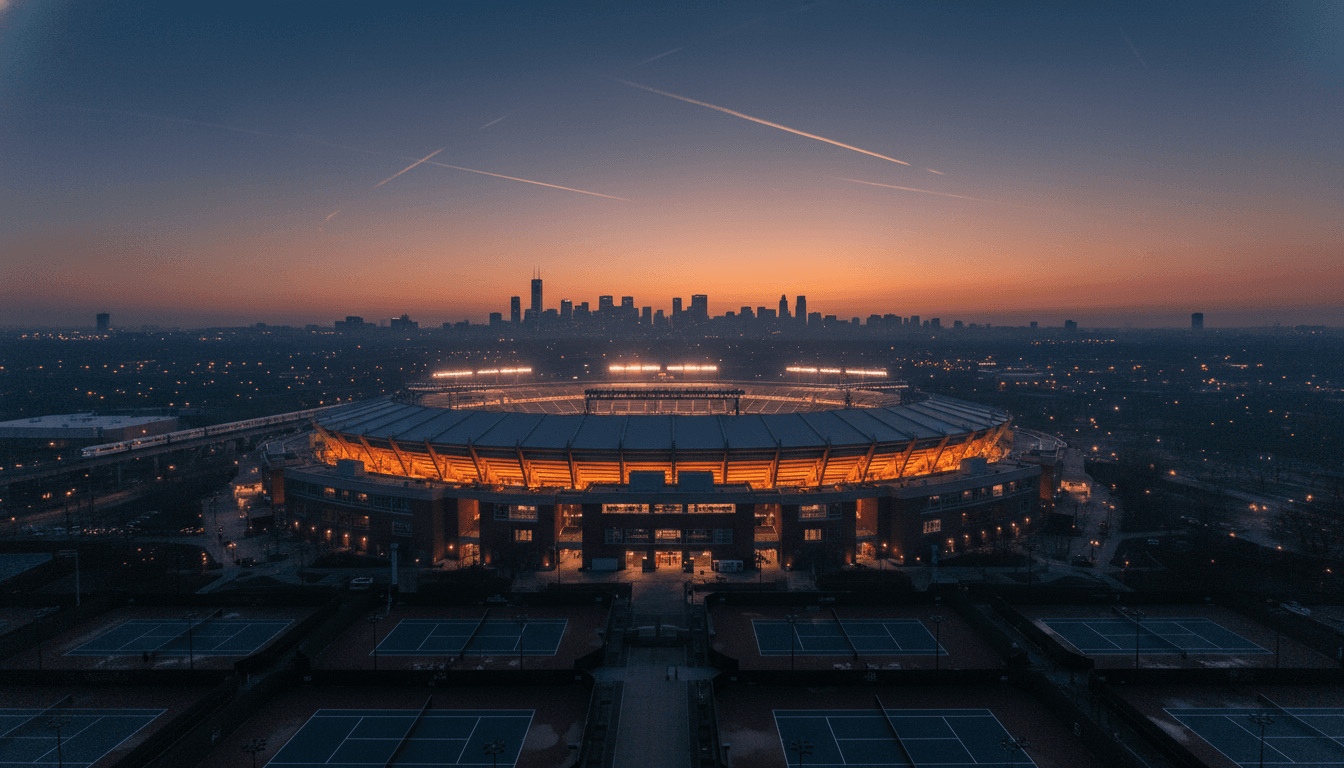
The US Open noisiest Grand Slam tournament status has been confirmed, with a confluence of external and internal factors creating an unparalleled sonic environment. This perennial debate among tennis aficionados and event organizers has found new clarity, as the tournament, set against the backdrop of New York City, consistently registers higher decibel levels than its Grand Slam counterparts. The unique urban setting, coupled with deliberate entertainment choices, cultivates an atmosphere that is both electrifying for some and potentially distracting for others.
The Unfiltered Roar of Flushing Meadows
The US Open’s distinct auditory signature stems from a multifaceted tapestry of sounds. Beyond the expected crowd reactions, the tournament experiences significant external noise pollution. Planes departing and arriving at nearby LaGuardia Airport frequently punctuate matches with their powerful engines, while the rumble of trains traversing the city’s extensive rail network adds another layer to the cacophony. These elements, largely beyond the control of tournament organizers, are intrinsic to the Flushing Meadows location.
However, the tournament also actively contributes to its own soundscape. Music, often played during changeovers and breaks, is a staple of the US Open experience, designed to energize the crowd and enhance the entertainment value. And, of course, the fans themselves, known for their enthusiastic and often vocal support, play a crucial role. Their cheers, groans, and sometimes unsolicited advice create a vibrant, if sometimes overwhelming, auditory backdrop.
“The US Open embraces a unique, high-energy atmosphere that sets it apart. While the noise is undeniable, it’s also a significant part of the tournament’s identity for many.”
This combination of urban noise, programmed entertainment, and passionate spectators solidifies the US Open noisiest Grand Slam tournament designation. It’s a sensory experience unlike any other in professional tennis, challenging players to maintain focus amidst a constant barrage of sound.
Impact Analysis on the Broader Sports Landscape
The consistent identification of the US Open as the noisiest Grand Slam tournament carries significant implications for the broader sports news landscape and the future of tennis events. For players, adapting to this environment becomes a crucial skill, potentially influencing match outcomes and mental fortitude. Coaches and sports psychologists often emphasize mental resilience, and the US Open presents a unique test of that capacity. The narrative surrounding player performance at Flushing Meadows often includes discussions about how well they manage the distractions.
From a commercial perspective, the ‘noisy’ reputation is a double-edged sword. While some fans are drawn to the electric, party-like atmosphere, others may prefer the more traditional, quieter reverence associated with events like Wimbledon. This distinction allows the US Open to carve out a unique niche in the global tennis calendar, appealing to a specific demographic that values high energy and constant engagement. It also influences broadcasting, with commentators often acknowledging the ambient sounds as part of the live experience. For related sports news articles on player adaptations, visit our archives.
Context and Background: A Grand Slam Anomaly
Historically, Grand Slam tournaments have largely been defined by their distinct characteristics. Wimbledon, for instance, is synonymous with its strict ‘all-white’ dress code and hushed reverence, while Roland Garros is celebrated for its challenging clay courts. The Australian Open, often called the ‘Happy Slam,’ cultivates a relaxed, fan-friendly vibe. The US Open, however, has increasingly embraced its role as the dynamic, urban outlier. This wasn’t always the case, but over the decades, as the tournament grew in stature and moved to its current Flushing Meadows location, the surrounding environment became an inseparable part of its identity.
The deliberate integration of music and entertainment during breaks, a feature less prominent at other Slams, reflects a conscious choice by organizers to cater to a modern sports audience accustomed to constant stimulation. This trend aligns with broader industry movements to enhance spectator experience beyond the pure athletic competition, turning events into comprehensive entertainment spectacles. The US Open noisiest Grand Slam tournament identity is therefore not accidental, but a product of both geography and strategic event planning.
What’s Next: Balancing Atmosphere and Athlete Focus
Looking ahead, the organizers of the US Open face an ongoing challenge: how to maintain the tournament’s vibrant, high-energy atmosphere without unduly compromising the integrity of the competition or the athletes’ ability to perform at their peak. There will likely be continued discussions about sound management, potentially exploring advanced acoustic technologies or revised policies for music volume and fan conduct. However, given the deep-seated nature of the external noise factors – planes and trains – a complete silencing of the US Open is neither feasible nor, arguably, desired by all stakeholders.
Future editions may see further innovations in fan engagement that lean into the tournament’s unique character, perhaps even embracing the noise as a defining element rather than attempting to mitigate it entirely. The balance will be delicate, aiming to preserve the ‘Flushing Meadows buzz’ while ensuring the focus remains on world-class tennis. Any significant shifts would likely be met with scrutiny from both traditionalists and those who have come to love the tournament’s distinct roar.
Key Takeaway: The US Open’s Enduring Sonic Identity
The US Open noisiest Grand Slam tournament status is more than a mere observation; it’s a fundamental aspect of its identity. This convergence of urban sprawl, deliberate entertainment, and passionate spectators creates a singular experience in professional tennis. While it presents unique challenges for players and potentially alters the spectator experience, it also solidifies the US Open’s position as a dynamic, modern, and distinct event on the global sporting calendar. Its sonic signature, for better or worse, remains a critical component of its allure and its place in the pantheon of Grand Slam events, continually shaping narratives around performance, atmosphere, and the evolving nature of sports entertainment.