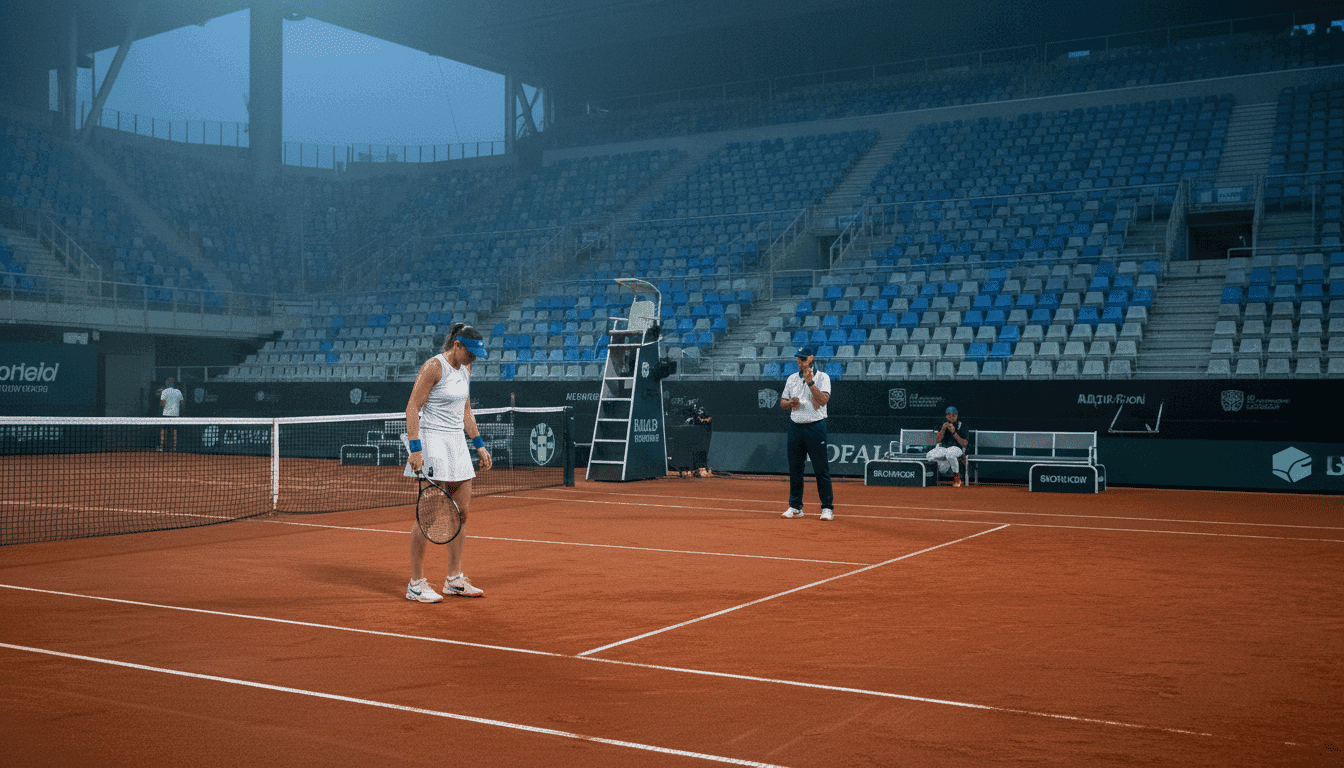
A sudden withdrawal minutes before a scheduled match has plunged the Madrid Open chaos, sending ripples through the tournament and raising questions about player welfare and logistical preparedness. The unnamed star’s eleventh-hour decision on Friday, April 24, 2026, left organizers scrambling and fans bewildered, marking a significant disruption to one of the premier clay-court events on the tennis calendar.
The Story Unfolds
The incident occurred just moments before the player was due to take to the court, an announcement that reverberated through the Caja Mágica, the tournament’s iconic venue. While the Daily Express report on Friday, April 24, 2026, did not specify the player’s identity or the exact reason for the withdrawal, the timing itself is unprecedented and indicative of an acute issue. Such last-minute pull-outs are rare, especially at this stage of a major tournament, and typically signal either a sudden, debilitating injury or an unforeseen personal emergency that prevents competition.
The lack of prior indication or a more gradual decline in health suggests a rapid onset of circumstances that rendered the player unable to compete. This kind of abrupt absence not only affects the individual player’s trajectory but also creates a domino effect across the draw, impacting opponents, scheduling, and broadcast commitments. The Madrid Open chaos underscores the inherent fragility of live sporting events and the constant challenges faced by organizers.
“The suddenness of the withdrawal highlights the immense pressures and physical demands placed on elite athletes, where even minutes before competition, unforeseen circumstances can drastically alter the course of a tournament.”
Impact Analysis
The immediate impact of this withdrawal is multifaceted. For the opponent, it means either a walkover win or a scramble to find a replacement, potentially a lucky loser from the qualifying rounds, altering their preparation and match strategy. For spectators who purchased tickets specifically to see this player, it represents a significant disappointment. Broadcasters face last-minute programming changes, and the tournament organizers must swiftly adapt their schedule, often under intense scrutiny.
Beyond the immediate logistical headaches, the incident adds to a broader narrative surrounding player health and the demanding nature of the professional tennis circuit. Injuries and fatigue are constant companions for top athletes, and high-profile withdrawals, while unfortunate, are a recurring theme. However, the nature of this particular withdrawal – minutes before the match – elevates it beyond a routine occurrence, signaling a more acute problem that triggered the Madrid Open chaos.
Context & Background
The Madrid Open, a combined ATP Tour Masters 1000 and WTA 1000 event, is a crucial stop in the European clay-court swing, serving as a key warm-up for the French Open. Its status attracts the world’s top players, making any disruption particularly impactful. Historically, player withdrawals due to injury or illness are not uncommon in tennis, given the grueling schedule and the physical toll of competition. However, most withdrawals are announced hours, if not a day, in advance, allowing for smoother transitions in scheduling and opponent adjustments. This specific instance of Madrid Open chaos stands out due to its extreme timing.
The sport has seen increasing discussions around player welfare, mental health, and the need for more structured breaks or reduced schedules. High-profile players have often voiced concerns about the physical demands, leading to debates within governing bodies. This incident will likely reignite some of those conversations, prompting further examination of how players are supported and how tournaments manage such unforeseen events.
What’s Next
The immediate next steps for the Madrid Open organizers will involve officially confirming the details of the withdrawal, including any public statements from the player or their team, if appropriate. The draw will be adjusted, and the tournament will proceed, but the memory of this disruption will linger. In the long term, this event may prompt internal reviews by the ATP and WTA tours regarding protocols for last-minute withdrawals and communication strategies to mitigate fan and media impact. The focus will now shift to how the tournament recovers and whether any further details emerge regarding the circumstances that led to this sudden decision, which caused the Madrid Open chaos.
Key Takeaway
This incident at the Madrid Open serves as a stark reminder of the unpredictable nature of elite sports and the intricate web of logistics and human factors that underpin major tournaments. While the show will undoubtedly go on, the sudden absence of a star player, minutes before competition, underscores the ever-present challenges of player health, tournament management, and the delicate balance required to maintain the integrity and excitement of professional tennis. The Madrid Open chaos, though contained, highlights the vulnerabilities inherent in even the most meticulously planned sporting spectacles.