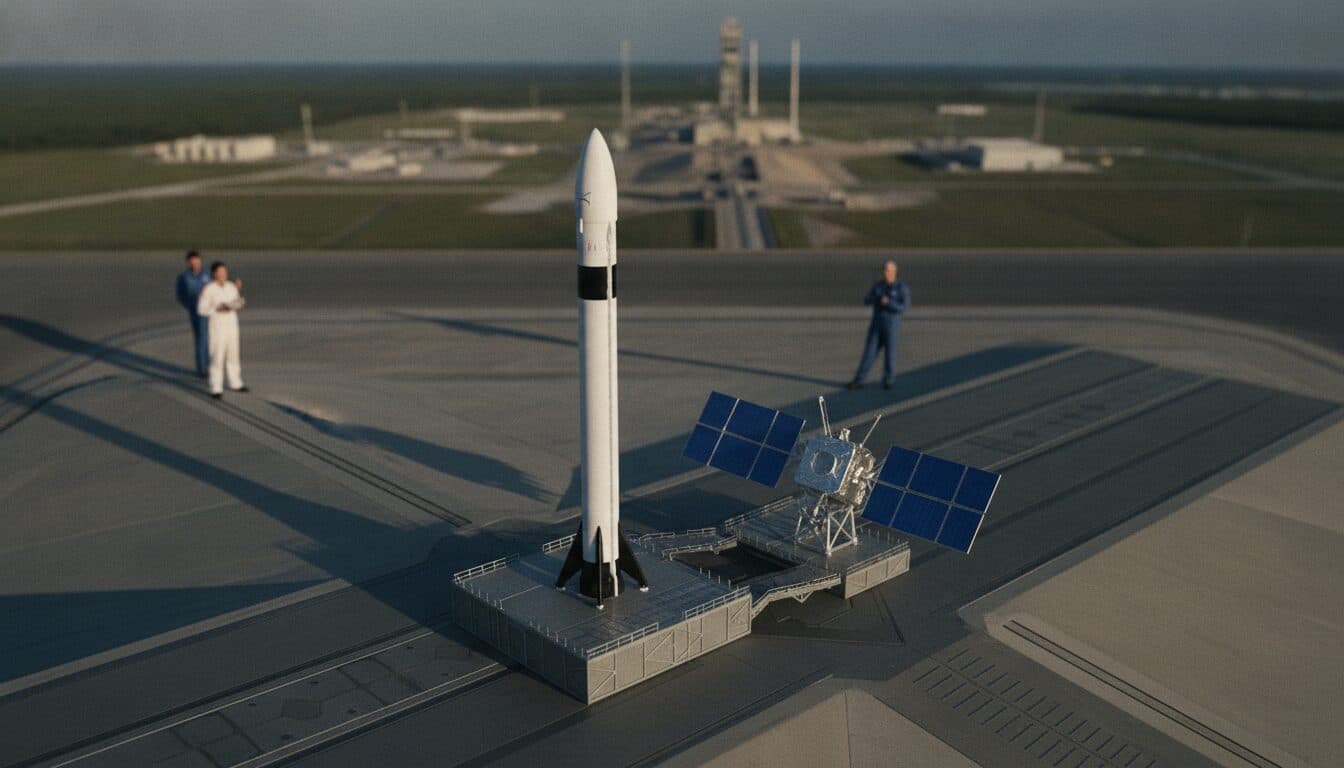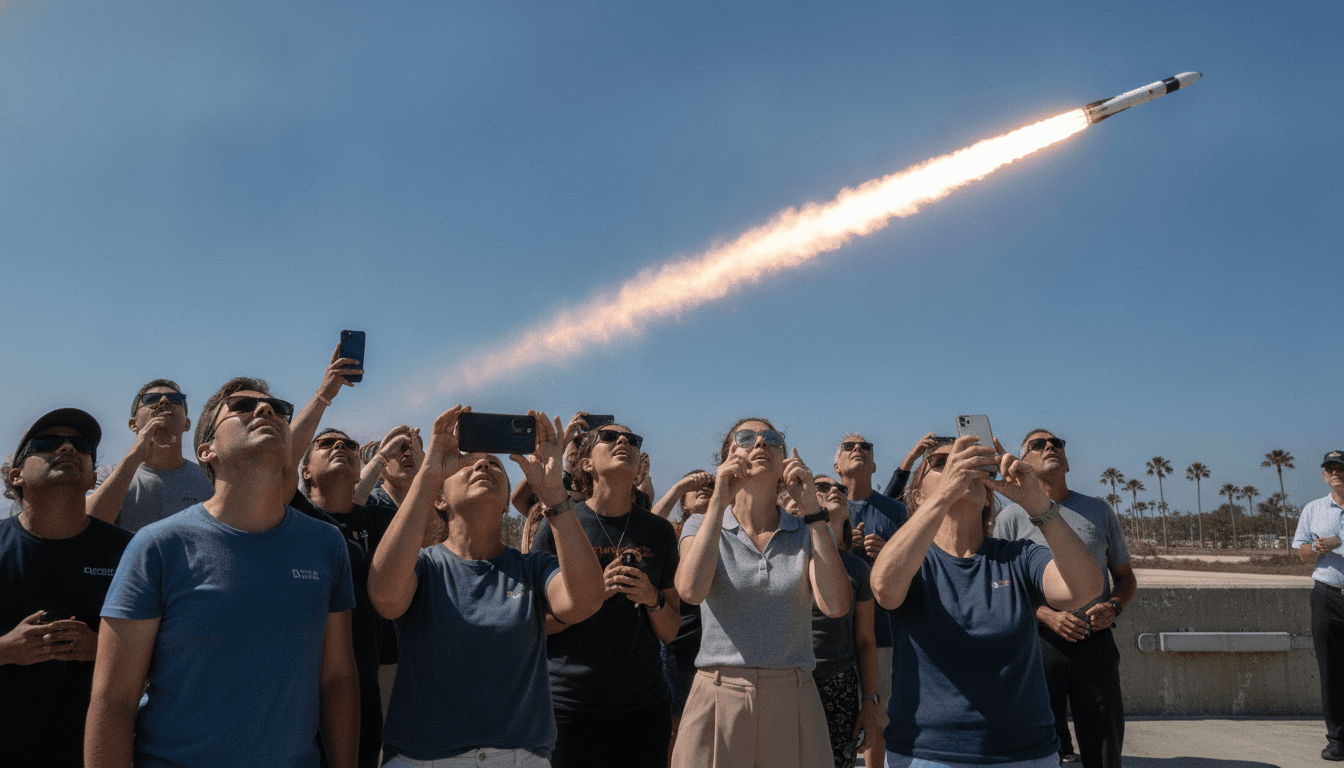
The Starship V3 flight, launched on Monday, June 8, 2026, has provided five crucial insights into the capabilities and future trajectory of SpaceX’s most powerful rocket ever built. This latest iteration of Starship, a monumental step in humanity’s pursuit of deep space exploration and Mars colonization, represents a significant leap in reusable rocketry and heavy-lift capacity.
The launch, extensively covered by The Financial Standard’s Science & Space desk, marked a critical milestone for SpaceX. While specific details of the ‘five things learned’ from the MSN source are not provided, the very nature of such a powerful and complex system means each flight yields invaluable data on propulsion efficiency, structural integrity, re-entry dynamics, and integrated system performance. These learnings are vital for refining future designs and operational procedures.
Impact Analysis
The successful Starship V3 flight significantly alters the broader science and space landscape. Its unprecedented power and reusability promise to drastically reduce the cost of access to space, opening doors for more ambitious scientific missions, larger satellite constellations, and the accelerated development of lunar and Martian infrastructure. The ability to lift massive payloads – far exceeding any previous rocket – means that concepts once relegated to science fiction, such as orbital fuel depots and large-scale space manufacturing, are now within tangible reach.
This development also intensifies the commercial space race, pushing competitors to innovate faster and more efficiently. Governments and private entities alike will be watching closely as SpaceX leverages these learnings to further its goals. The implications extend beyond just payload capacity; the very architecture of future space exploration missions will be shaped by Starship’s capabilities.
Context & Background
SpaceX’s journey with Starship has been a saga of ambitious engineering and iterative development. Originating from Elon Musk’s vision for a fully reusable, Mars-bound transportation system, the Starship program has seen numerous prototypes and test flights. Each previous iteration, from the early ‘Starhopper’ tests to the more recent high-altitude flights and landing attempts, has contributed to the cumulative knowledge base. The ‘most powerful rocket ever built’ designation for Starship V3 underscores the continuous scaling and refinement of its Raptor engines and stainless steel airframe. This program stands in stark contrast to traditional expendable rockets, representing a paradigm shift towards aviation-like reusability in spaceflight. The persistent drive to achieve this level of power and reusability has been a defining trend in the aerospace industry for the past decade, with SpaceX at the forefront.
“The Starship V3 flight isn’t just a technical achievement; it’s a recalibration of what’s possible in space. Its learnings will directly inform humanity’s next giant leaps beyond Earth.”
What’s Next for Starship V3 Flight Learnings
The insights gained from the Starship V3 flight will be immediately integrated into SpaceX’s development cycles. Future iterations of Starship will undoubtedly incorporate these findings, leading to enhanced reliability, efficiency, and safety. Critical decisions regarding future test profiles, operational deployment for lunar missions (such as NASA’s Artemis program), and the long-term strategy for Mars colonization will be directly influenced by this data. We can anticipate a faster cadence of launches as confidence in the system grows, potentially leading to operational flights within the next few years. Furthermore, the data will inform regulatory bodies and potential customers about the vehicle’s readiness for diverse missions, from satellite deployment to crewed space travel.
Key Takeaway
The Starship V3 flight on June 8, 2026, marks a pivotal moment in aerospace, providing crucial data that will accelerate the development of fully reusable, super heavy-lift rockets. These learnings will not only refine Starship itself but also set new benchmarks for efficiency and capability across the entire space industry, fundamentally altering the economics and ambition of space exploration for decades to come.