Emerging from academic laboratories, Qunnect builds quantum networks, transforming theoretical physics into deployable, secure communication infrastructure. This innovative company, co-founded by Stony Brook University’s Endowed Presidential Professor of Physics Eden Figueroa, along with alumni Mehdi Namazi, PhD ‘18, and Mael Flament, MS ‘19, is at the forefront of developing room-temperature quantum memory systems, a significant departure from the ultra-cold environments typically required for quantum technologies. Their work addresses a critical challenge in the development of a scalable quantum internet, pushing the boundaries of what was once considered scientifically improbable.
The Genesis of Qunnect’s Quantum Networks
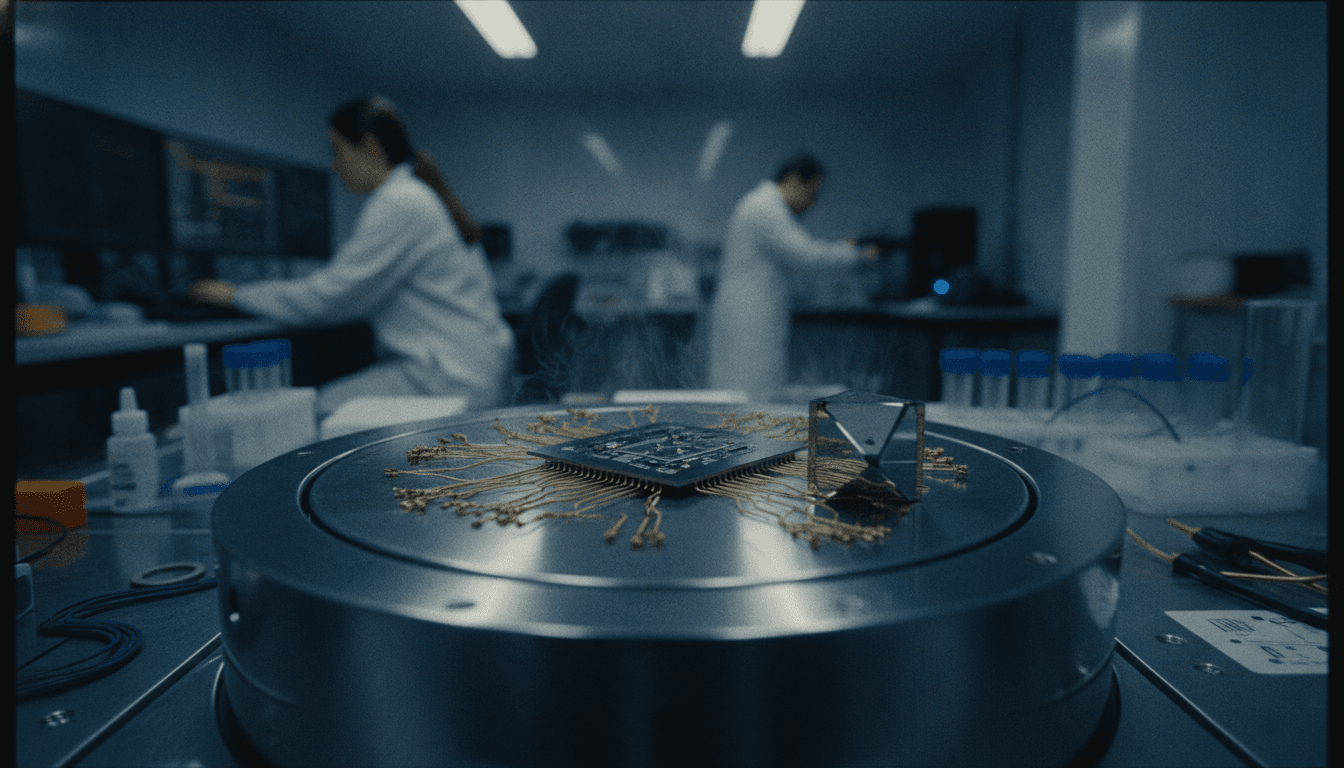
The origins of Qunnect trace back to Figueroa’s laboratory in the basement of the Stony Brook University Physics building. Here, researchers grappled with the ambitious question of achieving quantum memory at room temperature, a feat that would dramatically reduce the cost and complexity associated with traditional quantum systems. Namazi, then a doctoral student, played a pivotal role in this foundational research, which ultimately led to the company’s core patented technology. The team’s breakthrough involved developing a room-temperature quantum memory capable of storing and retrieving quantum states with minimal noise levels, a critical component for stable quantum communication over long distances.
Quantum communication, reliant on individual photons carrying encoded information, offers unparalleled security by immediately detecting any eavesdropping attempts. This inherent security makes quantum networks highly attractive for sectors like cybersecurity, finance, and defense. However, the reliance on environments colder than outer space had previously rendered widespread deployment impractical. Qunnect’s patented room-temperature memory technology, a first of its kind, directly tackles this scalability issue, enabling the integration of quantum devices into existing telecommunications infrastructure.
From Lab to Commercial Deployment
The transition from academic research to commercial viability was facilitated by programs like the NSF Innovation Corps (I-Corps™), which trained the founders to articulate their scientific concepts in terms of real-world problems and solutions. This entrepreneurial shift led to the founding of Qunnect, initially operating from Stony Brook University’s Center of Excellence in Wireless and Information Technology (CEWIT). The university environment provided essential resources, including access to students, collaborators, and facilities, fostering the company’s early growth and refinement of its technology.
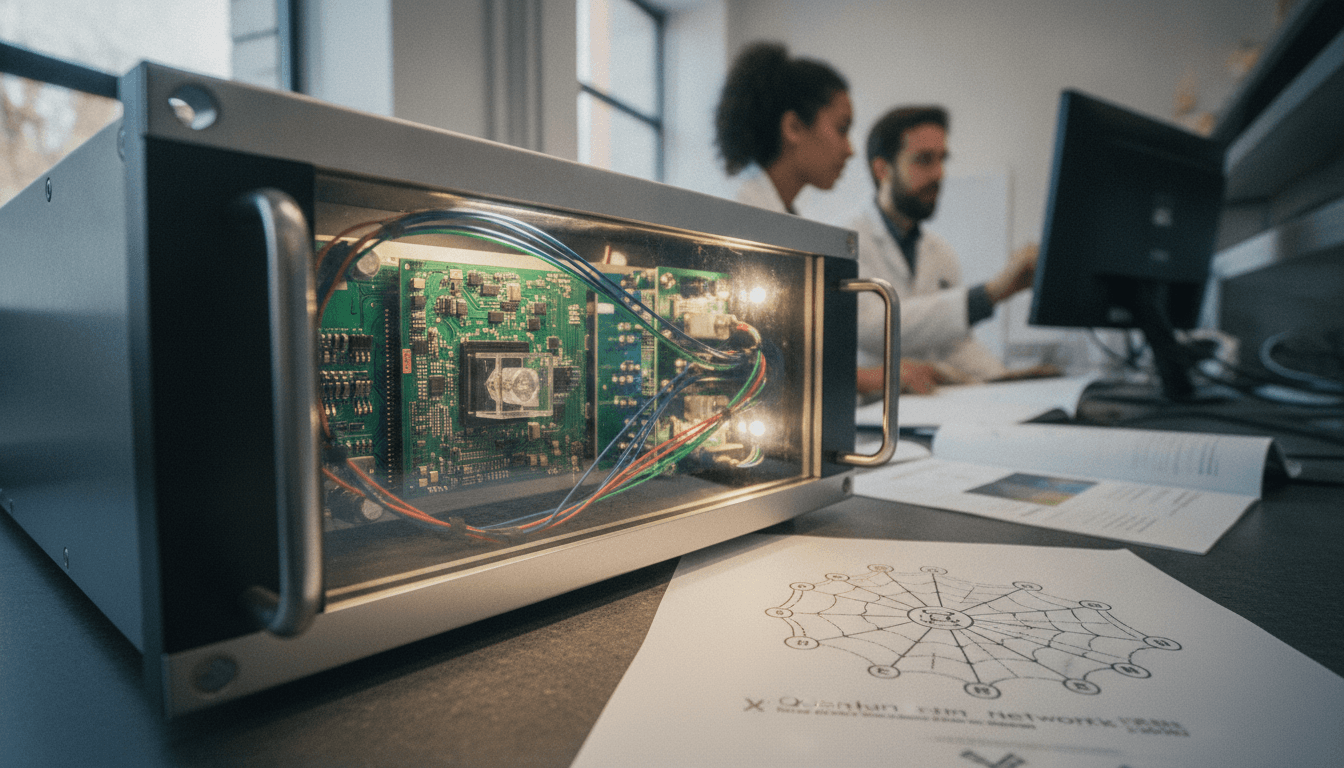
Both Namazi and Flament tailored their coursework at Stony Brook to bridge the gap between lab breakthroughs and commercial products. Namazi’s dissertation focused on the tabletop form of the memory, while Flament’s master’s thesis concentrated on creating a rack-mounted prototype—the form necessary for commercial sales. This foresight enabled Qunnect to develop a product suite for metro-scale networking, now known as the full-stack Carina system.
Qunnect’s practical deployment strategy distinguishes it within the quantum technology sector. Their systems are designed to operate on existing fiber optic lines, demonstrating functionality in urban environments despite vibrations and temperature fluctuations. The GothamQ project, a quantum networking testbed across Manhattan, Brooklyn, and Queens, exemplifies this approach, proving the reliability of quantum technologies in real-world conditions.
“Quantum networks need to have instrumentation remotely deployed in places that could never support extreme cooling. This feature enables feasible scalability.”
The company’s focus on practical deployment has garnered significant support from organizations such as the National Science Foundation (NSF), the U.S. Department of Energy (DOE), and the U.S. Air Force, alongside millions in venture capital funding. A landmark achievement came in 2021 with the sale of the world’s first commercial quantum memory, Qu-MEM, to Brookhaven National Laboratory (BNL). This sale underscored the market readiness of Qunnect’s room-temperature design, which bypasses the complex cooling infrastructure typically required for quantum memory systems.
The Future of Secure Communication
Qunnect builds quantum networks that are poised to address growing concerns about cybersecurity. Noel Goddard, CEO of Qunnect, emphasizes that current encryption standards like RSA/ECC are increasingly vulnerable as computing power advances. Quantum encryption offers a fundamentally different approach, physically encoding information into the quantum state of a particle. This method ensures that any tampering is immediately detectable, providing an unprecedented level of security.
The company continues to evolve its product offerings, developing a wider suite of networking hardware to support secure quantum communication. Researchers envision these systems connecting future quantum computers, enabling highly secure communication networks, and fostering entirely new forms of information sharing. The global investment in quantum communication research by governments and technology companies highlights the perceived importance of this technology as the future of cybersecurity and advanced computing. Qunnect’s journey from student research to a leader in quantum networking serves as a powerful testament to the potential of university-driven innovation to shape the technological landscape.