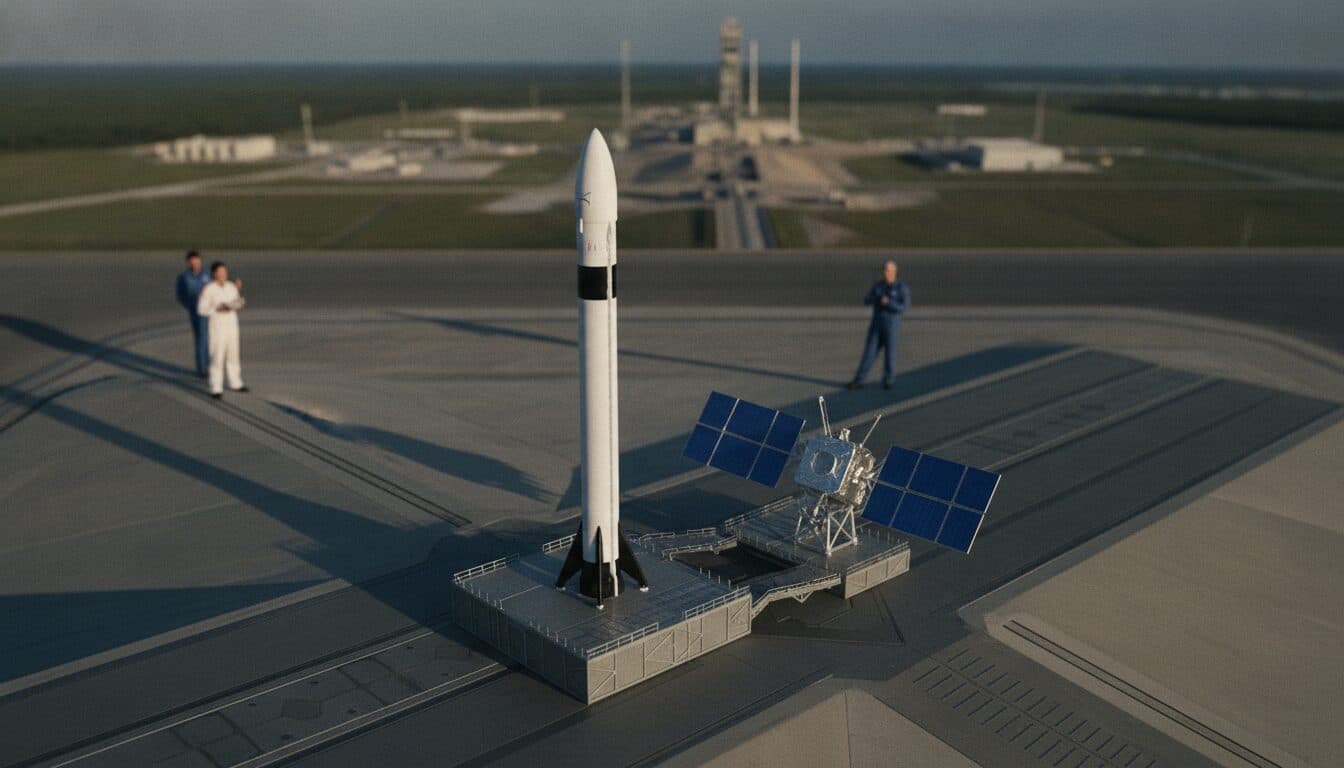
Artemis III, NASA’s ambitious mission to return humans to the lunar surface, continues to solidify its operational framework, with recent updates from June 9, 2026, offering crucial insights into its timeline and objectives. This mission represents a significant leap forward in humanity’s sustained presence beyond Earth orbit, aiming to land the first woman and first person of color on the Moon.
Impact Analysis
The progression of Artemis III has profound implications for the broader science and space landscape. Beyond the symbolic achievement of returning humans to the Moon, the mission is designed to test technologies and procedures critical for future deep-space exploration, including Mars. The development of advanced lunar landers, habitats, and surface operations will provide invaluable data for long-duration human missions. Furthermore, the collaborative nature of the Artemis program, involving international partners and commercial entities, is reshaping the global space economy. It fosters innovation in propulsion, life support, and resource utilization, creating new markets and opportunities for aerospace companies worldwide. The scientific community eagerly anticipates the unique research opportunities presented by extended lunar surface stays, particularly concerning lunar geology, resource prospecting, and the study of the Moon’s exosphere. Related science & space articles frequently highlight the economic and scientific dividends expected from such endeavors.
What Is Artemis III?
Artemis III is poised to be the first crewed lunar landing since Apollo 17 in 1972. The mission’s primary objective is to deliver astronauts to the Moon’s South Pole, an area of significant scientific interest due to the potential presence of water ice in permanently shadowed craters. This ice could be a vital resource for future lunar bases, providing potable water, breathable oxygen, and even rocket fuel. The mission involves NASA’s Orion spacecraft, launched atop the Space Launch System (SLS) rocket, which will carry the crew to lunar orbit. A Human Landing System (HLS) will then transport two astronauts to the lunar surface for an anticipated stay of several days. During their time on the Moon, the astronauts will conduct scientific experiments, collect samples, and demonstrate technologies for future long-term habitation. The selection of the South Pole as the landing site underscores a strategic shift from the equatorial landings of the Apollo era, reflecting a renewed focus on resource utilization and sustained lunar presence.
Context & Background
The Artemis program, named after Apollo’s twin sister, represents a multi-phased approach to lunar exploration. Artemis I, an uncrewed test flight, successfully orbited the Moon in late 2022, validating the SLS rocket and Orion spacecraft. Artemis II, scheduled for 2027, will carry a crew on a lunar flyby, further testing systems before the Artemis III landing. This methodical progression aims to mitigate risks and ensure the safety of the astronauts. The program builds upon decades of space exploration knowledge, incorporating lessons from Apollo while leveraging advancements in propulsion, materials science, and robotics. The emphasis on commercial partnerships, particularly for the Human Landing System, marks a departure from previous government-led space initiatives, fostering competition and accelerating technological development. This hybrid approach is seen as crucial for making lunar exploration sustainable and economically viable in the long term.
“Artemis III is not just about returning to the Moon; it’s about establishing a foundation for humanity’s permanent off-world presence, paving the way for Mars and beyond.”
What’s Next
Looking ahead, the successful execution of Artemis III will be a critical milestone. Following the landing, NASA and its partners will analyze the scientific data and engineering performance to inform subsequent Artemis missions, which aim for more extended stays and the establishment of a lunar Gateway space station. Decisions regarding the next generation of lunar surface infrastructure, including pressurized rovers and habitats, will be heavily influenced by the experiences of Artemis III. The program also faces ongoing challenges, including budget constraints, technological hurdles, and the need for sustained political and public support. International collaboration will continue to play a pivotal role, with discussions ongoing for expanded partnerships in lunar resource development and scientific research. The insights gained from Artemis III will directly influence the architectural design and operational strategies for future crewed missions to Mars, making it a foundational step in humanity’s multi-planetary future.
The implications of Artemis III extend far beyond the immediate scientific and engineering achievements. It represents a renewed commitment to human space exploration, a catalyst for technological innovation, and a powerful symbol of international cooperation. Its success will not only expand our understanding of the cosmos but also inspire a new generation of scientists and engineers, reinforcing humanity’s enduring drive to explore the unknown.