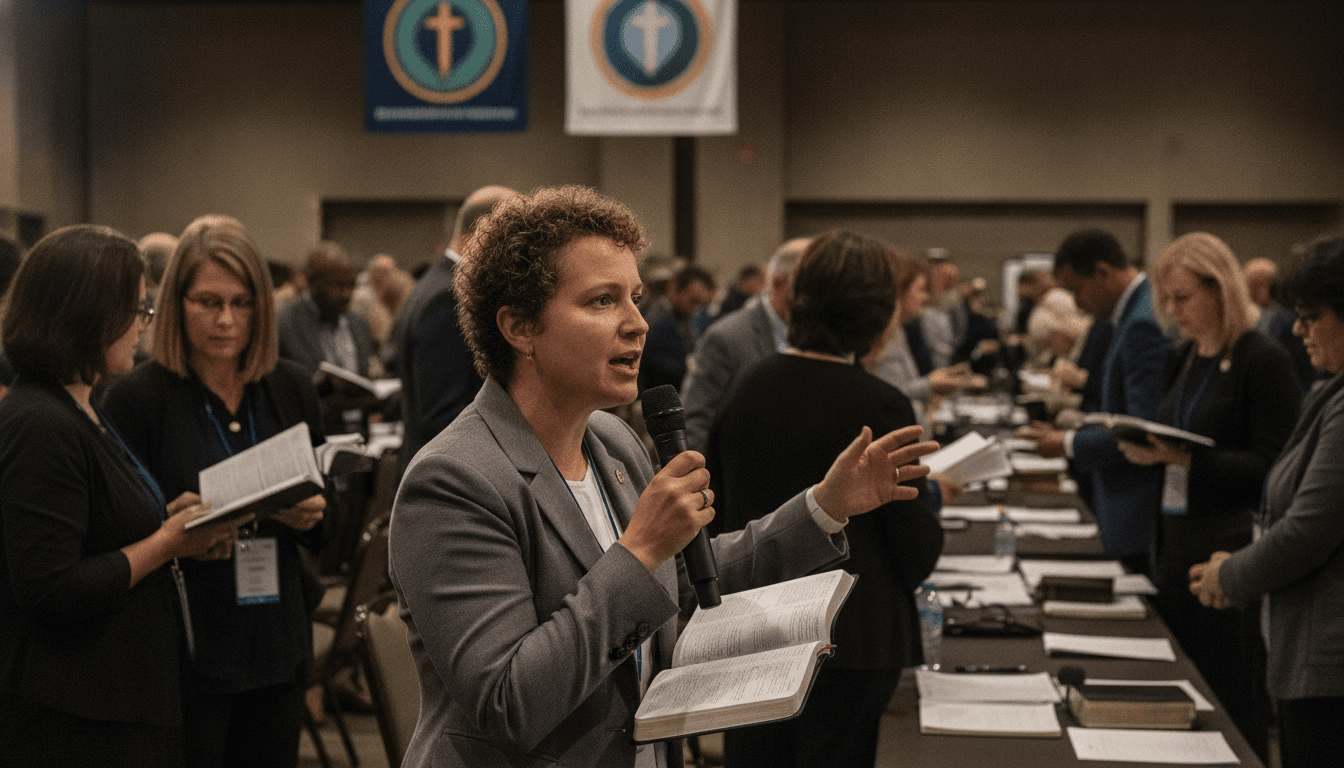
Southern Baptists grapple with women pastors and political divisions as their annual meeting, held on Tuesday, June 9, 2026, unfolds. The gathering has become a focal point for internal struggles threatening to reshape the nation’s largest Protestant denomination, reflecting broader fissures within American religious and political landscapes.
The Story: A Denomination at a Crossroads
The Southern Baptist Convention (SBC), a powerful conservative force in American Christianity, is currently embroiled in intense debates over two intertwined issues: the role of women in pastoral leadership and the escalating political polarization within its ranks. These discussions are not merely theological; they carry significant implications for the denomination’s future influence and its public image.
At the heart of the controversy surrounding women pastors is the SBC’s foundational document, the Baptist Faith and Message, which states that the office of pastor is limited to men. However, a growing number of churches within the convention have either ordained women or employed them in pastoral roles, leading to calls for stricter enforcement and even the disfellowship of these congregations. This internal conflict pits traditionalists against those advocating for a more inclusive interpretation of leadership roles, reflecting a broader societal shift in gender roles that is now challenging deeply held religious doctrines.
Simultaneously, the meeting is dominated by discussions on political divisions. The SBC, long a bastion of conservative political thought, has seen increasing internal strife over the degree to which political engagement, particularly with partisan politics, should define its mission. While many within the convention believe in advocating for conservative values in the public square, others express concern that an overt alignment with specific political factions is alienating members, diluting the evangelical message, and creating an environment of distrust and discord. This tension mirrors the wider political chasm in the United States, illustrating how national political anxieties are permeating even religious institutions.
Impact Analysis: Shifting Sands in Religious Politics
The outcomes of the Southern Baptist meeting will have significant repercussions beyond the denomination itself, affecting the broader politics & policy landscape. A decision to more rigorously enforce restrictions on women pastors could lead to a significant exodus of churches and members, potentially weakening the SBC’s numerical strength and political influence. Conversely, a more lenient approach could be seen as a concession by conservatives, sparking further internal dissent from traditionalist factions.
The debate over political divisions is equally critical. Should the SBC double down on its partisan alignment, it risks further alienating younger generations and more moderate evangelicals, potentially diminishing its long-term viability and its ability to speak with a unified voice on moral and ethical issues. If it pivots towards a more nuanced approach to political engagement, it could regain some lost ground but might also face accusations of abandoning its conservative principles. This internal struggle for identity reflects a larger trend among faith-based organizations grappling with how to maintain relevance and unity in an increasingly polarized society.
“The Southern Baptist Convention’s internal struggles over women pastors and political alignment are not isolated incidents; they are symptomatic of the profound challenges facing traditional religious institutions in a rapidly changing social and political environment. How they navigate these issues will set a precedent for other denominations grappling with similar pressures.”
Context & Background: A History of Internal Strife
The Southern Baptist Convention has a long history of internal debates, from its founding over issues of slavery to the conservative resurgence of the late 20th century. The current discussions around women pastors are not entirely new; the role of women in ministry has been a recurring point of contention within various Protestant denominations for decades. However, the intensity of the current debate is heightened by the broader cultural conversations around gender equality and leadership.
Similarly, the political divisions reflect a culmination of decades of increasing evangelical engagement in American politics, particularly since the late 1970s. While this engagement initially solidified the SBC’s influence as a conservative voting bloc, the hyper-partisan nature of recent political cycles has begun to fracture this unity, forcing a re-evaluation of the appropriate balance between faith and politics. The meeting on June 9, 2026, therefore, represents a critical juncture, building upon past tensions and trends that have brought the denomination to this pivotal moment.
What’s Next: A Defining Moment for Southern Baptists
The decisions made at this Southern Baptists meeting will undoubtedly shape the denomination’s trajectory for years to come. Immediate implications could include formal actions against churches employing women pastors, or the formation of new task forces to address political engagement guidelines. Looking further ahead, observers will be watching for potential schisms or significant shifts in membership demographics, as individuals and congregations align themselves with the outcomes of these debates. The future leadership of the SBC and its ability to maintain its broad appeal will largely depend on its capacity to navigate these complex issues without fracturing its core identity. Future conventions and denominational pronouncements will provide further clarity on how these resolutions are implemented and received.
Key Takeaway: Reconciling Tradition with Modernity
The struggles within the Southern Baptist Convention over women pastors and political divisions underscore a fundamental challenge facing many traditional institutions: how to reconcile deeply held theological and historical traditions with the pressures and realities of modern society. The outcome of these debates will not only determine the future of the SBC but will also offer a significant case study on the resilience and adaptability of religious organizations in an era of rapid social and political change. The decisions made this week will resonate far beyond the convention halls, influencing the broader landscape of faith, politics, and culture in America.