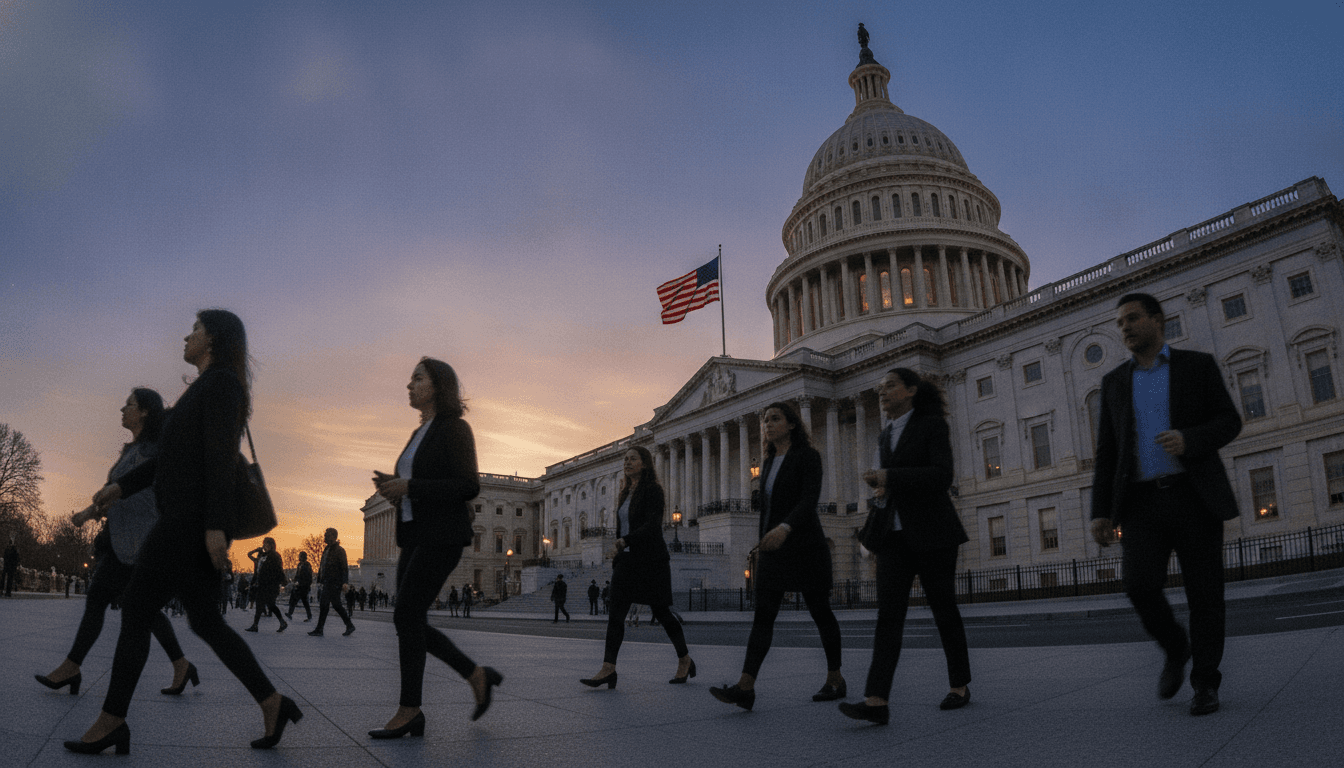
A sweeping $70 billion immigration enforcement package has been passed by the House of Representatives, marking a significant legislative victory for House Republicans and effectively ending a month-long impasse over federal funding. This crucial development, finalized on Thursday, June 11, 2026, ensures the full funding of key federal agencies—specifically the Department of Homeland Security (DHS), Immigration and Customs Enforcement (ICE), and U.S. Customs and Border Protection (CBP)—through the remainder of President Donald Trump’s second term. The bill, passed by a narrow margin, underscores a robust commitment to federal immigration enforcement and is now headed to President Trump for his expected signature.
The passage of this substantial funding bill reflects deeply polarized views within Congress regarding immigration policy, border security, and the government’s role in managing migration. While championed by Republicans as essential for national security and maintaining the rule of law, the legislation faced strong opposition from many Democrats who raised concerns about its emphasis on enforcement over humanitarian considerations and comprehensive reform. The contentious debate highlights the enduring challenges in forging bipartisan consensus on one of the nation’s most pressing issues.
What the $70 Billion Immigration Enforcement Package Covers
The core of the $70 billion allocation is directed towards bolstering the operational capabilities of DHS, ICE, and CBP. These agencies are the frontline pillars of the nation’s border security and immigration enforcement infrastructure. The funding is designed to ensure their uninterrupted functioning and significant enhancement, covering personnel, technology upgrades, and critical border infrastructure. This includes the expansion of physical barriers and sophisticated surveillance systems along the U.S.-Mexico border, aiming to deter unauthorized crossings and improve detection capabilities.
Specifically, the appropriations are set to provide financial certainty and operational stability for these agencies throughout President Trump’s second term. Supporters argue these funds will enable the deployment of advanced technology, a substantial increase in staffing levels for border patrol units and immigration officers, and improvements to facilities. These measures are intended to manage the daily challenges of immigration enforcement more effectively, reduce backlogs, streamline processing, and enhance interior enforcement operations.
“The infusion of funds promises to strengthen border infrastructure projects such as the expansion of physical barriers and enhancement of detection systems to monitor illegal crossings more effectively.”
Political Divides and Broader Implications
The narrow passage of the $70 billion immigration enforcement package vividly illustrates the ongoing partisan chasm in U.S. politics. Republicans presented the bill as a vital step to protect homeland security, safeguard communities, and uphold the rule of law, emphasizing the need for robust funding to address what they characterize as escalating border security challenges and illegal immigration. For them, adequate funding is not merely an administrative necessity but a strategic imperative.
Conversely, many Democrats expressed profound concerns, arguing that the bill’s heavy focus on enforcement could exacerbate humanitarian crises at the border and negatively impact immigrant communities. They cited issues such as family separations, detention conditions, and the treatment of asylum seekers, vowing to hold the government accountable for ensuring human rights are respected. Critics also advocated for a more comprehensive immigration overhaul that includes legal pathways, visa reform, and protections for undocumented immigrants already residing in the country. Despite these objections, the immediate need to avert a government shutdown by funding DHS ultimately led to the bill’s approval.
With President Trump’s signature anticipated, the U.S. government is poised to significantly advance its immigration enforcement agenda. The increased resources will not only strengthen physical and technological border infrastructure but also support the enlargement of frontline personnel at CBP and ICE. This legislative package solidifies the administration’s broader immigration stance, which prioritizes strict enforcement and deterrence. This approach is expected to influence various aspects of policy implementation, including deportation priorities and coordination with local law enforcement agencies across the nation.
As these funds are deployed in the coming years, various stakeholders, including advocacy groups, local governments, and border communities, will undoubtedly continue to scrutinize the dual impact of enhanced enforcement on both national security and the lived experiences of immigrant populations. The debate over balancing security with humanitarian concerns is far from over, and the implementation of this legislation will serve as a critical test of its effectiveness and ethical implications. For deeper insights into the complex interplay of policy and politics, readers can explore related politics & policy articles on our platform.
What’s Next for Immigration Enforcement
Upon President Trump’s expected signature, the $70 billion immigration enforcement package will immediately begin to reshape the operational landscape of U.S. border and interior enforcement. The immediate focus will be on the allocation of funds to DHS, ICE, and CBP for technology upgrades, increased staffing, and infrastructure projects. This includes accelerating the deployment of advanced surveillance systems and potentially expanding physical barriers along the southern border. The agencies will likely initiate new hiring drives for border patrol agents and immigration officers, aiming to meet the increased operational demands outlined in the bill.
The long-term implications are substantial. The consistent funding through Trump’s second term provides a stable foundation for his administration’s enforcement-first immigration strategy, potentially leading to a more aggressive stance on deportations and stricter vetting processes. Advocacy groups will be closely monitoring the implementation, particularly concerning human rights and the treatment of asylum seekers, with potential legal challenges arising from new enforcement measures. The political ramifications will also be felt in upcoming election cycles, as immigration remains a potent issue for voters across the political spectrum.
The passage of this bill is not merely a funding allocation; it is a definitive statement on the direction of U.S. immigration policy under the current administration. It signals a sustained commitment to border security and interior enforcement, with significant resources dedicated to these efforts. While proponents laud it as a necessary step for national security, critics continue to call for a more balanced and humane approach to immigration. The coming months and years will reveal the full impact of this legislative milestone on both the nation’s borders and its immigrant communities.