This year’s World Cup ball’s new design, the Adidas Trionda, introduces significant aerodynamic changes that could impact gameplay, particularly for long-distance kicks. The upcoming FIFA World Cup tournament, hosted across the US, Canada, and Mexico, is set to feature a brand-new soccer ball, continuing a half-century tradition of design evolution.
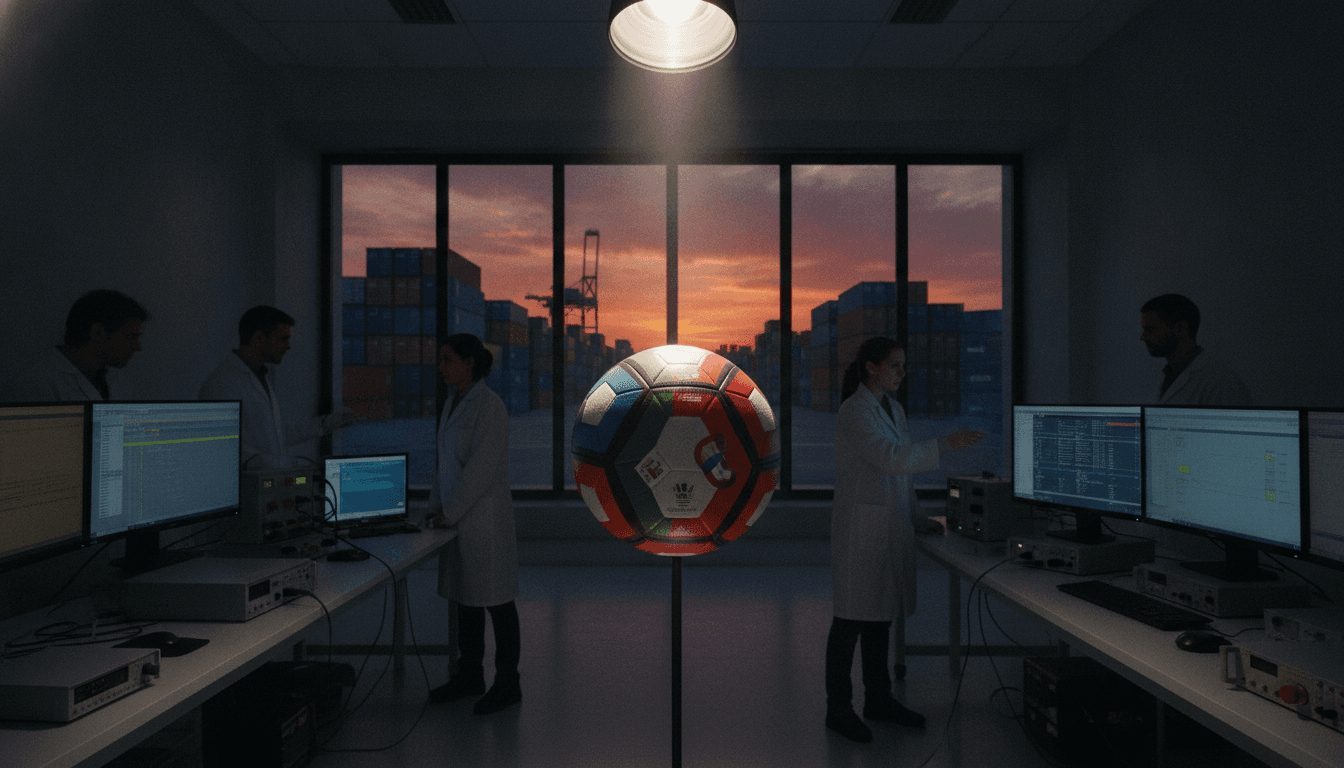
Researchers at the University of Tsukuba, led by sports physicist John Eric Goff, have conducted extensive wind-tunnel experiments on the Trionda. Their findings suggest that while the ball improves upon previous versions in some aspects, its unique characteristics might prevent long-distance kicks from traveling as far as they did in past tournaments. Goff, an incoming professor of engineering practice at Purdue University, notes,
“The simple picture is that Trionda may very slightly punish extreme distance, but it should reward clean technique and predictable flight.”
He anticipates visible differences for goalkeepers, defenders making long passes, and players attempting long-range shots.
The Evolution of World Cup Ball Design
Adidas has been at the forefront of designing new World Cup balls since the 1970s. Early innovations primarily focused on aesthetics and minor structural improvements, such as enhanced water resistance and upgraded foam cores, largely maintaining the traditional 32-panel stitched design. A significant shift occurred with the 2006 World Cup’s +Teamgeist ball, which introduced 14 thermally bonded curved panels, improving moisture resistance and preventing the ball from gaining weight during play. This marked the beginning of more profound structural changes that directly influence game dynamics, a trend Goff and his colleagues have meticulously tracked.
Goff’s research involves analyzing a ball’s trajectory data to derive its drag coefficient, a crucial metric for understanding air resistance. His team’s consistent experimental methodology at the University of Tsukuba, using a force balance to measure aerodynamic forces at real-game wind speeds, allows for direct comparison of new ball designs with historical data. This rigorous approach helps uncover how design modifications, such as different surface textures and fewer panels, alter a ball’s in-flight behavior.
Understanding the Trionda’s Aerodynamics
The Trionda’s design features just four panels, each deeply grooved, providing significant surface texture. This approach contrasts sharply with the infamously smooth eight-panel Jabulani ball from the 2010 World Cup, which faced widespread criticism for its unpredictable trajectory due to a sudden increase in its drag coefficient—a phenomenon known as the ‘drag crisis.’ Smoother balls experience this drag crisis at higher speeds, causing them to lose speed rapidly and behave erratically. Adding texture, much like the dimples on a golf ball or stitches on a baseball, pushes this transition to lower speeds, allowing the ball to travel farther and more predictably.
While the Trionda successfully pushes the drag crisis to the slowest speed since 2010, ensuring more predictable flight at lower speeds, Goff and his team also found a trade-off: its drag coefficient is higher than recent predecessors at high speeds. This means that during the faster portion of its flight, the Trionda will slow down more quickly, potentially shortening the trajectories of powerful long kicks by a few meters. Players, however, have had access to the Trionda for months, allowing them to adapt to its unique flight characteristics. The ball’s similarity to Nike’s Flight ball might even give an advantage to players familiar with that design.
World Cup Ball’s New Design Challenges Players
As the FIFA World Cup approaches, the World Cup ball’s new design presents a fascinating challenge for players and coaches alike. While the Trionda promises predictable flight for clean technique, its higher drag at high speeds suggests that tactical adjustments may be necessary for long-range plays. Goff continues to share his team’s findings with FIFA and Adidas, underscoring the importance of external, independent testing for the most crucial piece of equipment in the world’s most popular sport.