Milky Way’s black hole reveals active wind, a long-theorized phenomenon, as astronomers confirm evidence of energy radiation pushing away matter from Sagittarius A* (Sgr A*). This groundbreaking discovery, made possible by five years of observations from the Atacama Large Millimeter/Submillimeter Array (ALMA), finally validates predictions dating back to 1971 regarding the behavior of supermassive black holes (SMBHs).
For decades, astrophysicists have speculated that black holes, much like stars, exert a ‘wind’ – a stream of particles and energy – on their surroundings. However, the elusive nature of Sgr A*, the relatively quiet supermassive black hole at the heart of our galaxy, made direct observation challenging. Unlike the dramatic outflows from more active black holes, Sgr A*’s emissions are subtle, involving ‘occasional small wisps of gas’ where only a fraction converts into the radiation that then exerts pressure.
Unveiling the Southern and Northern Lobes
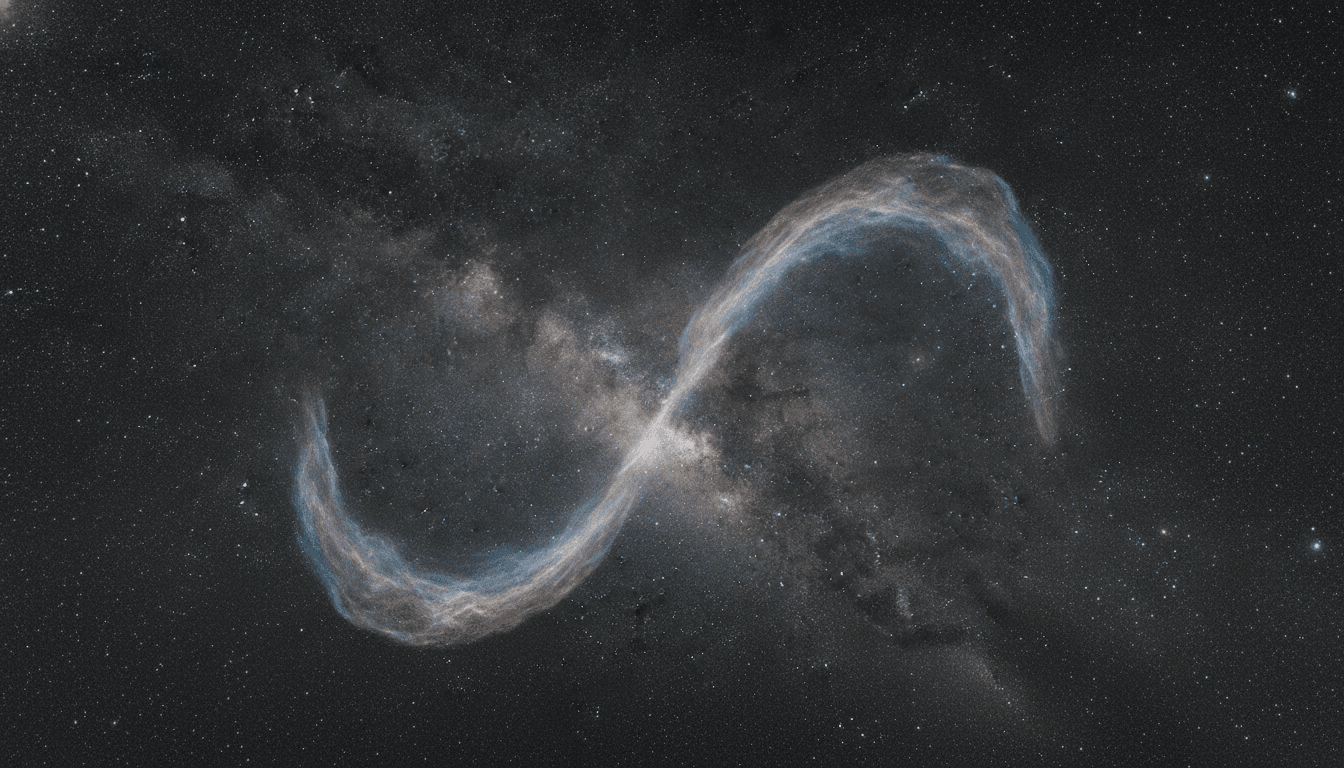
The ALMA observations, meticulously correlated with other astronomical data, successfully identified a distinct Southern Lobe of movement emanating from Sgr A*. Crucially, evidence for a corresponding Northern Lobe was also uncovered, painting a clearer picture of this energetic outflow. This discovery provides concrete proof of the mechanism by which even quiescent black holes can influence their galactic environment, albeit on a far smaller scale than their more voracious counterparts.
“The quiescent nature of Sgr A* makes finding evidence of SMBH wind a significant astrophysical triumph, offering new insights into galactic evolution.”
Understanding these subtle interactions is vital for comprehending the long-term evolution of galaxies. The energy radiated by a black hole, even a quiet one, can play a role in regulating star formation and the distribution of gas within the galactic center. This research contributes significantly to related Industries news in astrophysics and cosmology.
The Quiescent Nature of Sagittarius A*
The very quietness of Sgr A* has been both a hindrance and a fascinating aspect of this research. While a rapidly expanding event horizon of a well-fed SMBH would present a more dramatic spectacle, it would also pose significant risks to nearby planetary systems. Sgr A*’s subtle activity allows for a unique opportunity to study the fundamental physics of black hole winds without the overwhelming interference of massive, energetic outbursts. The detection of this active wind from the Milky Way’s black hole reveals active wind processes previously hidden.
This landmark finding not only confirms a long-standing theoretical prediction but also opens new avenues for studying the intricate relationship between supermassive black holes and their host galaxies. As observational technology continues to advance, astronomers will undoubtedly seek to further characterize these winds, potentially leading to a more complete understanding of cosmic dynamics.