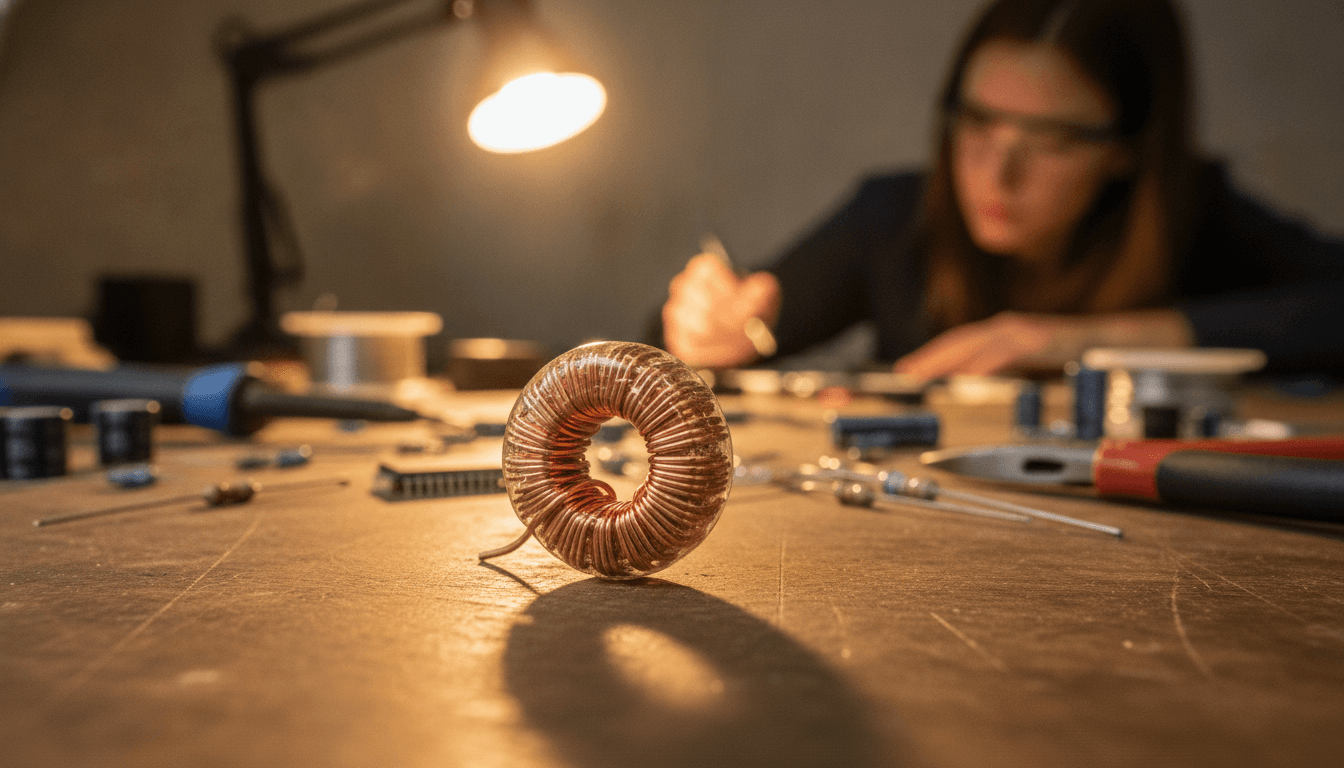
Inductor coil stability proves crucial for radio frequency circuits, a challenge veteran radio amateurs understand well. While air-cored inductors offer benefits, their inherent fragility leads to unpredictable inductance shifts from minor movements, temperature changes, or even ambient sound. For decades, the reliable solution has been Q-dope, a polystyrene-based solution that dries into a rigid, low-dielectric coating, effectively ‘potting’ the coils into a stable form.
The Enduring Need for Inductor Coil Stability
In the world of radio, particularly for high-frequency applications, the performance of an inductor is paramount. Unlike their chunky transformer counterparts used in power supplies, radio frequency (RF) inductors are often delicate, air-cored structures. Their design prioritizes low loss and specific inductance values, but this often comes at the expense of mechanical robustness. Even the slightest physical disturbance—a bump, vibration, or thermal expansion—can subtly deform the coil windings, altering its inductance and subsequently degrading circuit performance. This variability can be a significant hurdle for sensitive RF circuits where precise tuning is essential.
“Relying on an unsupported air-cored coil for stability is a fool’s errand; its inductance will shift from the slightest movement or thermal expansion.”
Historically, radio enthusiasts and professionals alike sought methods to mitigate this issue. Before the widespread availability of specialized potting compounds, some resorted to makeshift solutions, including nail lacquer, to provide a degree of rigidity. However, these often fell short in terms of dielectric properties or long-term stability. The gold standard, particularly in the American amateur radio community, became Q-dope due to its excellent electrical characteristics and firm setting properties.
The Return of Q-Dope: A DIY Solution
The original commercial Q-dope, a staple for many years, has largely disappeared from the market, leaving a void for those seeking to achieve optimal inductor coil stability. Fortunately, the ingenuity of the amateur radio community has once again provided a solution: homemade Q-dope. The principle is simple yet effective: dissolving packaging polystyrene in an appropriate solvent creates a viable substitute. This DIY approach not only revives a lost art but also offers a cost-effective alternative for hobbyists and professionals alike.
Creating homemade Q-dope requires careful consideration of safety. Solvents used to dissolve polystyrene can emit fumes that are harmful if inhaled, and the mixture itself can be flammable. Proper ventilation, protective gear, and an understanding of the chemicals involved are essential. Despite these precautions, the ability to produce a reliable low-dielectric coating for stabilizing delicate coils empowers innovators to continue pushing the boundaries of radio frequency design. For those eager to experiment with their own inductor designs, exploring related Industries news can provide broader context on material science and manufacturing trends impacting electronic components.
Future Implications for RF Component Durability
The renewed interest in methods like Q-dope for enhancing inductor coil stability underscores a broader trend in electronics: the pursuit of durable and reliable components, even in an era of miniaturization. As RF technologies continue to evolve, from advanced telecommunications to IoT devices, the foundational principles of stable circuit design remain critical. Whether through specialized commercial products or resourceful DIY alternatives, ensuring the mechanical integrity of key components like inductors will continue to be a focus for engineers and hobbyists alike, ensuring consistent performance in diverse operational environments.