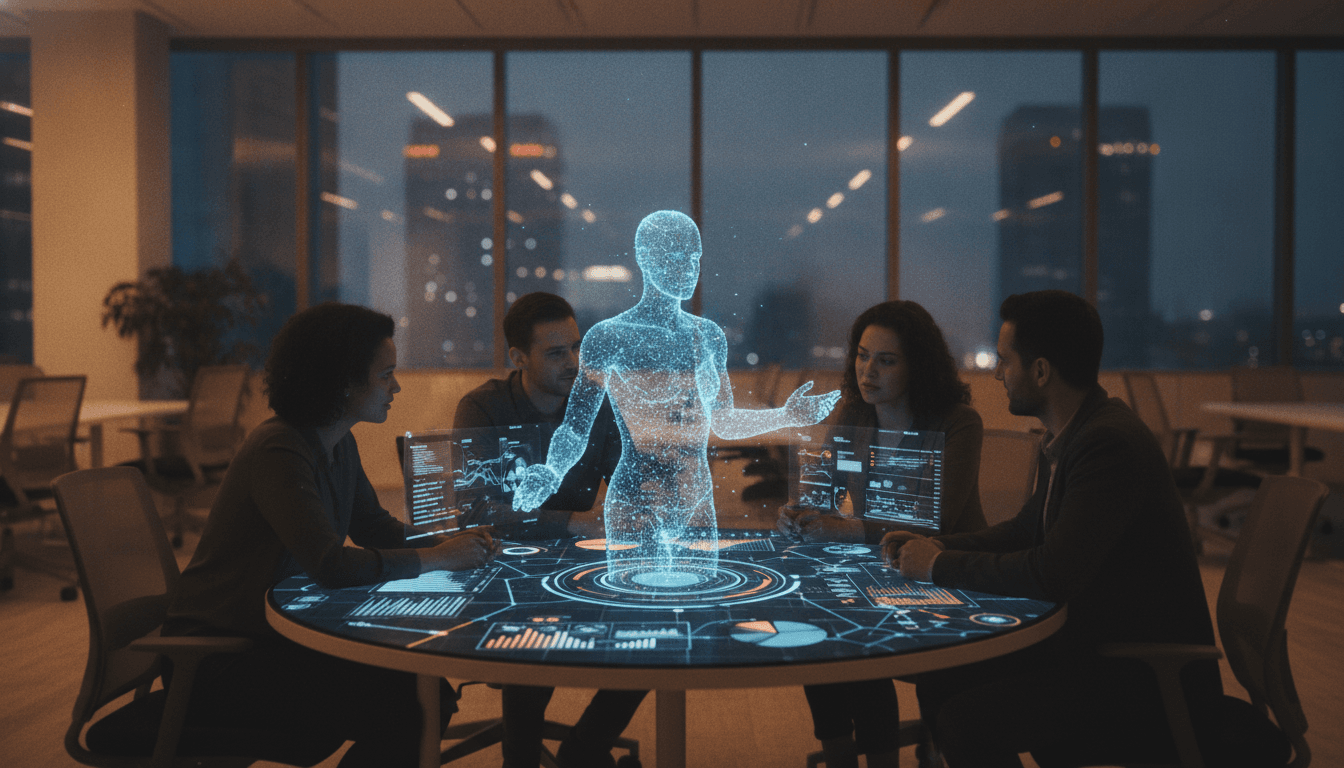
Hybrid human-AI enterprise demands a fundamental re-evaluation of leadership strategies as AI agents are poised to surge by 300% in adoption over the next two years, fundamentally reshaping workplace dynamics. Unlike traditional automation, these autonomous AI agents can coordinate complex tasks and interact across multiple systems, transforming roles in customer service, HR, and sales, and delivering productivity gains of 30-50%.
The rise of agentic AI positions these intelligent systems more as collaborators than mere tools, working alongside human employees in blended teams. This shift, as acknowledged by over three-quarters of HR leaders, necessitates a complete reappraisal of how responsibilities are distributed, skills are prioritized, and workplace culture is shaped. For 86% of chief HR officers, navigating this digital labor landscape will be central to their roles in the coming years, requiring a significant mindset shift, according to Ateet Jayaswal, chief culture and employee experience officer at Wipro.
Redeploying Roles for Higher-Value Work
As AI agents take on more complex and integral tasks, a significant redesign of roles and responsibilities is imminent. Estimates suggest three-quarters of current roles will require redesign, reskilling, or redeployment by 2030 due to agentic AI. Jayaswal emphasizes that this transformation should focus on reskilling employees for higher-value work, optimizing the potential of a hybrid human-AI enterprise.
Wipro, for instance, has integrated a custom agentic AI assistant, co-created with Ema Unlimited, to manage 50 HR tasks previously handled by human employees. This has reduced average query response times from 48 hours to mere seconds. Consequently, human employees are freed to focus on tasks requiring creativity, imagination, and cross-functional collaboration. Jayaswal stresses the imperative of keeping humans in the loop, especially given the sensitive data AI agents handle. Robust governance, including data privacy rules and AI councils, is crucial. The nature of jobs will evolve from problem-solving to designing the ‘hero’ that solves problems, a shift that successful individuals will embrace.
“The nature of your job changes from being the hero who comes in to solve the problem to designing the hero who can solve the problem.”
Evolving Employee Skillsets for AI Collaboration
The advent of agentic AI will necessitate a reprioritization of employee skills. Over four in five HR leaders are planning to reskill workers to remain competitive. Technical AI literacy is becoming essential, with major employers like Salesforce, Danone, and Walmart launching dedicated AI and digital skills programs. Beyond technical acumen, soft skills are also evolving. Employees interacting with AI agents must clearly articulate tasks, desired outcomes, and necessary guardrails for data privacy. A recent survey highlights relationship building, collaboration, and adaptability as top recruitment priorities for a blended workforce.
Maintaining Workplace Culture in a Hybrid Environment
While AI agents promise to elevate employee experience by removing non-value-added work, leadership teams must also address potential new pressures. A significant knowledge gap exists, with 73% of HR leaders reporting employees don’t fully understand AI’s impact on their work. Defining AI agents as ‘teammates’ might erode trust and professional identity, raising questions of accountability. Jayaswal highlights the critical role of management in orchestrating blended systems, supervising both AI agents and human employees. Upgrading employee well-being programs to foster social connection and empathetic communication will be vital to maintaining a robust workplace culture amidst increased AI interactions.
The rapid scaling of agentic AI across enterprises mandates that leadership teams actively review and refine organizational strategies. This proactive approach is essential for optimizing both the technological gains and the employee experience within the evolving hybrid human-AI enterprise.