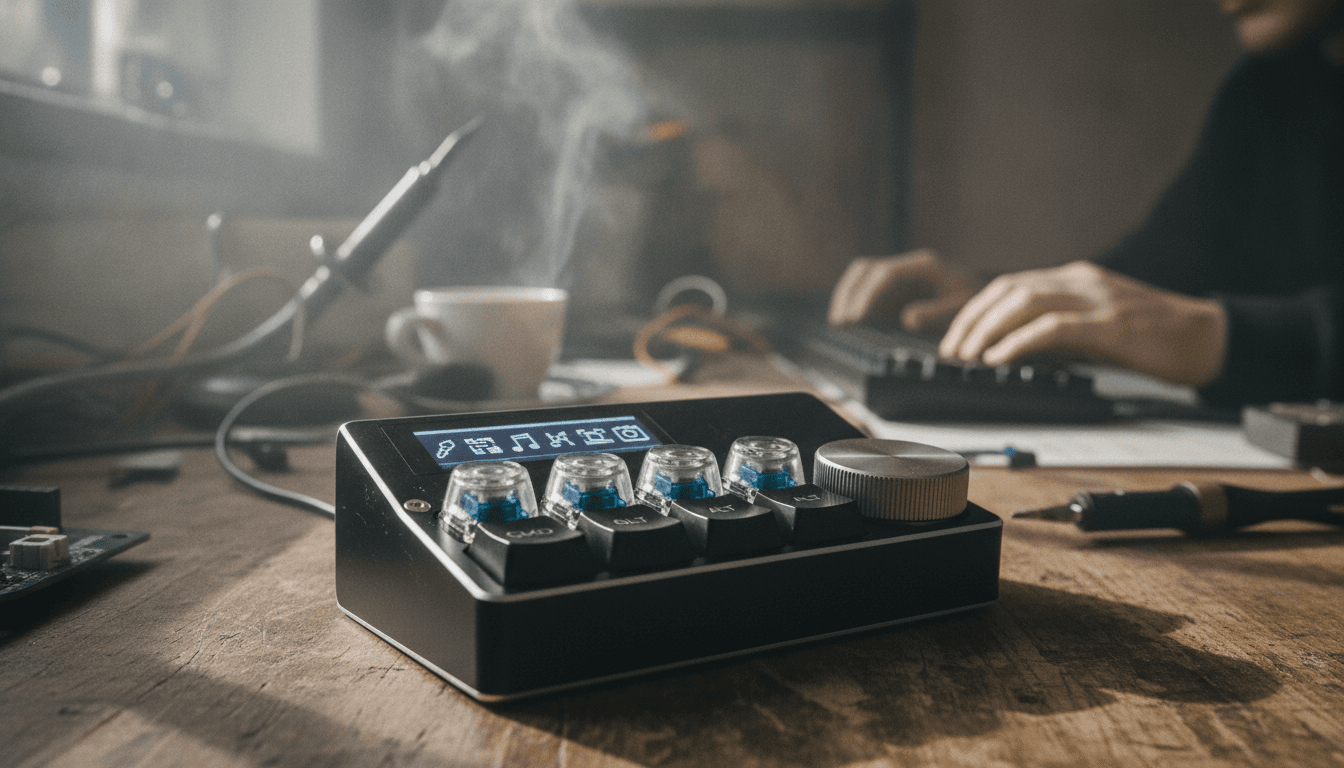
A homebrew macropad project, dubbed ‘Apna Dost,’ is drawing significant attention from the maker community for its impressive design and functionality. This innovative device, created by [np_vishwakarma], successfully integrates several highly sought-after features, including an encoder, an OLED display, and the highly customisable QMK firmware. Its sleek aesthetic and robust capabilities position it as a standout example in the burgeoning DIY peripheral market.
The Appeal of a Homebrew Macropad Project
The ‘Apna Dost’ project distinguishes itself with its thoughtful component selection and user-centric design. At its core, the system utilises an RP2040 microcontroller, a choice lauded for its accessibility and power, making it feasible for many enthusiasts to replicate the build with readily available parts. While some might desire a greater number of keys, the modular nature of such a homebrew macropad project means expansion is straightforward. The design cleverly incorporates an encoder with multi-purpose functionality, adding a layer of versatility that enhances user experience without increasing complexity.
“The integration of an RP2040, an OLED display, and QMK firmware in the ‘Apna Dost’ project sets a high bar for DIY macropads, making advanced customisation accessible.”
A key differentiator for ‘Apna Dost’ is its embrace of QMK firmware. Many commercially available budget macropads often fall short by omitting robust, open-source firmware, limiting their long-term utility and customisation potential. The inclusion of QMK ensures that users can easily modify and tailor the macropad’s behaviour to their specific workflows, a crucial aspect for productivity and gaming enthusiasts alike. This commitment to open standards significantly boosts the project’s appeal within the maker community, allowing for related Industries news to follow in its footsteps.
Customisation and Community Impact
The beauty of a well-designed homebrew macropad project lies in its inherent customisability. While the ‘Apna Dost’ layout positions the OLED display adjacent to the keys, the open-source nature of the project means that builders can easily reconfigure this if they prefer the OLED to directly label the macro keys. This flexibility empowers users to truly make the device their own, adapting it to their unique preferences and operational needs. The project serves as an excellent blueprint for those looking to delve deeper into custom peripheral creation, demonstrating that high-quality, functional devices can be crafted at home.
The increasing interest in DIY macropads reflects a broader trend towards personalised computing setups. From converting old conference badges into rudimentary QMK macropads to undertaking more ambitious, larger-scale builds, the community’s ingenuity is boundless. Projects like ‘Apna Dost’ inspire further innovation, showcasing what’s possible when accessible hardware meets powerful, open-source software. This particular project exemplifies a blend of aesthetic appeal and practical functionality, encouraging more individuals to explore the exciting world of custom input devices.