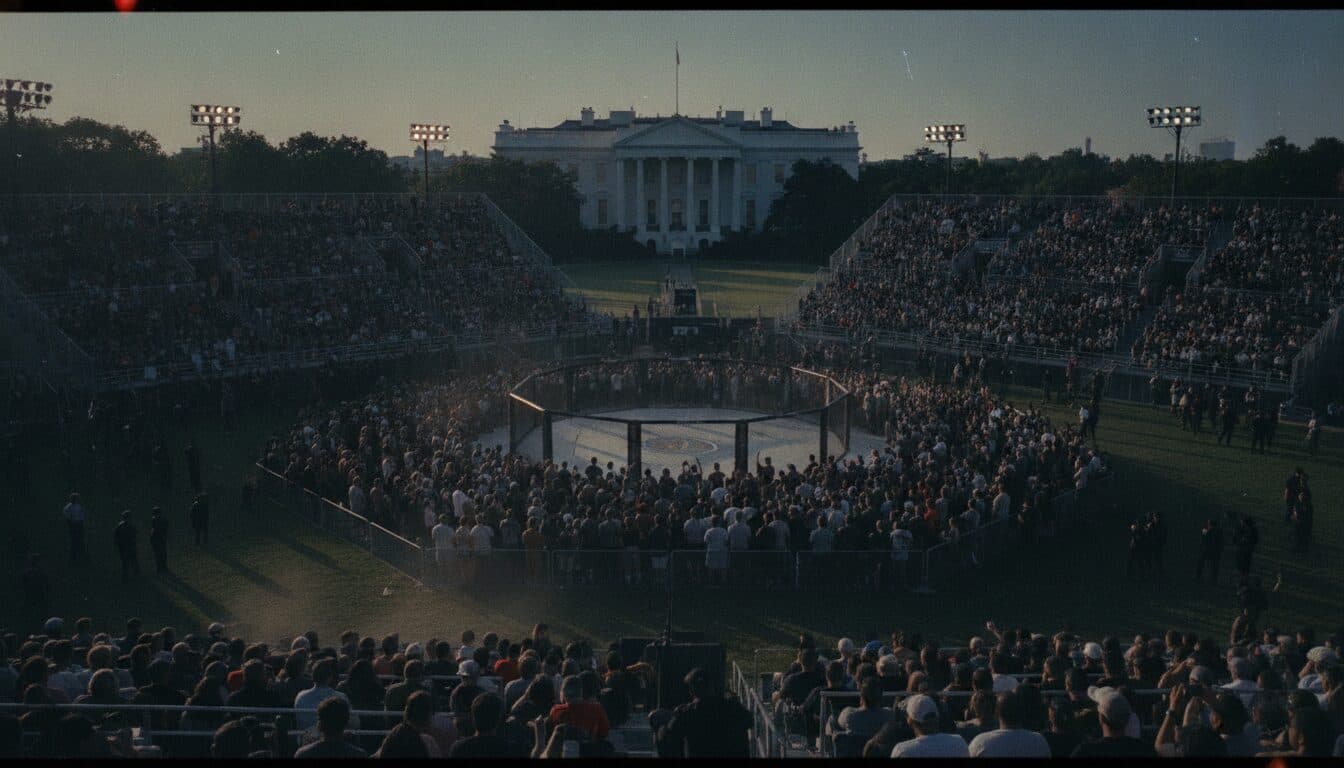
A meticulously planned assault on the White House during a high-profile UFC event was successfully thwarted by the FBI, leading to the arrest of five individuals across four states. The Department of Justice announced on Tuesday, June 16, 2026, the disruption of a plot that allegedly involved explosive-laden drones and firearms targeting government officials and attendees at the UFC Freedom 250 event.
The alleged plot to attack a White House UFC event, scheduled for Sunday, June 14, 2026, on the South Lawn, sent ripples through national security circles. President Donald Trump, Vice President JD Vance, and other senior administration officials were present at the event, underscoring the severity of the threat. The arrests, made over the preceding weekend, underscore the persistent challenges posed by domestic security threats and political extremism.
The five individuals taken into custody have been identified as Tycen Proper, 19, of Danville, Ohio; Bryan Omar Roa, 24, of Calimesa, California; Michael Alan Thomas, 32, of Pinon Hills, California; Daniel K. Eskridge, 32, of Kidder, Missouri; and Abraham Hermosillo Alvarez, 31, of Omaha, Nebraska. Proper faces charges including conspiring to commit an offense against the United States and attempting to murder an officer or employee of the United States. Roa, Thomas, and Eskridge are charged with conspiracy to commit murder. Alvarez, believed to be the plot’s primary organizer using the handle “Shepherd” in encrypted communications, faces charges of conspiracy to commit murder and conspiring to commit an offense against the United States.
Court papers unsealed Tuesday detailed the alleged multi-pronged attack. The conspirators reportedly planned to stage a demonstration on the north side of the White House to draw attention, followed by the deployment of small drones “laden with unspecified explosive devices” over the north side of the UFC arena. The intent was to force attendees and “high-value targets” to evacuate to the south, where other group members would be positioned as snipers and shooters. Discussions among the alleged plotters included targeting President Trump, Vice President Vance, Israeli Prime Minister Benjamin Netanyahu, and Elon Musk, alongside Senators Marsha Blackburn and Tom Cotton. Motivations reportedly stemmed from grievances against the government, including U.S. support for Israel and the handling of the Jeffrey Epstein files.
The investigation commenced on June 10, 2026, after Proper’s mother alerted local law enforcement to her son’s concerning behavior, including recent firearms purchases and online communications. FBI Director Kash Patel confirmed the arrests via social media, stating that “multiple individuals” had been apprehended and the “allegedly planned attacks were stopped cold.” Law enforcement sources indicated that search warrants yielded weapons, thousands of rounds of ammunition, and tactical gear. While no drones were recovered, their use was reportedly in the discussion and research phases among the group, who initially connected on TikTok before moving to the encrypted messaging app Signal.
“The swift action of law enforcement in disrupting this alleged plot highlights the constant vigilance required to safeguard our institutions and public events from those who seek to sow chaos,” noted a security analyst.
The financial ramifications of this thwarted attack are multifaceted. Immediate impacts could include increased government spending on security protocols for high-profile public events, particularly those held at sensitive locations. Businesses involved in event management and security services may see heightened demand, but also face greater scrutiny and regulatory burdens. The perceived threat to public safety could also temporarily deter attendance at large public gatherings, potentially affecting sectors like hospitality and entertainment. Investors in security technology firms, particularly those specializing in counter-drone measures and surveillance, might observe increased interest.
This incident also provides a stark reminder of the evolving landscape of domestic extremism. The alleged use of social media for initial recruitment and encrypted apps for detailed planning underscores the challenges law enforcement faces in monitoring and disrupting such activities. The targeting of high-profile political figures and international guests speaks to a broader discontent that transcends traditional political divides, encompassing a range of grievances from geopolitical stances to perceived government corruption. This event is not isolated; it reflects an ongoing concern for related trending articles on domestic security threats and the radicalization of individuals through online platforms.
Looking ahead, the five defendants face severe charges, including conspiracy to commit murder, which carries a maximum penalty of life in prison and a $250,000 fine upon conviction. The investigation remains active, with authorities actively pursuing leads on other potential co-conspirators. This case will undoubtedly fuel debates on online content moderation, the privacy afforded by encrypted communications, and the balance between civil liberties and national security. Companies that host user-generated content may face renewed pressure to identify and report suspicious activities.
The key takeaway from the alleged plot to attack a White House UFC event is the critical importance of intelligence gathering and inter-agency cooperation in preventing acts of domestic terrorism. For investors and businesses, the incident underscores the need to factor in geopolitical and domestic security risks when assessing market stability and planning for future public engagements. The resilience of democratic institutions hinges on the continuous efforts to protect them from both internal and external threats, ensuring the safety and confidence of the public.