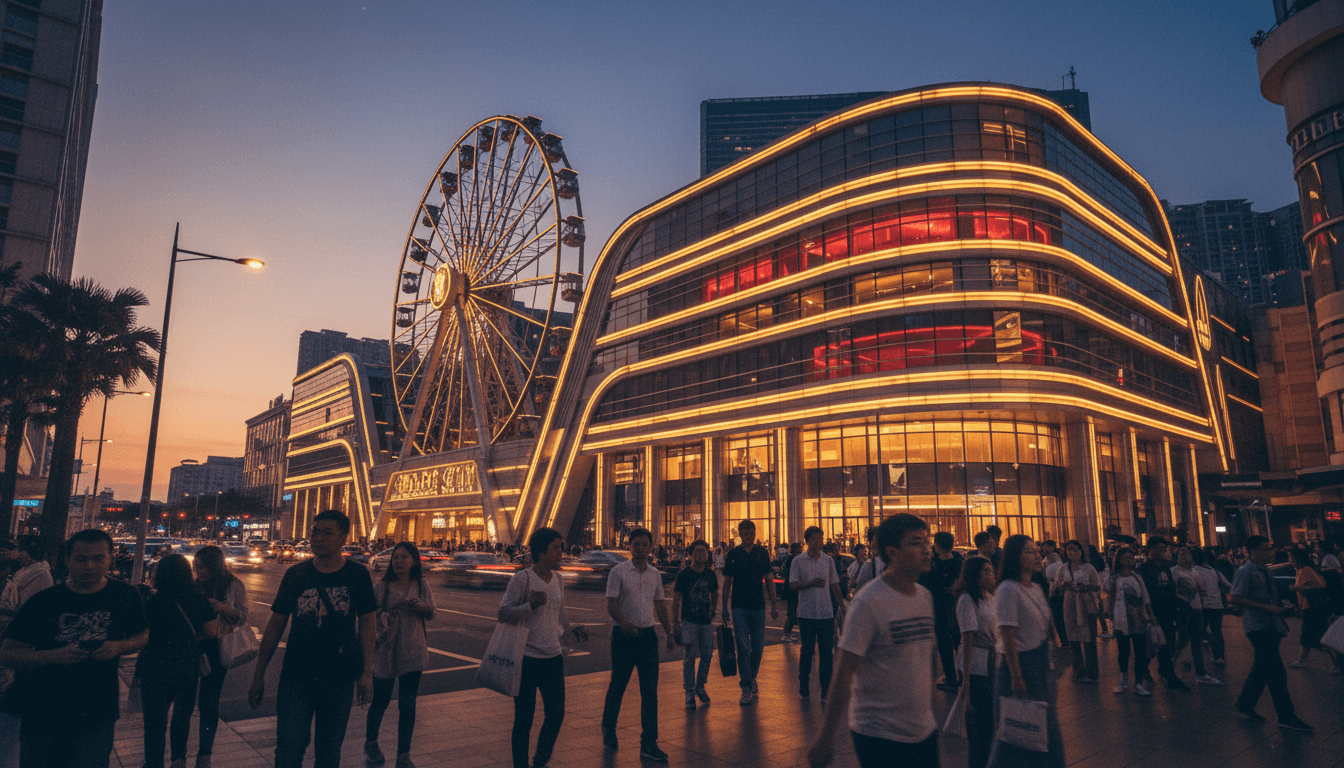
Studio City International Holdings reported a significant revenue increase, reaching $176.7 million in its Q1 2026 financial results. This positive outcome, announced on Friday, May 1, 2026, by Quiver Quantitative, signals a robust start to the year for the integrated resort developer with strong implications for its entertainment and gaming segments.
Studio City International Holdings Limited operates a cinematically-themed integrated resort in Macau, which includes a diverse range of entertainment offerings alongside its casino operations. The reported $176.7 million in Q1 2026 revenue marks a notable improvement, indicating a healthy recovery and growth trajectory in the post-pandemic landscape for leisure and entertainment companies. While the specific breakdown between gaming and non-gaming revenue was not detailed in the provided source, the overall revenue increase suggests positive performance across its integrated offerings, which often include attractions, retail, dining, and convention facilities that synergize with gaming.
Market Dynamics for Studio City International Holdings
The financial performance of Studio City International Holdings has broader implications for the Macau gaming market and integrated resort sector. A revenue increase of this magnitude often translates to investor confidence, potentially influencing stock performance and future investment opportunities within the region. For the gaming industry at large, these results provide a barometer for consumer spending on high-end entertainment and leisure, especially in key Asian markets. This positive financial report comes at a time when many integrated resorts are diversifying their offerings beyond traditional casino gaming to attract a wider demographic and ensure more stable revenue streams.
Historically, Macau has been a dominant force in the global gaming industry, though it faced significant challenges in recent years due to travel restrictions and regulatory shifts. The Q1 2026 results from Studio City International Holdings suggest a resilient market, adapting to new operational paradigms and consumer preferences. Competitors in the region, such as Las Vegas Sands and Wynn Resorts, will undoubtedly be observing these figures closely, as they reflect the overall health and potential for growth in the highly competitive Macau landscape. The trend towards integrated resorts emphasizing non-gaming amenities continues to be a crucial strategy, and strong overall revenue figures like these validate that approach.
“The rebound in integrated resort revenue, particularly in key Asian markets, underscores the enduring appeal of high-quality entertainment and leisure experiences, even as operational models evolve.”
Looking ahead, the strong Q1 2026 performance positions Studio City International Holdings well for the remainder of the year. Analysts will likely be projecting continued growth, especially if global travel and tourism continue their upward trajectory. Future implications could include further investments in non-gaming attractions, technological upgrades to enhance the guest experience, or even expansion plans. Upcoming milestones to watch would be subsequent quarterly reports for sustained growth and any announcements regarding new entertainment ventures or strategic partnerships that could further bolster its revenue streams. Investors will be keen to see if this momentum can be maintained, particularly as competition intensifies and consumer habits continue to shift within the global entertainment sector.
This revenue increase for Studio City International Holdings is a significant indicator for the broader gaming and integrated resort industry. It highlights the potential for robust recovery and growth in key international markets, reinforcing the strategic importance of diversified entertainment offerings alongside traditional gaming. For investors and industry observers, these Q1 2026 results provide a compelling narrative of resilience and adaptation in a dynamic global market.