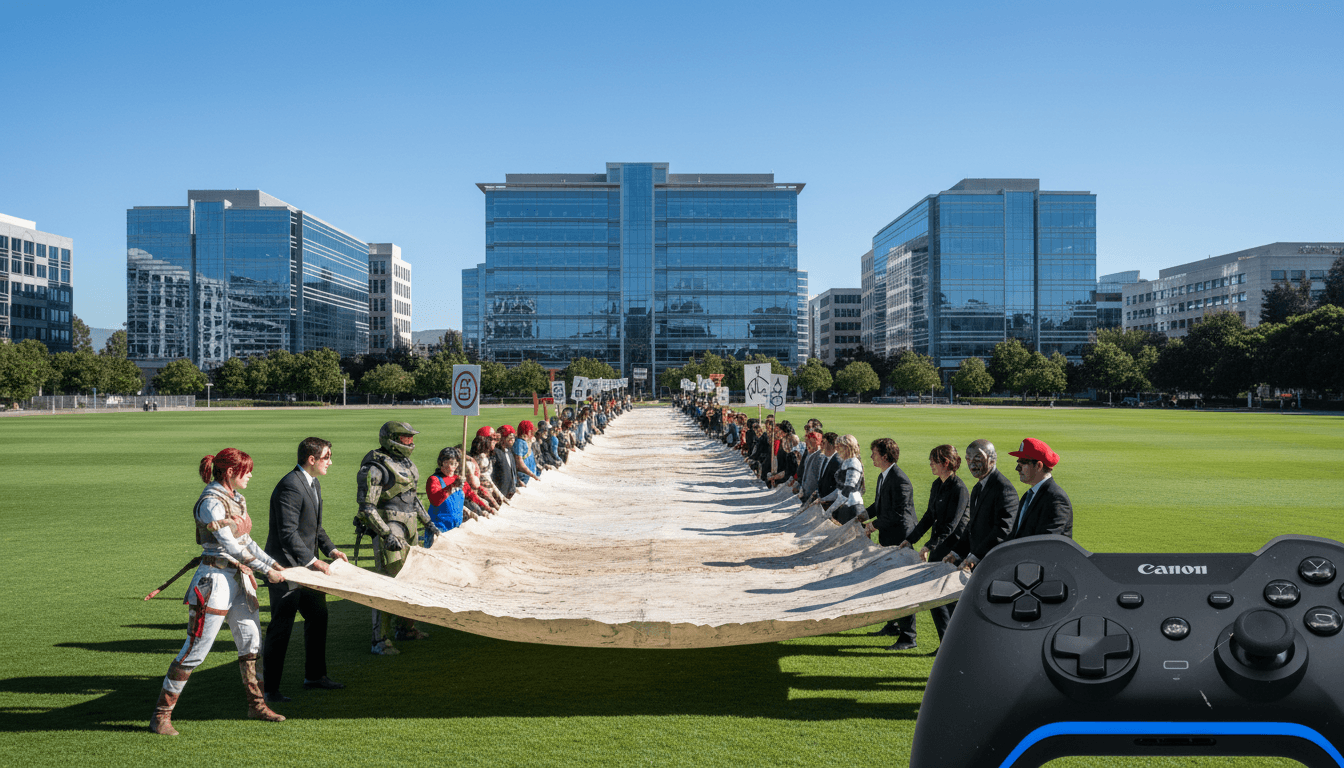
A significant protest against the Saudi Arabia EA buyout is set to unfold on May 11, 2026, as a movement known as Players Alliance HQ prepares to descend upon Electronic Arts’ Redwood, California, headquarters. This demonstration highlights growing public and investor concerns surrounding the $55 billion leveraged buyout, which would see Saudi Arabia’s Public Investment Fund (PIF) acquire a substantial majority stake in one of the world’s largest video game publishers. The protest, planned with theatrical flair, underscores the complex financial and ethical considerations now facing the gaming industry.
The Players Alliance HQ has announced its intention to “raid” EA’s campus at 11 AM PT / 2 PM ET, aiming to publicly denounce the PIF’s takeover. Central to their demonstration will be the unfurling of a 50-foot scroll bearing over 70,000 petition signatures on the Madden football field located at the heart of the campus. The protest is designed as a performance piece, with participants reportedly dressing as “corporate villains” in suits and top hats to symbolize the forces behind the deal. Further amplifying their message, a giant health bar prop will visually deplete in real-time with digital engagement, and a “loot-box demonstration” is planned to metaphorically reveal the potential negative consequences of the acquisition, such as mass layoffs, studio closures, and aggressive monetization strategies.
The Financial Stakes of the Saudi Arabia EA Buyout
According to the Players Alliance HQ’s press release, the primary fear is that the $55 billion deal, which would burden EA with an additional $20 billion in debt, could pressure the company into drastic cost-cutting measures. These measures could include job reductions, the replacement of human employees with AI, and significant price hikes for consumers, all aimed at recouping the substantial financial outlay. The group points out that saddling the acquired company with debt is a common private equity tactic, shifting financial risk from the buyers to the acquired entity.
The proposed ownership structure, as detailed in a December 2025 Wall Street Journal report, shows the PIF acquiring a dominant 93% ownership of EA, with private equity firms Silver Lake and Jared Kushner’s Affinity Partners taking 5.5% and 1.1% respectively. This arrangement means the PIF would be funding almost the entirety of the deal. However, reports from November 2025, based on New York Times findings, suggest the PIF may itself be facing liquidity challenges, adding another layer of complexity to the massive Saudi Arabia EA buyout.
Broader Industry Context and Regulatory Hurdles
The deal, first revealed in September 2025, is not yet finalized and requires approval from critical regulatory bodies, including the Federal Trade Commission and the Committee on Foreign Investment in the United States. This regulatory scrutiny is standard for transactions of this magnitude, especially when foreign investment in a major U.S. company is involved. The protest aims to influence public opinion and potentially regulatory decisions by highlighting stakeholder concerns.
This acquisition is part of a broader trend of Saudi Arabia’s Public Investment Fund significantly increasing its footprint in the global gaming industry. The PIF has already made substantial investments in, or acquired stakes in, numerous other prominent gaming companies, including Capcom, SNK, and Nintendo. This aggressive investment strategy signals a long-term commitment to diversifying the Saudi economy away from oil, with gaming identified as a key growth sector. The live stream of the protest on DnD and Warhammer Twitch streamer SlayerKase’s channel will further amplify its reach, bringing the conversation about the Saudi Arabia EA buyout to a global audience.
The planned protest at EA’s headquarters serves as a vivid illustration of the growing tension between corporate financial strategies and the expectations of the gaming community. As the industry continues to consolidate and attract massive international investment, the impact on developers, consumers, and the creative integrity of gaming remains a central concern. The outcome of this deal, and the efficacy of such public demonstrations, will undoubtedly set precedents for future transactions and stakeholder engagement within the rapidly evolving landscape of interactive entertainment.