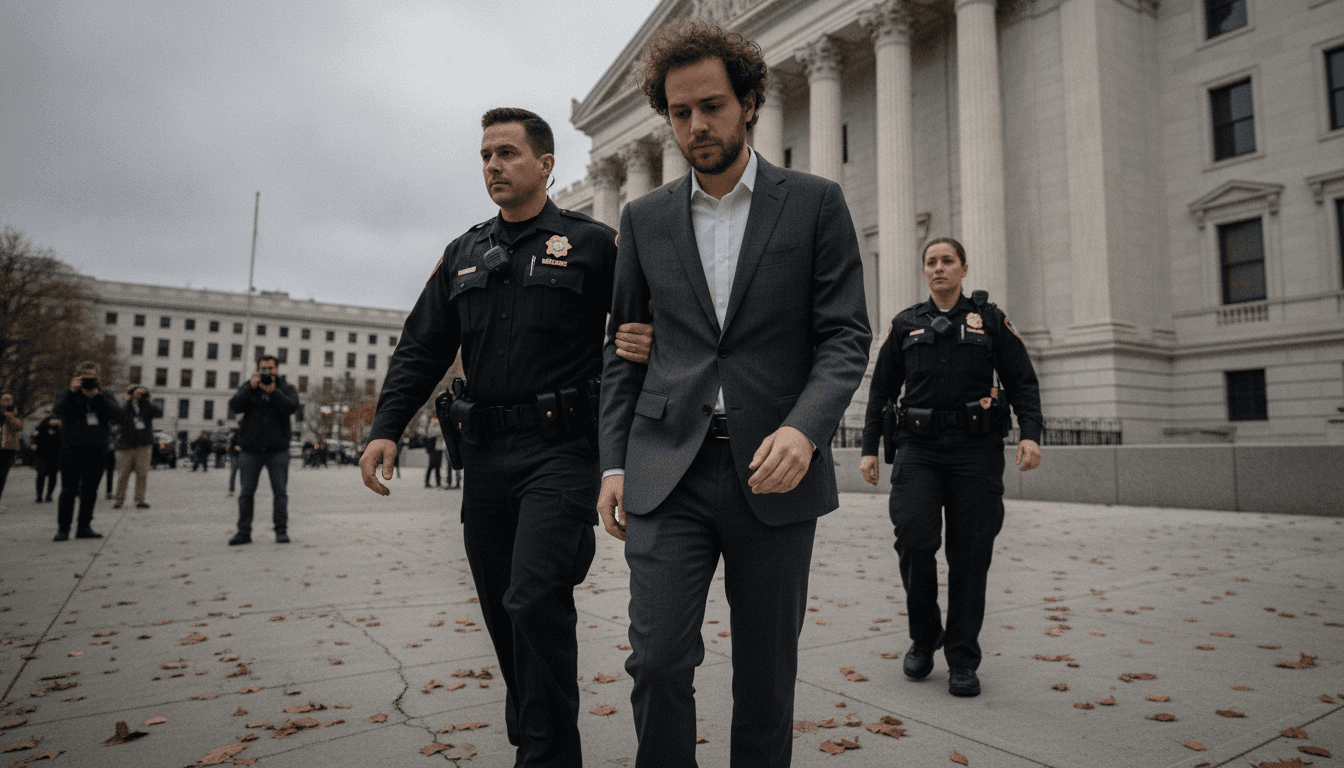
A California man faces $100 million bank fraud charges, according to a recent announcement from First Assistant U.S. Attorney Bill Essayli in Los Angeles. Mahender Makhijani, a resident of Newport Beach, stands accused of orchestrating a sophisticated scheme to defraud Western Alliance Bancorp out of nearly $100 million by systematically falsifying title insurance policies to inflate the value of collateral pledged for loans. This high-stakes alleged fraud, made public on Wednesday, June 11, 2026, highlights the persistent threat of white-collar crime in the financial sector.
The Anatomy of Deception: Inflated Collateral
The core of the alleged fraud, as laid out by prosecutors, revolved around the deliberate manipulation of financial documents. Makhijani is accused of utilizing Adobe software to create and alter title insurance policies, presenting them to Western Alliance Bancorp as legitimate proof of collateral value. By artificially inflating these values, he was allegedly able to secure loans far exceeding the actual worth of the assets he pledged. This intricate web of falsified documents reportedly misled Western Alliance about the true financial stability and backing of the loans issued.
The charges are not entirely new territory for Makhijani. The case has direct ties to a prior civil lawsuit filed by Western Alliance against Cantor Group V, a firm with which Makhijani was associated. In that civil action, Western Alliance claimed unpaid debts totaling $98.6 million, a figure strikingly close to the criminal charges now brought against Makhijani. While Cantor Group V has denied any wrongdoing in the civil case, and Makhijani’s representatives have yet to comment on the criminal charges, the pattern of alleged financial misrepresentation is a significant point of concern for investigators.
“The alleged use of sophisticated software to create fraudulent financial instruments underscores the evolving challenge financial institutions face in verifying the authenticity of collateral documentation,” a source close to the investigation noted.
The Unraveling of the California Man Faces $100 Million Bank Fraud
The discovery of the alleged fraud points to a meticulous investigation by federal authorities, likely triggered by discrepancies found during routine financial audits or internal reviews at Western Alliance Bancorp. While the exact timeline of discovery remains under wraps, the public announcement of charges on June 11, 2026, indicates a culmination of significant investigative efforts. The explicit mention of Adobe software as the tool for falsification suggests forensic analysis played a crucial role in uncovering the digital footprints of the alleged deception.
Despite the nearly $100 million in alleged fraud, prosecutors have stated that Western Alliance Bancorp has not yet incurred a financial loss. This is attributed to the potential for the bank to recoup the funds through other means, specifically through guarantor recovery. This aspect of the case raises questions about the robustness of the bank’s loan underwriting processes and the safeguards in place to mitigate such risks, even if ultimate losses are avoided.
Consequences and Lessons for the Financial Sector
Mahender Makhijani now faces criminal charges for his alleged role in the $100 million bank fraud scheme. The legal proceedings will undoubtedly be complex, involving extensive document review and expert testimony on financial forensics and title insurance practices. While the outcome of the criminal case is pending, the charges alone serve as a stark reminder of the severe penalties associated with financial fraud, including potential imprisonment and substantial fines.
For financial institutions, this case underscores the critical need for enhanced due diligence and technological safeguards against document forgery. The alleged use of readily available software like Adobe to falsify critical financial documents highlights a vulnerability that banks must actively address. Implementing related fraud investigations and advanced verification protocols for collateral documentation, alongside robust internal audit mechanisms, is paramount.
The Mahender Makhijani case should serve as a cautionary tale for both lenders and potential fraudsters. Lenders must continuously evolve their fraud detection capabilities, while individuals considering such schemes face increasingly sophisticated investigative techniques that can uncover even digitally manipulated evidence. Vigilance, rigorous verification, and a commitment to ethical financial practices remain the strongest defenses against the devastating impact of white-collar crime.