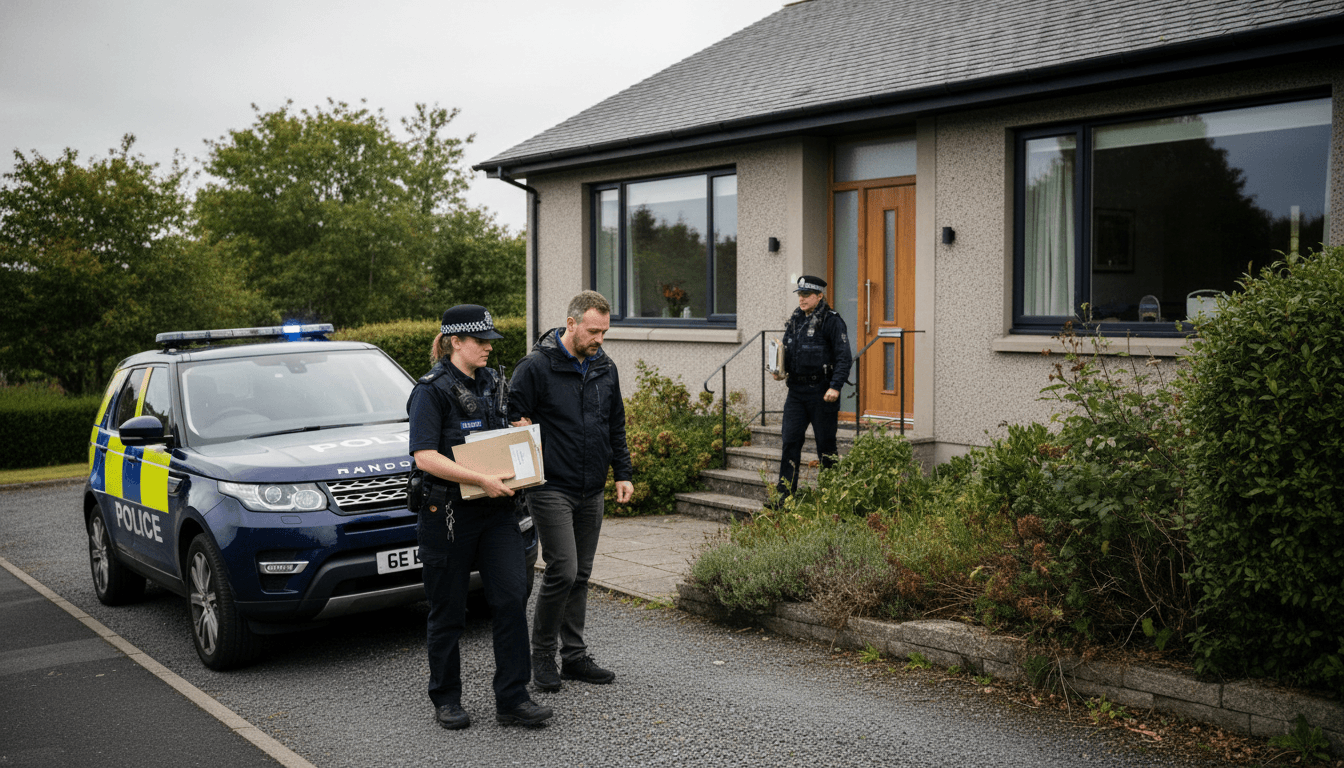
EDINBURGH, SCOTLAND – Peter Murrell, the former Chief Executive of the Scottish National Party (SNP) and estranged husband of former First Minister Nicola Sturgeon, has pleaded guilty to embezzling more than £400,000 from the party. The conviction, handed down on Thursday, May 28, 2026, by Police Scotland, marks a significant moment in a long-running investigation that has rocked Scottish politics.
Murrell admitted to siphoning £400,310.65 from SNP coffers over a 12-year period, using the funds to finance a lavish personal lifestyle and attempting to conceal his actions through false accounting. His guilty plea was entered at the High Court in Edinburgh on May 25, 2026, where he was immediately remanded in custody ahead of his sentencing on June 23, 2026.
The Charges Against Peter Murrell
The charges against Peter Murrell center on a systematic abuse of his position as the SNP’s chief executive. From August 2010 to October 2022, Murrell engaged in a scheme of embezzlement, making false entries in the party’s accounts, submitting fraudulent invoices, and using party credit cards – some reportedly taken out in the names of SNP staff – to claim personal expenses as legitimate party expenditures. This fraudulent activity spanned over a decade, allowing him to divert substantial sums for his own benefit.
The embezzled funds were used to acquire an array of luxury items. Among the most notable purchases was a Niesmann + Bischoff motorhome, costing £124,550, paid for entirely with party funds in 2020. He also used party money for two cars: an £81,277 Jaguar I-Pace SUV and contributing £16,489 towards a £32,989 Volkswagen Golf. Further expenditures included high-end watches, luxury pens, boutique cosmetics, iPads, a Lalique Feuilles salt and pepper set worth £2,618, and numerous other personal goods, from Wusthof knife blocks to expensive Advent calendars and even Andrex toilet paper.
Scale of the Crime: Betrayal of Trust and Party Funds
The scale of Peter Murrell’s embezzlement, totaling £400,310.65, represents a significant breach of trust against the Scottish National Party and its thousands of members. These individuals donated their money with the expectation that it would be used to advance the party’s political agenda, particularly the campaign for Scottish independence. SNP leader John Swinney articulated the profound impact, stating that Murrell was
“stealing the hopes, the dreams and the aspirations of thousands of people all over Scotland, people who gave what they could over many years.”
Beyond party members, there is a strong possibility that Scottish taxpayers may also be considered victims. The SNP receives public funds, such as ‘Short Money’ for parliamentary duties, and the party does not ringfence income from various sources. This raises concerns that some of the embezzled money could have originated from public contributions.
Who Is Peter Murrell?
Peter Tierney Murrell, 61, was born in Edinburgh, Scotland, in December 1964. He served as the Chief Executive of the Scottish National Party from 1999 to March 2023, making him an influential, albeit unelected, figure in Scottish politics for over two decades. Murrell attended Craigmount High School and the University of Glasgow. Prior to his extensive career with the SNP, he worked in public relations for the Church of Scotland and had a background in business and finance. He was married to Nicola Sturgeon, who served as the SNP leader and First Minister of Scotland from 2014 to 2023, from 2010 until their separation in January 2025.
Investigation Details: Operation Branchform’s Long Road
The investigation into Peter Murrell’s activities was spearheaded by Police Scotland under the codename Operation Branchform. Launched in July 2021, the probe initially focused on allegations concerning £660,000 raised for an independence referendum campaign that could not be accounted for. Assistant Chief Constable Stuart Houston described the investigation as challenging, noting Murrell’s deliberate efforts to obscure his tracks over 12 years through false accounting.
The extensive inquiry involved searches of Murrell and Sturgeon’s Glasgow home, the SNP headquarters in Edinburgh, and the seizure of the luxury motorhome from Murrell’s mother’s residence. Police Scotland’s inquiries spanned across Europe, ultimately costing almost £2.7 million in public funds. Murrell was first arrested in April 2023, released without charge, and then re-arrested and formally charged in April 2024. Nicola Sturgeon and former SNP treasurer Colin Beattie were also questioned but later released without charge, with investigations into them concluding in March 2025.
What Happens Next: Sentencing and Lingering Questions
With Peter Murrell’s guilty plea entered and his immediate remand in custody, the focus now shifts to his sentencing, scheduled for June 23, 2026. Lord Young, the presiding judge, has already characterized Murrell’s actions as a “gross breach of trust” given his senior position within the party. The legal proceedings may also shed further light on the extent of asset freezes beyond the motorhome already seized.
While Murrell’s conviction provides some closure, the revelations of such long-running fraud within a major political party are likely to have lasting repercussions, raising questions about internal financial oversight and accountability within the SNP and similar organizations. For more on related fraud investigations, visit our dedicated section.
Protecting Yourself: Red Flags in Organizational Finance
This case serves as a stark reminder of the critical importance of robust financial controls and transparency within any organization, political or otherwise. Readers and donors should be vigilant for several red flags. A lack of transparency in financial reporting, particularly when significant funds are raised for specific campaigns, should raise immediate concerns. Concentrated power in the hands of a single, unelected individual, especially over an extended period without adequate checks and balances, creates an environment ripe for abuse. Dismissal of internal concerns about financial irregularities, or a culture that discourages scrutiny, can allow problems to fester. Finally, unexplained lavish spending by senior officials that seems out of step with their declared income or organizational purpose should always prompt further investigation. These warning signs are crucial for preventing similar breaches of trust and ensuring funds are used as intended.