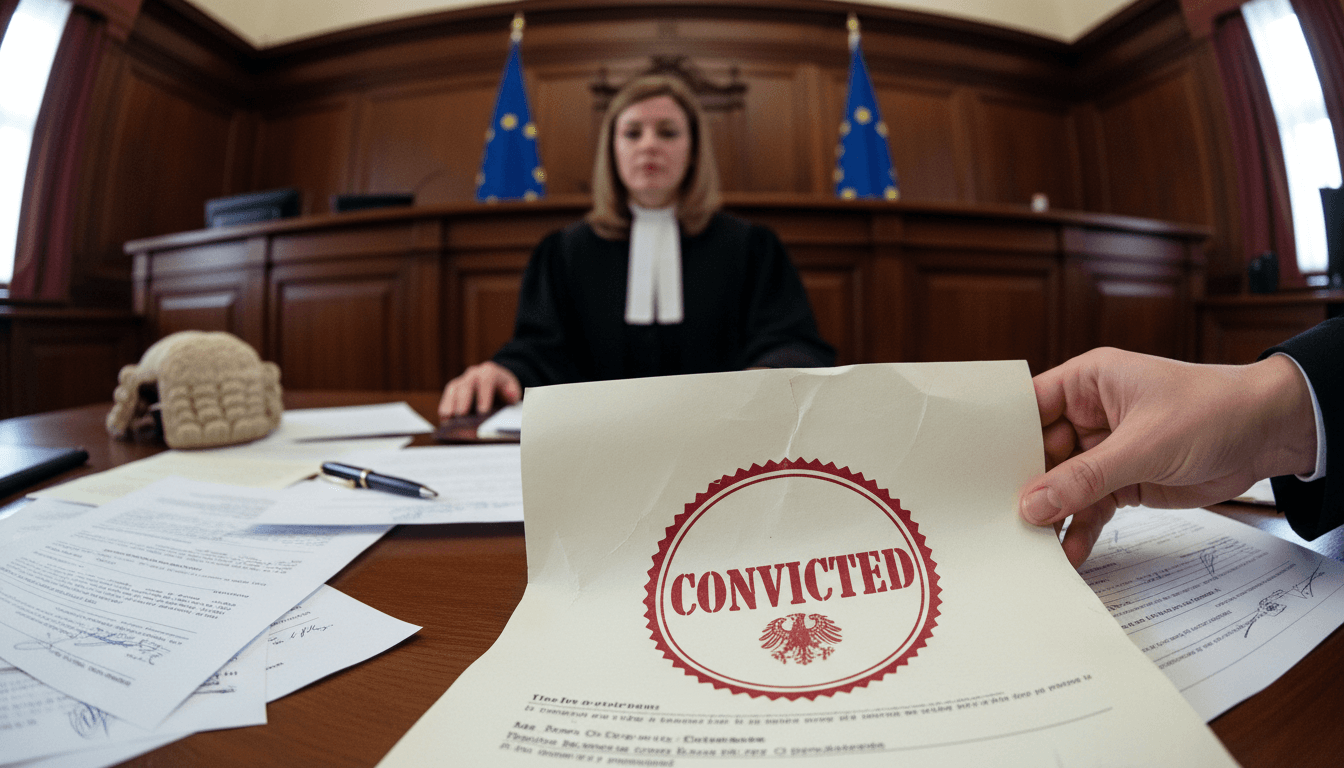
PRAGUE – Tuesday, May 5, 2026 – Jana Nagyová, a prominent Czech politician and Member of the European Parliament, has been convicted by a Czech court for subsidy fraud and harming the financial interests of the European Union in the high-profile “Stork’s Nest” case. The verdict, delivered yesterday, May 4, 2026, marks a significant development in a scandal that has plagued Czech politics for years, involving approximately $2 million in EU funds.
The Charges Against Jana Nagyová
Jana Nagyová was found guilty of orchestrating a scheme to illicitly secure approximately $2 million (around 50 million Czech koruna) in EU agricultural and development subsidies for the Stork’s Nest farm. These funds were specifically earmarked for small and medium-sized enterprises (SMEs). Prosecutors successfully argued that Nagyová, a former associate of Czech Prime Minister Andrej Babiš, deliberately concealed the farm’s true ownership ties to Agrofert, a large conglomerate owned by Babiš, which would have rendered it ineligible for the SME funding due to its size.
The core of the fraud involved temporarily transferring ownership of the Stork’s Nest farm from Agrofert to Babiš’s family members. This maneuver created the illusion that the farm met the criteria for SME subsidies. Once the funds were secured, ownership reportedly reverted to Agrofert. Nagyová was accused of submitting the fraudulent subsidy application, withholding critical information about the company’s relationship with the conglomerate.
Scale of the Crime and its Mechanism
The scheme revolved around the acquisition of approximately $2 million in EU subsidies. While these funds were eventually returned, the prosecution maintained that their initial acquisition violated European Union regulations. The primary entity affected by this sophisticated financial deception is the European Union itself, and by extension, its taxpayers. The misdirection of these funds from their intended purpose of fostering genuine small and medium-sized enterprises represents a significant breach of trust and financial integrity. There is no indication of individual victims beyond the broader impact on EU financial interests and the competitive landscape for legitimate SMEs.
Who Is Jana Nagyová?
Jana Nagyová, born on September 26, 1970, is a Czech politician currently serving as a Member of the European Parliament (MEP) for the ANO 2011 party. Before her election as an MEP in 2024, she held the position of deputy mayor of Jihlava from 2016 to 2018. Nagyová is notably a former close associate of Czech Prime Minister Andrej Babiš, a connection that has been central to the Stork’s Nest controversy. It is important to distinguish her from the Slovak actress of the same name.
Investigation Details and Legal Journey
The complex fraud was uncovered and investigated by both Czech police and the European Anti-Fraud Office (OLAF). The seven-year probe meticulously examined the altered ownership structure of the Stork’s Nest farm, designed precisely to circumvent EU subsidy eligibility rules. The investigation revealed how the company was spun out of Agrofert in late 2007 or early 2008, with shares transferred to Babiš’s children and partner, solely to qualify for the subsidies.
The legal battle has been protracted and challenging. Andrej Babiš and Jana Nagyová were initially acquitted by the Prague Municipal Court in January 2023, with the judge stating that criminal intent could not be proven. However, this verdict was overturned by the Prague High Court in November 2023, which then, in June 2025, ordered the lower court to find the defendants guilty based on the evidence. The European Parliament had previously lifted Nagyová’s immunity, paving the way for her prosecution.
“The Stork’s Nest case highlights the persistent challenge of ensuring the integrity of EU funds and the critical need for robust oversight mechanisms to prevent misuse by powerful entities.”
What Happens Next for Jana Nagyová
Following her conviction on May 4, 2026, Jana Nagyová received a three-year suspended sentence and a fine of 500,000 Czech koruna (approximately $24,000). The verdict is not yet final, and Nagyová retains the right to appeal this decision. This ongoing legal process means the saga of the Stork’s Nest case is likely to continue. Meanwhile, Andrej Babiš, who was a co-defendant, has not faced sentencing due to parliamentary immunity. In March 2026, lawmakers in the lower house of Parliament rejected a motion to lift his immunity, meaning his trial is currently stalled until his term ends in 2029.
As the legal proceedings unfold, the focus will remain on the appeals process and the potential for a final resolution. The case serves as a stark reminder of the complexities involved in prosecuting financial crimes, especially when they involve high-profile political figures and related fraud investigations.
Protecting Yourself: Red Flags to Watch For
The Stork’s Nest case offers crucial insights into the red flags that could indicate potential subsidy fraud. The most glaring warning sign was the suspicious and abrupt change in the ownership structure of the farm. Any instance where a company’s ownership is transferred, particularly from a large, ineligible entity to smaller, seemingly independent parties, only to revert after securing funds, should trigger immediate and intense scrutiny. Such maneuvers are often designed to exploit loopholes in funding programs intended for specific beneficiaries. Businesses and oversight bodies should be vigilant for these patterns, especially when high-profile political figures or their close associates are involved, as this can signal attempts to exert undue influence over funding allocations. Diligent due diligence and transparent reporting are paramount to safeguarding public funds from such schemes.