
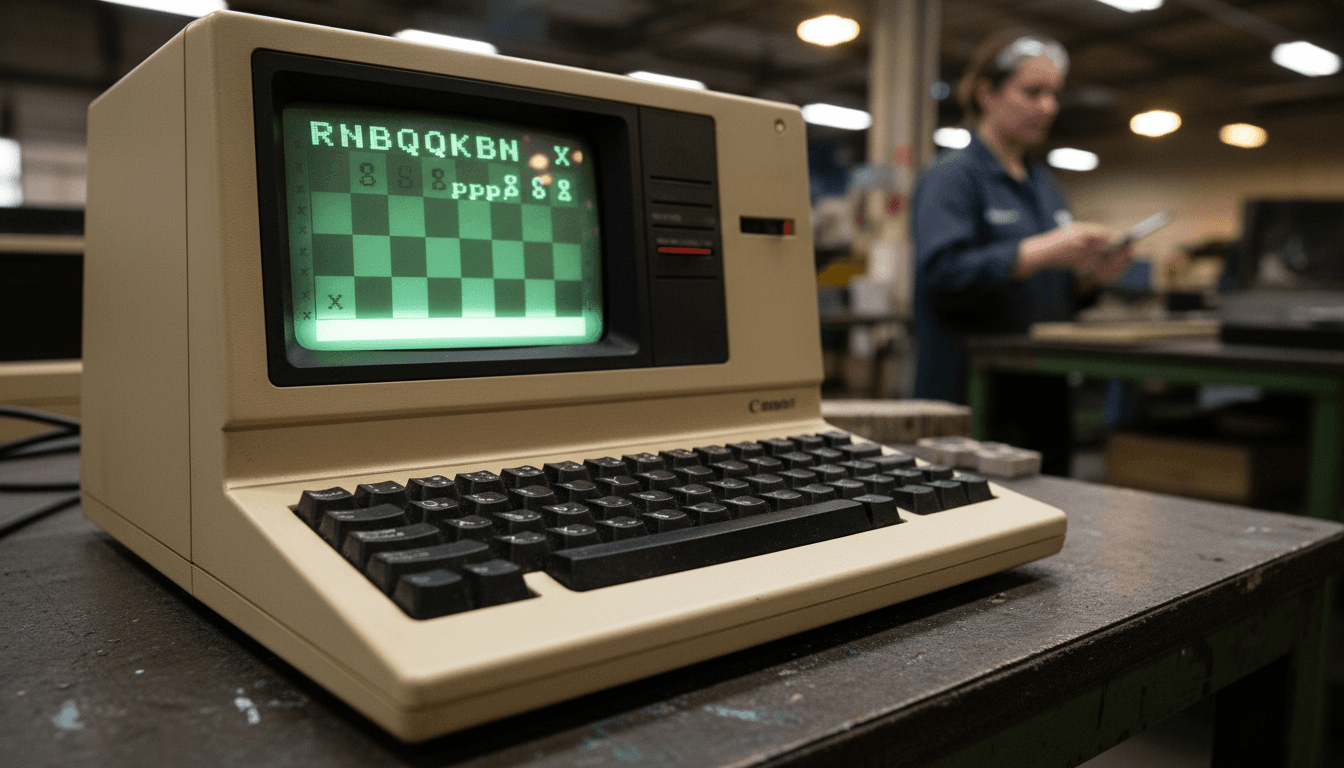
ZX81 1K Chess Code, a legendary feat of early 8-bit programming, continues to captivate enthusiasts decades after its initial release. This remarkably compact software managed to squeeze a complete chess engine into the minuscule 1K user-available memory of the unexpanded Sinclair ZX81, a testament to the ingenuity of 1980s developers pushing hardware to its absolute limits. A recent deep dive by programmer MarquisdeGeek has meticulously analyzed this vintage code, uncovering the clever tricks that made such a feat possible.
The Sinclair ZX81, while not the most graphically powerful machine of its era, was a masterclass in ultra-low-budget computing. Its limitations, particularly the text-only display with rudimentary block graphics, forced programmers to innovate. In the case of 1K Chess, the on-screen chessboard cleverly doubled as the program’s working memory, creating the illusion of ‘thinking’ as moves were calculated. This technique, along with others, is now fully exposed in MarquisdeGeek’s comprehensive GitHub repository, which includes decompiled, annotated versions of the original ZX binary. For those curious about the ZX81’s unique architecture, the repository even features a screen capture showing the game running in BASIC, revealing the machine’s peculiar method of storing Z80 code within REM statements.
Unpacking the Genius of 1K Chess
The analysis of ZX81 1K Chess Code offers a fascinating glimpse into the constraints and creative solutions of early software development. The sheer audacity of fitting a complex game like chess into 1 kilobyte of memory speaks volumes about the talent required to program efficiently in a bygone era. Modern developers, accustomed to gigabytes of RAM and powerful processors, can learn much from the elegant simplicity and resourcefulness demonstrated in this vintage program. It highlights a period where every single byte counted, and optimization was not just a best practice, but an absolute necessity for commercial viability.
“The brilliance of 1K Chess lies not just in its existence, but in the ingenious, almost poetic, solutions found to overcome severe hardware limitations. It’s a masterclass in minimalist programming.”
Adding another layer to this retro computing exploration, MarquisdeGeek revealed that much of the analytical work was performed within a ZX emulator, itself running inside a Dragon emulator. This multi-layered emulation setup underscores the dedication to preserving and understanding computing history. Further delighting enthusiasts, a playful glimpse shows the game running on a Cheap Yellow Display, nestled inside a replica 1K Chess cassette box – a charming nod to its origins. For those seeking more insights into the ZX81’s capabilities, exploring how this machine achieved related Industries news TV graphics by ‘chasing the beam’ offers another compelling example of its low-cost engineering.
Legacy and Modern Relevance
The enduring fascination with projects like 1K Chess isn’t just nostalgia; it’s a recognition of foundational principles in computing. Understanding how such complex functionality was achieved with so little provides invaluable lessons in efficiency and problem-solving. It demonstrates that innovation isn’t solely about raw power, but often about clever design and an intimate understanding of the underlying hardware. This deep dive into the ZX81 1K Chess Code serves as a powerful reminder of the roots of modern software engineering and the boundless creativity of early programmers.
In conclusion, the meticulous analysis of the 1K Chess program for the Sinclair ZX81 stands as a vibrant tribute to a pivotal era in computing. It illuminates the remarkable ingenuity that allowed developers to create sophisticated applications within extremely tight memory constraints. This journey through vintage code not only satisfies historical curiosity but also offers profound insights into the fundamental challenges and triumphs of software development.


