The global economy is showcasing surprising resilience, with a slight uptick in GDP growth anticipated for 2026 compared to previous forecasts. According to the World Bank’s semi-annual Global Economic Prospects report released on Tuesday, the projected growth rate for 2026 has been marginally revised upward. However, the institution warned that economic growth remains heavily concentrated in advanced economies and lacks the strength required to significantly alleviate extreme poverty worldwide.
For 2026, the World Bank predicts global output growth will be 2.6%, down slightly from 2.7% in 2025, before climbing back to 2.7% in 2027. This modest adjustment marks a two-tenths of a percentage point increase over forecasts shared last June. Meanwhile, the 2025 estimate is four-tenths of a point higher than prior predictions. The improved outlook for 2026 stems largely from stronger-than-anticipated performance in the United States, which is navigating trade disruptions caused by tariffs more effectively than expected.
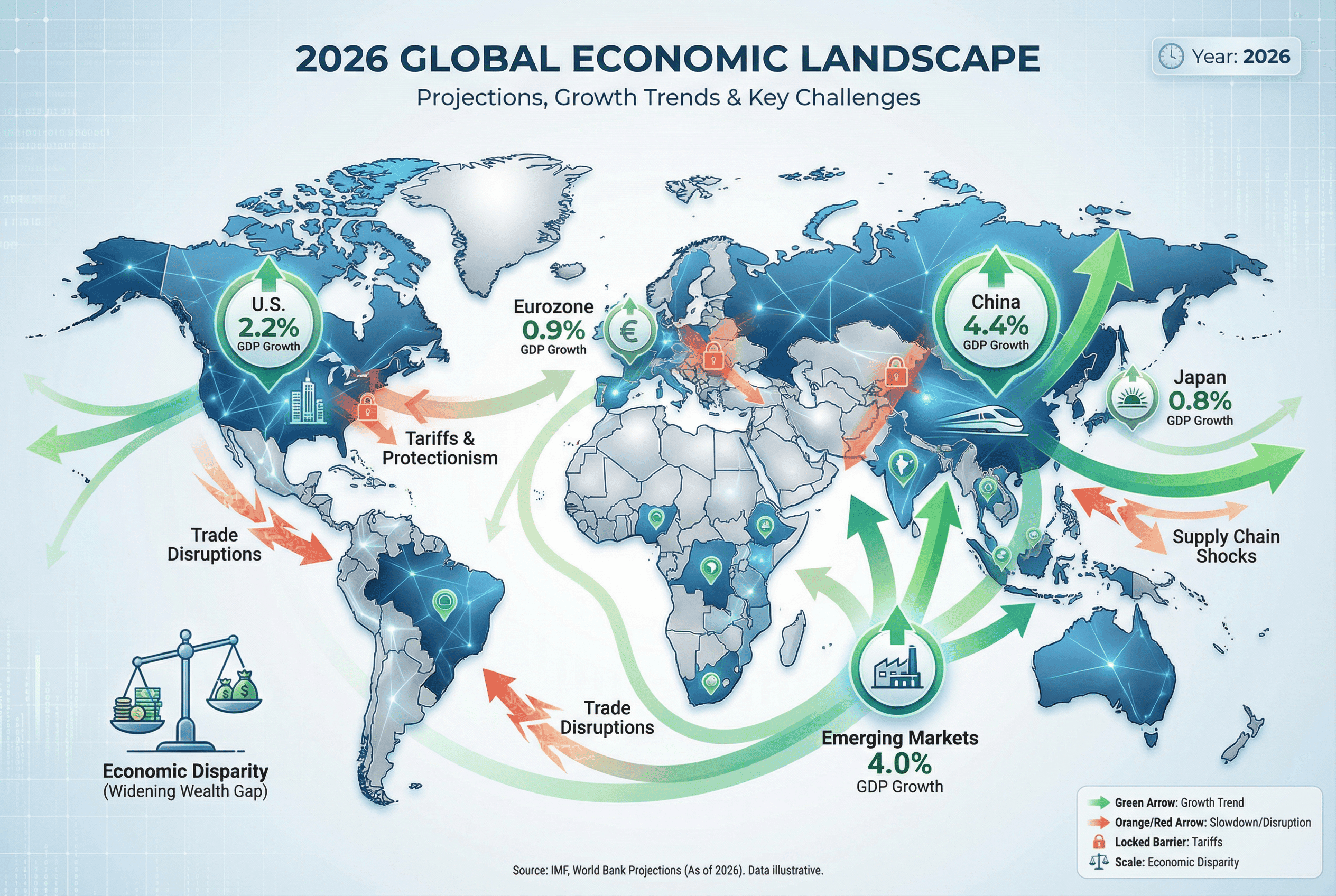
The U.S. economy is projected to grow by 2.2% in 2026, compared to a slightly lower figure of 2.1% for 2025—marking upward revisions of two-tenths and half a percentage point, respectively, from earlier estimates. The World Bank credits these gains to enhanced tax incentives fostering growth in 2026, though this will be partially offset by the dampening effects of tariffs on investment and consumer spending. The report also noted that an initial surge in U.S. imports aimed at avoiding tariff hikes hindered growth in early 2025.
Despite these improvements, the 2020s are shaping up to be the weakest decade for global economic growth since the 1960s. Current growth levels remain insufficient to counteract stagnation and unemployment concerns in emerging markets and developing economies. World Bank Chief Economist Indermit Gill highlighted this troubling trend, acknowledging that while global GDP per capita in 2025 is set to be 10% higher than pre-pandemic levels—marking one of the fastest recoveries from a major crisis—many poorer nations are falling behind. Alarmingly, approximately a quarter of developing countries are forecasted to have lower per-capita incomes in 2025 than they did in 2019, particularly among the world’s most impoverished regions.
Emerging market and developing economies are expected to see their growth rates soften from 4.2% in 2025 to 4.0% in 2026. However, excluding China, the growth rate for these nations remains stagnant at 3.7% across both years, according to the report. While China’s economy will also experience slower growth—declining from 4.9% in 2025 to 4.4% in 2026—its figures have been adjusted upwards since June due to supported fiscal stimulus measures and increased export activity targeting non-U.S. markets.
Across other major economies, the trends reveal challenges and pockets of recovery. The eurozone is projected to face a slowdown from 1.4% growth in 2025 to just 0.9% in 2026, with U.S.-led tariffs cited as a significant factor. By 2027, however, economic activity in the region is expected to rebound slightly to 1.2%, aided by increased defense spending among European nations.
Meanwhile, Japan’s growth trajectory mirrors some of these trends but at a more subdued pace. Following a bump to 1.3% GDP growth in 2025—attributed to accelerated exports to the U.S.—Japan’s economy will slow to 0.8% in both 2026 and beyond as reduced consumption and investment weigh down its economic recovery.
While slightly brighter forecasts for key advanced economies provide cautious optimism, the overall picture remains a mixed bag with growing disparities between wealthier nations that are recovering steadily and poorer countries still grappling with setbacks from pre-existing challenges and heightened uncertainty. As the World Bank report underscores, ensuring more inclusive and robust global growth remains vital for addressing economic vulnerability across all regions.