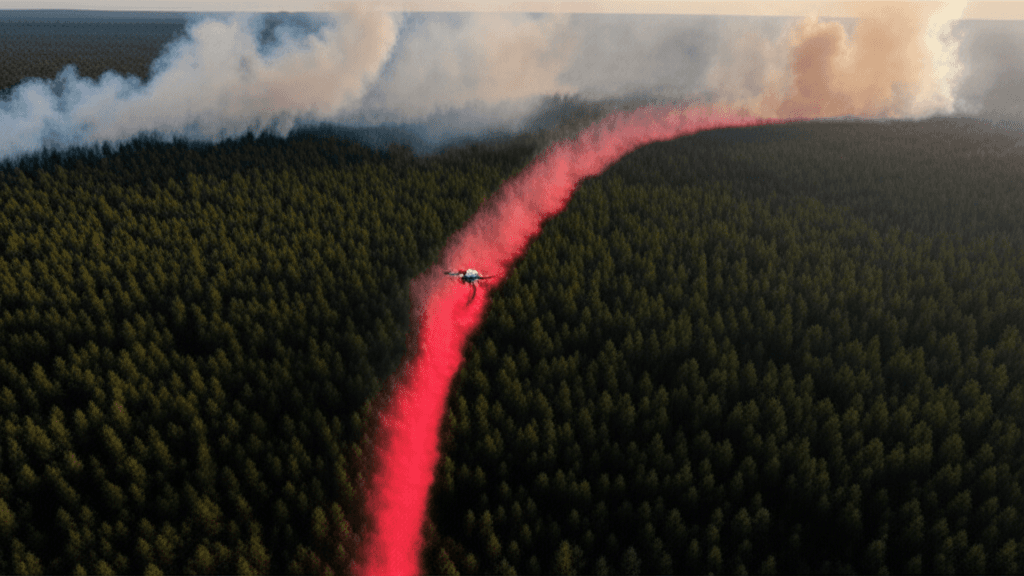
Wildfire prevention limits are being tested as technology races to stop blazes before they start, but how much intervention is too much? The question arises as companies propose high-tech solutions like AI fire detection systems and drones to extinguish early fires, and a Canadian startup, Skyward Wildfire, claims it can prevent lightning strikes altogether.
Lightning-sparked fires are a significant concern, as evidenced by the devastating Canadian wildfires of 2023, where lightning-started fires burned 93% of the affected area, releasing nearly 500 million metric tons of carbon emissions. Skyward Wildfire’s promise is to use metallic chaff to act as a conductor, reducing the buildup of static electricity that would otherwise result in a lightning strike.
The theory behind this lightning prevention method, which dates back to the 1950s, involves dispersing metallic chaff to reduce the static electricity buildup that leads to lightning strikes. However, results to date have been mixed, and questions remain about the effectiveness and potential consequences of such interventions. Some research suggests you might need high concentrations of chaff to prevent lightning effectively. Some of the early studies that tested the technique were small. And there’s not much information available from Skyward Wildfire about its efforts, as the company hasn’t released data from field trials or published any peer-reviewed papers that we could find.
The Ethical Dilemma of Wildfire Prevention Limits
Even if stopping lightning is technically feasible, should we do it? Climate change is exacerbating the risk of lightning-caused fires, particularly in the Arctic boreal region, where warming is most rapid. However, fire is a natural process in many ecosystems, and some of the worst wildfires result from climate-fueled conditions combined with policies that have allowed fuel to accumulate.
“So even if we have all of the technical skills to prevent lightning-ignited wildfires, there really still needs to be work on when/where to prevent fires so we don’t exacerbate the fuel accumulation problem,”
The Importance of Prescribed Burns
Practices like prescribed burns can significantly reduce the risk of extreme fires if implemented and funded adequately. These controlled burns help manage fuel buildup and maintain ecosystem health. According to Nicholas Harterre at Skyward, the company doesn’t intend to eliminate all wildfires but rather to reduce the likelihood of ignition on high-risk days.
Technological Fixes vs. Addressing Root Causes
Some experts argue that focusing solely on technological fixes misses the broader point. As Daniel Swain, a climate scientist, noted, the increasing intensity of wildfires and their intersection with society due to human-caused factors are the real problems. “Preventing ignitions doesn’t actually address any of the causes of increasingly destructive wildfires,” he says.
It’s hard to imagine that exploring more firefighting tools is a bad idea. But to me it seems both essential and quite difficult to suss out which techniques are worth deploying, and how they could be used without putting us in even more potential danger. related Industries news
Ultimately, determining the appropriate wildfire prevention limits requires careful consideration of the ecological impacts, the effectiveness of different methods, and the underlying causes of increasing fire intensity. A balanced approach that combines technological innovation with proactive forest management and climate action is essential to mitigating the risks of increasingly destructive wildfires. Addressing the root causes of fire risk, such as climate change and fuel accumulation, is critical for long-term sustainability.