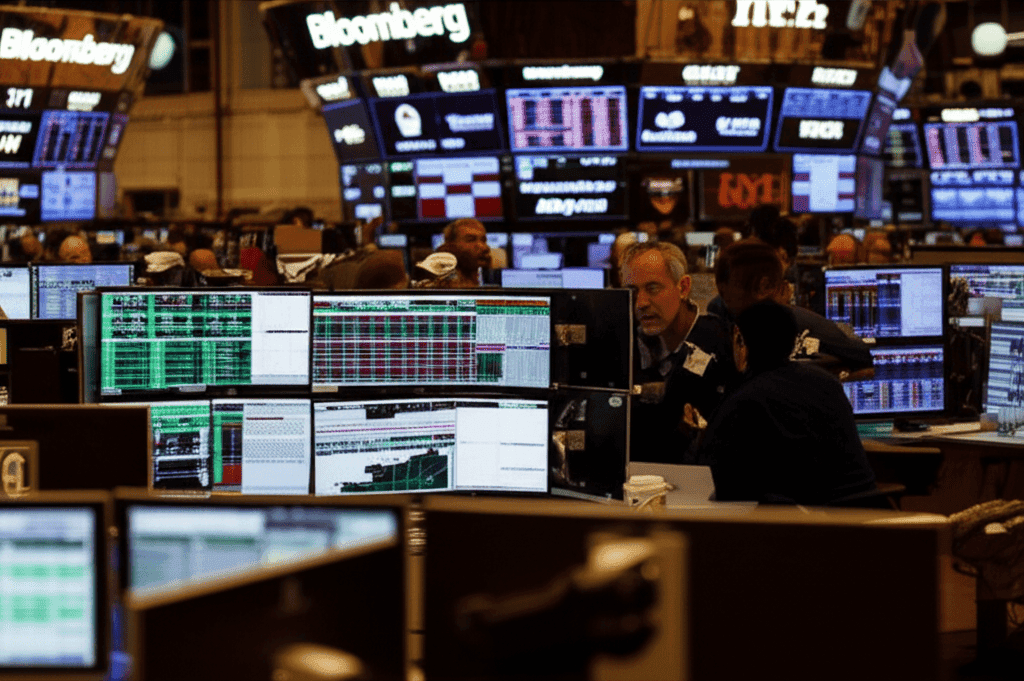
The nomination of Kevin Warsh to succeed Jerome Powell as Chair of the Federal Reserve is sending ripples of uncertainty through Wall Street. President Trump’s pick of Warsh, a known inflation hawk and critic of quantitative easing, has left investors struggling to decipher the future direction of monetary policy, leading to predictions of increased market volatility in the coming months. The market’s unease stems from the inherent conflict between Warsh’s publicly stated views and the President’s desire for lower interest rates, creating a conundrum that investors are finding difficult to resolve. This clash of ideologies raises serious questions about the Fed’s independence and its ability to navigate the complex economic landscape ahead.
A Test of Fed Independence
Warsh’s nomination is more than just a change in leadership at the Fed; it represents a significant test of the central bank’s independence. Traditionally, the Fed operates autonomously, making decisions based on economic data and long-term stability, rather than political pressure. However, President Trump has made it clear that he favors lower interest rates to stimulate economic growth, a stance that directly contradicts Warsh’s hawkish tendencies. The question now is whether Warsh will adhere to his principles, potentially clashing with the President, or yield to political influence, thereby compromising the Fed’s credibility.
“Given that the president has said that anyone who disagrees with him on rate trajectory will never be Fed chair, the reaction of investors shows they aren’t yet sure if Warsh will stick to his guns in defiance of the president’s affordability agenda.”
This uncertainty is fueling market anxiety, as investors grapple with the potential implications of a Fed chair who may be at odds with the President. The bond market’s reaction, or lack thereof, is a clear indication that investors are unsure whether Warsh will truly act independently. This ambiguity is likely to persist until Warsh provides more clarity on his policy intentions and demonstrates his commitment to maintaining the Fed’s autonomy.
Navigating the Volatility
In this environment of uncertainty, certain sectors of the stock market are likely to experience greater volatility than others. High-growth, unprofitable companies, particularly those in the small-cap segment, are particularly vulnerable. These companies often rely on low interest rates to fuel their growth, and any indication of a tightening monetary policy could trigger a significant sell-off. Conversely, defensive sectors such as consumer staples, utilities, and healthcare may offer a safe haven for investors seeking stability. These sectors are less sensitive to economic fluctuations and tend to perform relatively well during periods of market turmoil.
Technology stocks, especially those involved in artificial intelligence, could also benefit, particularly if Warsh believes that AI will drive productivity growth. Investments in AI companies might be perceived as a long-term hedge against economic uncertainty, attracting investors seeking growth opportunities in a volatile market.
Strategic Investment Considerations
For investors, the best course of action during this period of uncertainty is to maintain a long-term perspective and avoid making rash decisions based on short-term market fluctuations. Trying to time the market is often a losing game, and it is crucial to stay focused on your long-term investment goals. Diversification remains a key strategy for mitigating risk. By spreading your investments across different asset classes and sectors, you can reduce the impact of any single event on your overall portfolio. While volatility is expected, it also presents opportunities. Investors with a long-term horizon can consider selectively adding to their positions in high-quality companies that have been unfairly punished by market sentiment.
“The best move for investors during this time will be the hardest: Do nothing and stay focused on the long term.”
Ultimately, the market’s reaction to Kevin Warsh’s nomination highlights the importance of Fed independence and the potential consequences of political interference in monetary policy. As investors await further clarity on Warsh’s policy intentions, a cautious and disciplined approach is essential for navigating the expected volatility.
Source: MarketWatch