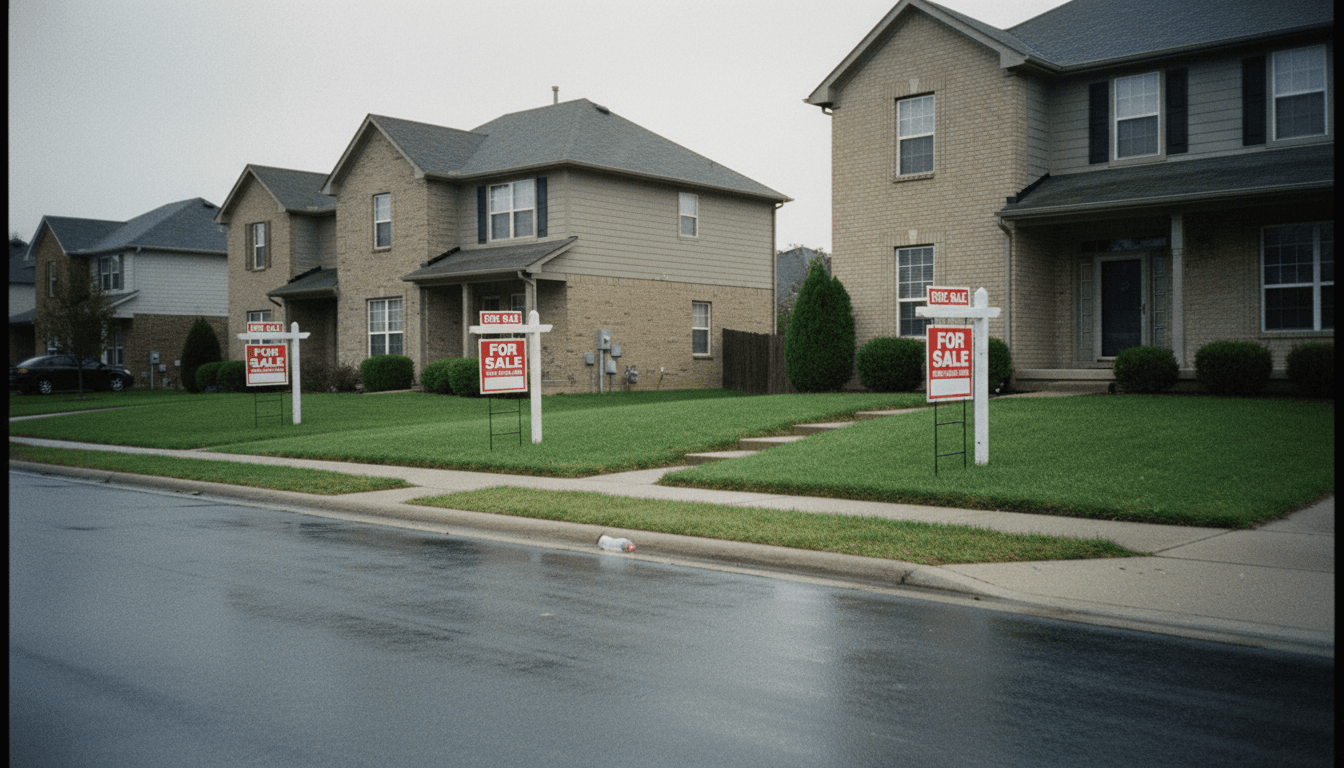
U.S. existing home sales remained essentially unchanged in April, signalling persistent stagnation in the nation’s housing market during what is typically its busiest season. According to the National Association of Realtors (NAR), sales of previously occupied homes saw only a marginal 0.2% uptick from March, settling at a seasonally adjusted annual rate of 4.02 million units. This figure falls short of economists’ projections for a pace of approximately 4.12 million units and reflects a flat trajectory compared to April of the previous year.
This sustained sluggishness extends a trend that has gripped the market since 2022, when escalating mortgage rates began to significantly temper buyer activity. Throughout 2023, existing home sales have consistently hovered near the 4-million annual rate, a substantial downturn from the historical average of around 5.2 million units annually. The market’s struggles have been particularly acute since late 2021, coinciding with the rise in mortgage rates from their pandemic-era lows. Last year saw overall sales for previously occupied homes stuck at a 30-year low, a trend that has unfortunately persisted into 2023.
The Persistent Chill in the Housing Market
Despite the lack of movement in sales volume, home prices continued their upward climb, albeit at a more subdued pace. The U.S. median sales price for homes increased by 0.9% in April compared to the same month last year, reaching a record high of $417,700 for any April since data collection began in 1999. This marks the 34th consecutive month of annual price appreciation, highlighting the dual challenge for prospective buyers: stagnant sales volume coupled with rising costs. Explore more real estate market trends and analysis.
Lawrence Yun, NAR’s chief economist, observed that the spring homebuying season has shown little indication of growth compared to the previous year. He noted that homes sold in April likely went under contract in February and March, a period when the average mortgage rate on a 30-year loan fluctuated between 5.98% and 6.38%. As of last week, this average mortgage rate stood at 6.37%. While these rates are lower than those seen the previous year, market volatility, influenced by geopolitical tensions and rising energy costs, has introduced an element of uncertainty that deters potential buyers.
“The spring homebuying season thus far shows little indication of growth compared to the previous year, with fluctuating mortgage pricing adding uncertainty to the market.”
For the segment of buyers who are able to navigate the current economic landscape, a modest increase in the number of available properties offers a slight reprieve. The total number of unsold homes at the end of April reached 1.47 million, representing a 5.8% increase from March and a 1.4% rise year-over-year. This inventory level is the highest recorded for April since 2019, though it still falls short of the approximately 2 million homes typically available before the COVID-19 pandemic. The current inventory translates to a 4.4-month supply at the ongoing sales pace, significantly below the 5- to 6-month supply traditionally considered indicative of a balanced market between buyers and sellers.
Future Outlook and The Path to Normalization
Experts underscore the critical need for a substantial increase in housing inventory—estimated at around 30%—to truly normalize market conditions. However, achieving such growth remains an elusive goal. The persistent struggle in the U.S. existing home sales market reflects a complex interplay of economic factors and evolving consumer behaviour. Potential buyers continue to exercise caution, grappling with the twin pressures of fluctuating interest rates and consistently rising home prices.
The current environment suggests that a significant market shift is unlikely in the immediate future without substantial changes in either interest rate stability or a dramatic increase in housing stock. The housing market’s trajectory will continue to be closely watched, as its health is a key indicator of broader economic sentiment and household financial stability. Read more on the challenges facing the real estate sector.