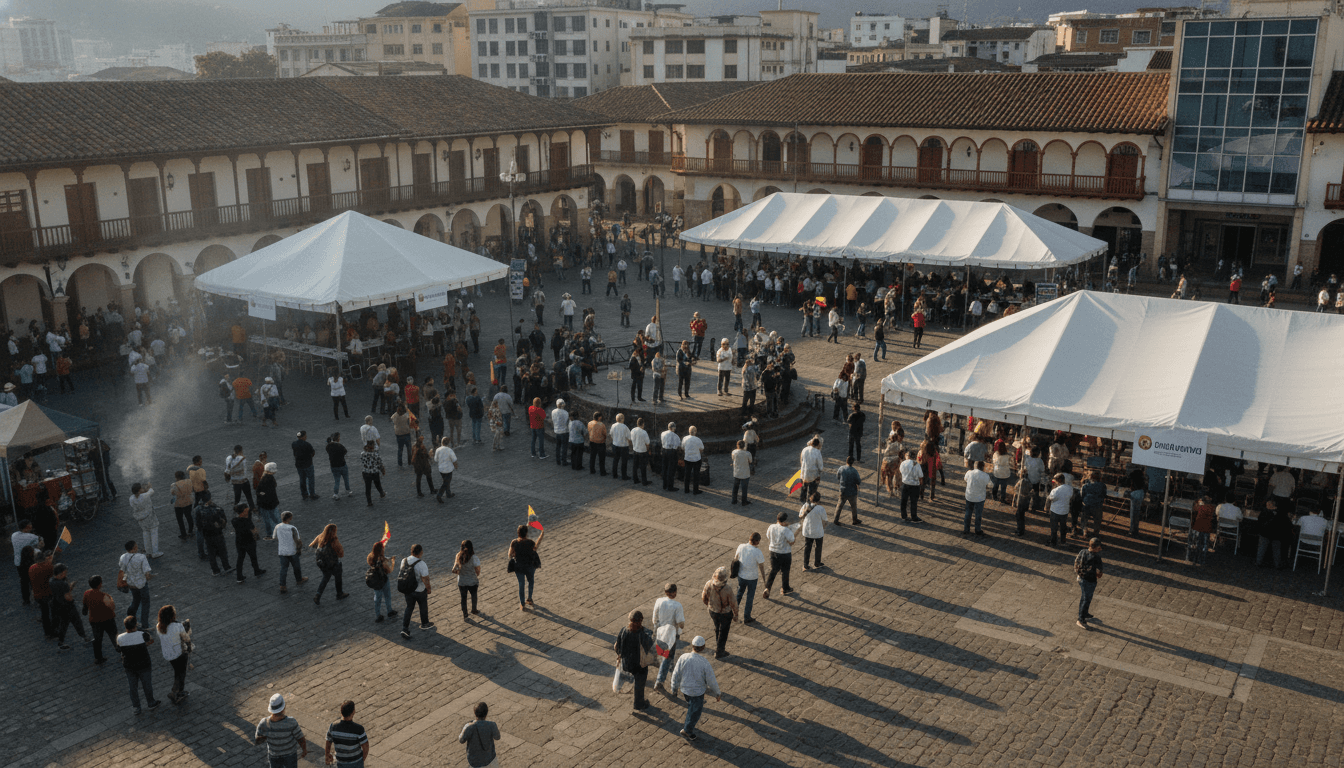
US electoral meddling has reached new heights in Colombia, with the first round of presidential elections on Sunday, June 1, 2026, marred by accusations of irregularities and direct foreign interference. As with recent elections in Argentina and Honduras, the process in Colombia has drawn significant scrutiny, not only from the United States but also from neighboring Ecuador, amidst claims of massive electoral fraud.
The stakes are exceptionally high as Colombia heads into a critical runoff election on June 21. The two candidates, Ivan Cepeda and Abelardo de la Espriella, represent starkly opposed political visions for the nation. A victory for Cepeda would solidify the progressive economic, social, and environmental policies initiated by his predecessor, Gustavo Petro, Colombia’s first-ever left-leaning government. Conversely, a win for the populist right candidate, de la Espriella, could see Colombia align with what has been termed Trump’s ‘Donroe Doctrine,’ potentially ushering in a ‘Plan Colombia 2.0’ style arrangement, as advocated by former Colombian president Andrés Pastrana. This could grant de facto control over Colombian territory to US Southern Command and other government agencies, mirroring recent developments in Ecuador.
“The number one threat comes from the financial ties between the Colombian far-right and the Miami mafia.”
De la Espriella, who participated in Trump’s Shield of the Americas summit, has made aggressive promises, including restarting fumigation of cocaine fields and bombing ‘terrorist guerrilla camps.’ This vision stands in stark contrast to Cepeda’s platform, which emphasizes peace negotiations, clean energy transition, human rights, and combating illicit finance. The divergent paths proposed by these candidates underscore the deep ideological chasm facing Colombia.
A Multi-pronged US Intervention in Colombia
The extent of US electoral meddling became strikingly apparent with the arrival of US Senator Bernie Moreno in Bogota just two days before the first-round elections. Accompanied by 87 US State Department delegates, Moreno’s visit, ostensibly to observe the elections, quickly drew criticism for allegedly flaunting Colombian election laws. Progressive International issued an official statement denouncing Moreno’s actions, citing planned meetings with leading right-wing candidates Paloma Valencia and Abelardo de la Espriella to facilitate political rapprochement ahead of the runoff. This constitutes an active political intervention by a foreign national operating under the guise of an observer mandate, particularly given Moreno’s documented ties to Colombia’s conservative elite and public hostility towards the Petro government.
Prior to his arrival, Senator Moreno issued thinly veiled threats, insinuating that ‘narco-terrorist’ groups linked to the Petro government were threatening electoral freedom and warning that Washington might not recognize the results if ‘clear intimidation’ occurred. Meanwhile, Trump’s former advisor Roger Stone published an article extolling de la Espriella, portraying him as the anti-establishment candidate poised to restore safety and sovereignty. Former Colombian president Alvaro Uribe also contributed to the pressure, warning that a vote for Cepeda could lead to ‘armed action against the country.’ Such statements highlight the intense international and domestic pressure surrounding these elections.
Direct interference also came from neighboring Ecuador, whose President Daniel Noboa met with de la Espriella days before the vote, pledging to remove 100% tariffs on Colombian goods should de la Espriella win. Noboa’s government has been criticized for its perceived willingness to serve as a staging ground for US military operations, despite public opposition to US bases. His family’s business has also faced implications in international drug trafficking investigations, adding another layer of complexity to the regional dynamics.
The Stakes for Colombia’s Future Policies
The most serious accusation, though currently unsubstantiated, is that massive electoral fraud was committed to benefit de la Espriella, who secured just under 44% of the vote. Outgoing President Gustavo Petro and Ivan Cepeda alleged that nearly one million voter IDs appeared at polling stations without being registered in the official electoral census. While Cepeda later tempered his claims, calling for full scrutiny of all votes, the allegations underscore the fragility of the electoral process and the deep mistrust pervading the political landscape. The upcoming runoff is not just a contest for the presidency but a referendum on Colombia’s geopolitical alignment and its domestic policy trajectory, including its stance on international issues like the conflict in Gaza. A victory for Cepeda would mean a continuation of progressive policies and a commitment to human rights and international law.
The outcome of Colombia’s presidential runoff will profoundly impact its economic and social future, determining whether it maintains its independent foreign policy or becomes further integrated into US regional strategies. The ongoing scrutiny of the vote count is crucial to ensuring the legitimacy of the election and the future direction of Latin America’s third-largest economy. This period of intense political maneuvering and foreign influence serves as a critical test for Colombia’s democratic institutions and its sovereignty.