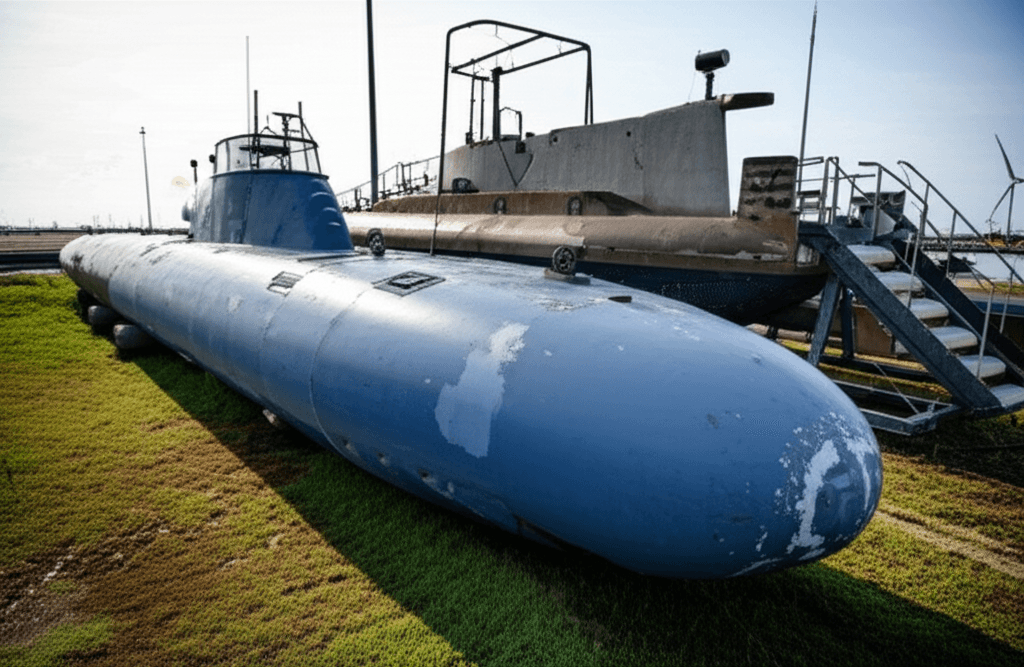
Uncrewed narco subs are poised to transform the Colombian drug trade, marking a significant escalation in the cat-and-mouse game between cartels and law enforcement. On a bright morning last April, a surveillance plane spotted a 40-foot-long shark-like silhouette idling in the ocean just off Tayrona National Park, an unmistakable sign of the evolving tactics used in drug smuggling.
For decades, handmade narco subs have been some of the cocaine trade’s most elusive and productive workhorses. Now, off-the-shelf technology may be advancing that cat-and-mouse game into a new phase. The recent discovery of an uncrewed narco sub prototype raises critical questions about the future of drug trafficking.
The Rise of Uncrewed Narco Subs
The Clan del Golfo, a powerful criminal group operating along the Caribbean coast, is suspected of building Colombia’s first confirmed uncrewed narco sub. This vessel, capable of remote control and autonomous travel, represents a significant leap in smuggling technology.
Drug traffickers favor the ocean for its vastness and the ability to blend illegal activities with legitimate commerce. Container ships, while slow and expensive, offer a relatively low-risk method of smuggling. Small, powerful motorboats, or “go-fasts,” are faster and cheaper but easier to detect. Semisubmersibles offer a balance between stealth and cost, making them an attractive option for cartels.
“A typical semisubmersible costs under $2 million to build and can carry three metric tons of cocaine. That’s worth over $160 million in Europe—wholesale.”
Seizures of narco subs have tripled in the last 20 years, but authorities admit they can only intercept a fraction of the vessels in operation. The move to uncrewed narco subs aims to eliminate the reliance on human crew, reducing costs and risks. No crew means more room for drugs or fuel and no sailors to pay.
The basic technology required for autonomous subs is becoming increasingly affordable, while potential profit margins continue to rise. This combination creates a compelling incentive for cartels to invest in and deploy uncrewed narco subs.
The Global Implications
The implications of uncrewed narco subs extend far beyond Colombia. Law enforcement agencies worldwide are grappling with the potential for increased drug smuggling over longer distances and with reduced risk to human smugglers. The discovery of submersible drones and remote-controlled minisubmarines in other regions suggests that the Tayrona sub is not an isolated incident.
“If you don’t have a person or people on board, that makes the transoceanic routes much more feasible,” says Henry Shuldiner, a researcher at InSight Crime. The ability to move more slowly and stealthily, wait out patrols, or scuttle the vessel remotely offers significant advantages to drug traffickers using uncrewed narco subs.
As autonomous technology becomes more universal, the challenges for law enforcement will only intensify. Agencies will need to adapt their strategies and technologies to counter the evolving threat of uncrewed narco subs. For more related Industries news, follow The Financial Standard.
Countering the Threat
The ARC Bolívar naval base in Cartagena houses the Tayrona semisubmersible, a stark reminder of the evolving nature of drug smuggling. Its leaner, more refined design compared to older models underscores the innovation driving this illicit industry.
The rise of uncrewed narco subs presents a formidable challenge, but it also underscores the importance of international cooperation and technological innovation in combating drug trafficking.
Source: MIT Technology Review